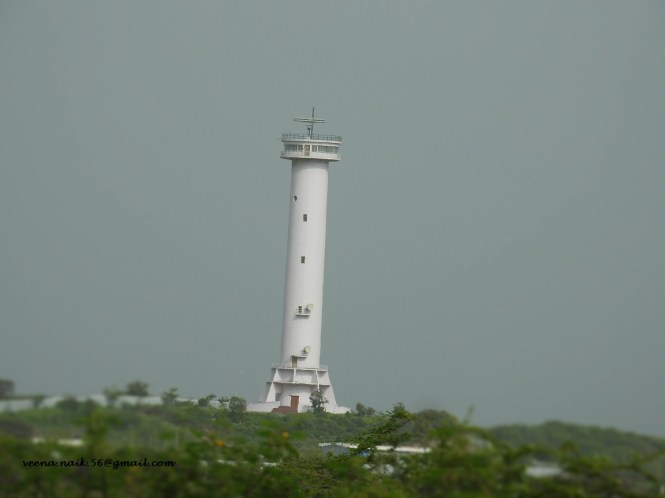
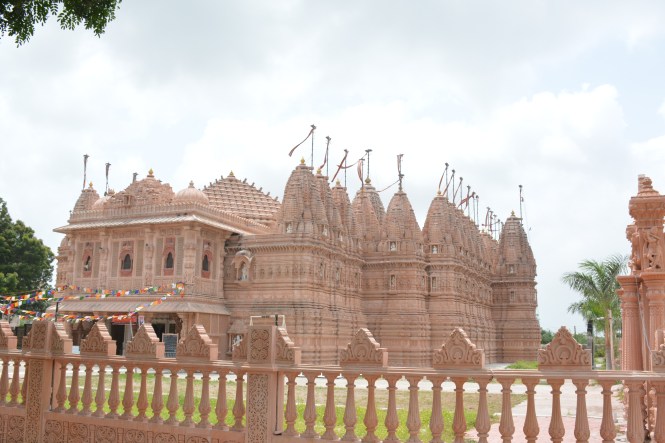
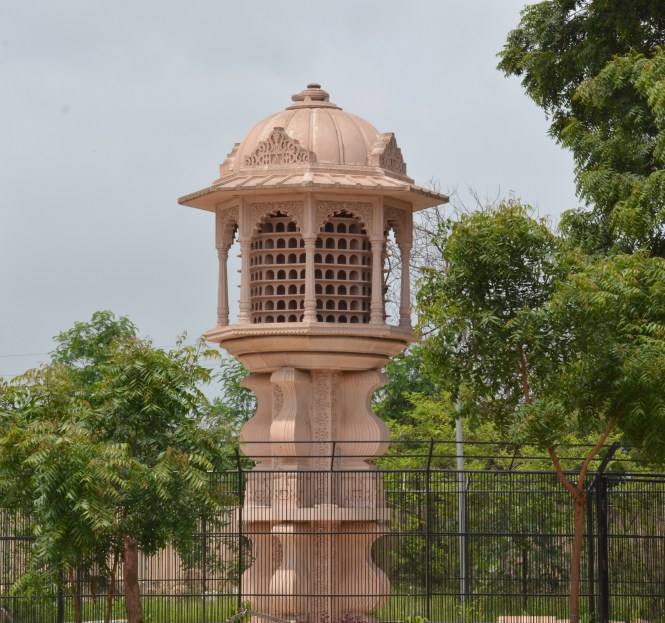
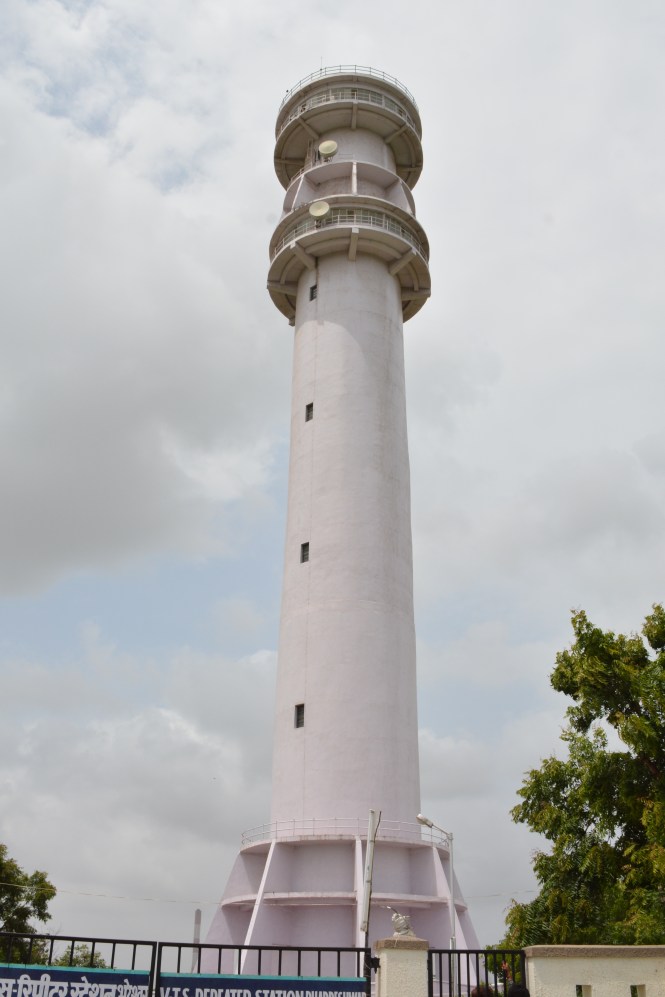
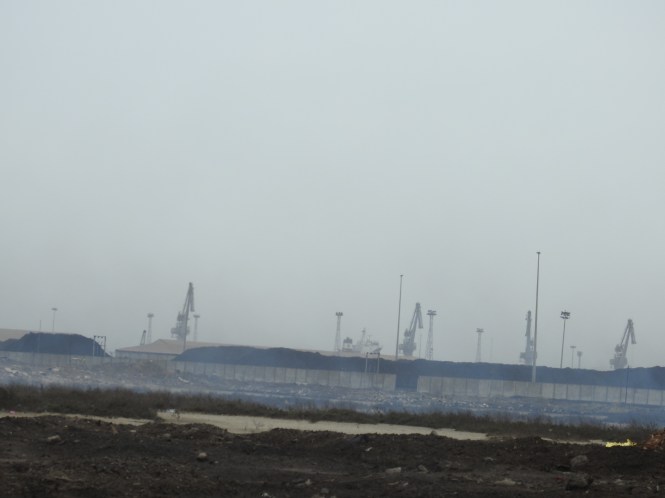
16. Ports of Jamnagar.

The surroundings of Jamnagar have about half a dozen ports, all minor ports operated by Gujarat Maritime Board. They also have Lighthouses at many of these places. Despite knowing that we will not be allowed to enter either places, we start off to explore them and their surroundings. We are rewarded with rich experience of things we had not seen earlier.

The first destination is Rozi port. Rozi, New Bedi and Bedi are located in close proximity to each other and Jamnagar town. Travelling is not an issue. Roads are good.

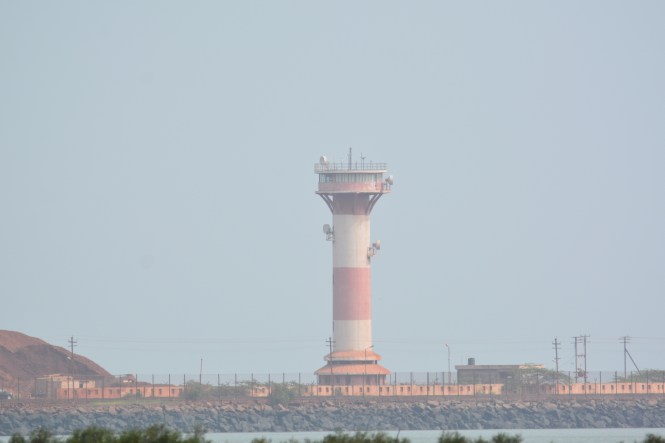
Rozi has Diwadandi, Lighthouse.
rozy1

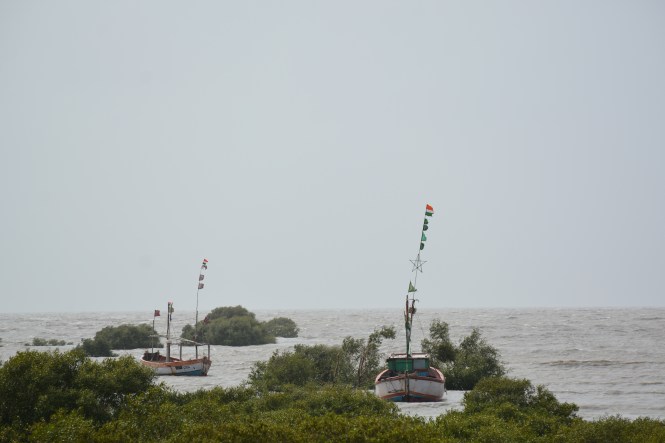
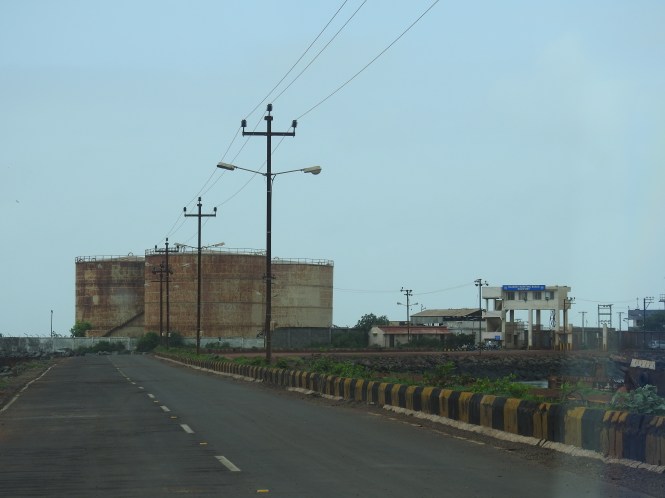
The port is for dry bulk cargo. Right now, they told us, it is handling ‘mitti’. A little prodding revealed it is Bauxite. As expected we were sent away from the port and the Lighthouse as the same required permission from ‘authorities’. Rozi also happens to be the place to access the island of Pirotan which is major tourist attraction within the Marine National Park. Of course they cannot prevent us from taking photographs from afar.
rozi1a

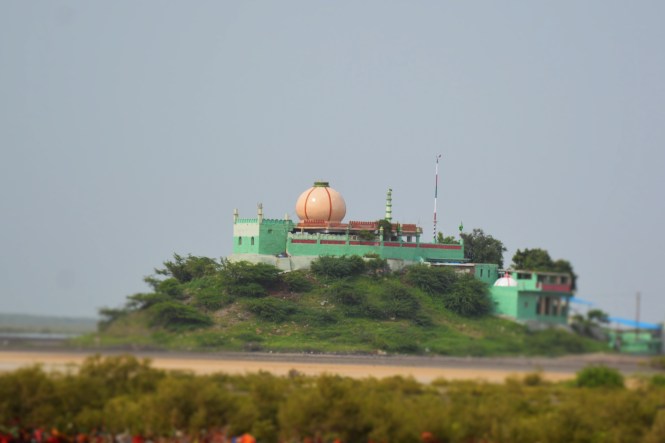
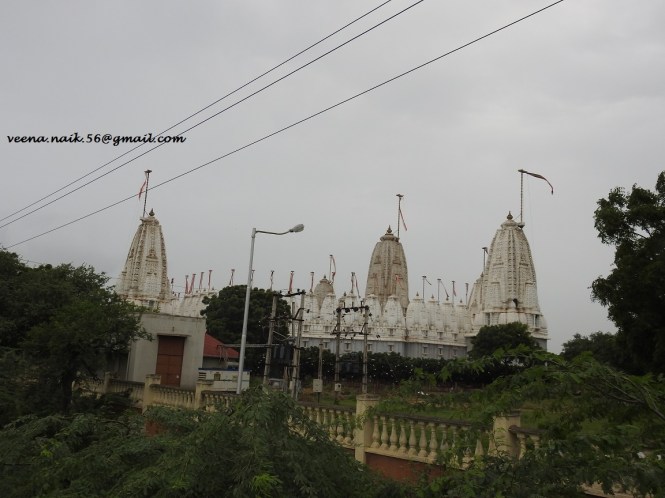
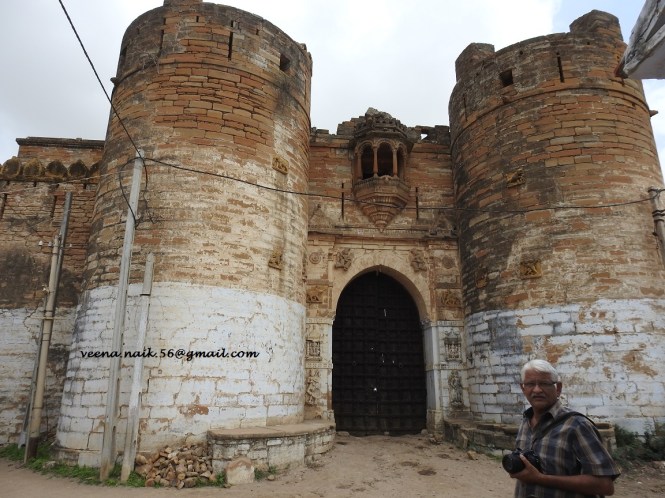
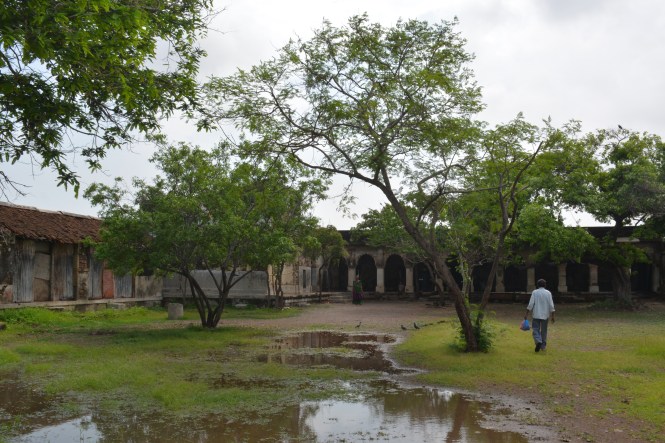
Before you speculate about the name Rozi, let me clarify that the port is not named after the girl you met in Goa some time back. It is named after the Goddess Rozi Mata under whose jurisdiction the port falls. Rozi Mata Mandir is a curious place. As you approach the place, it appears like an old fortress. Inside is the dilapidated structures of temples.
 

rozy3

The entrance:

rozy2

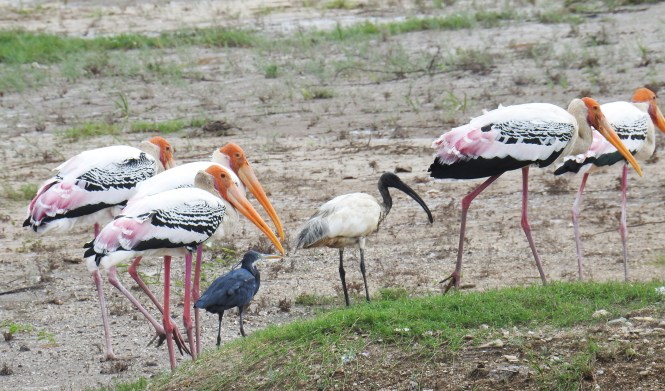
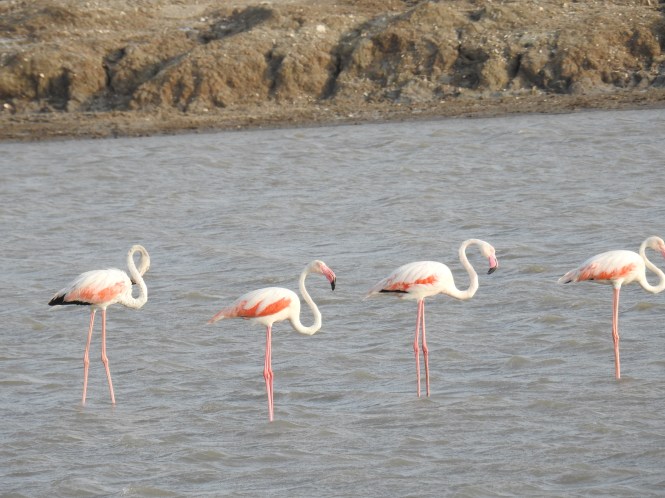
Birds abound in the salt pans and the roadside ponds in the entire area even in August. In winter it should offer a more spectacular avian scene. Here is a dramatic Darter.

darter

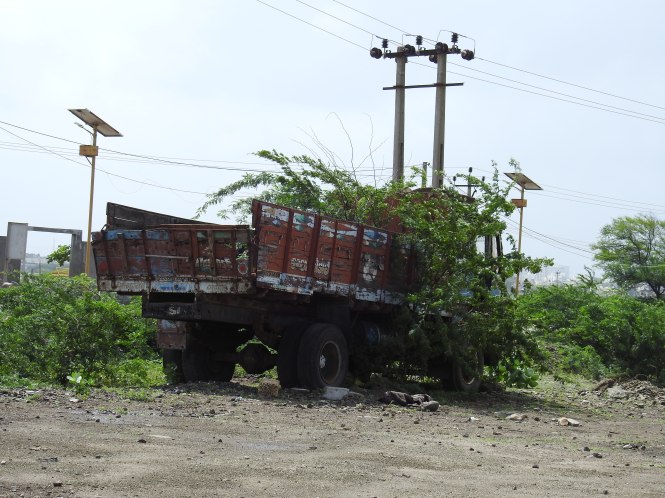
Among the odd scenes is that truck. There are plants growing under it as well in the load body, quite an environment-friendly vehicle.
DSCN2961

Here is the New Bedi port. The ‘security’ advised us to visit Rozi port and not to waste time there. ‘The port is importing coal and the dust is not god for health.’ Thank you.
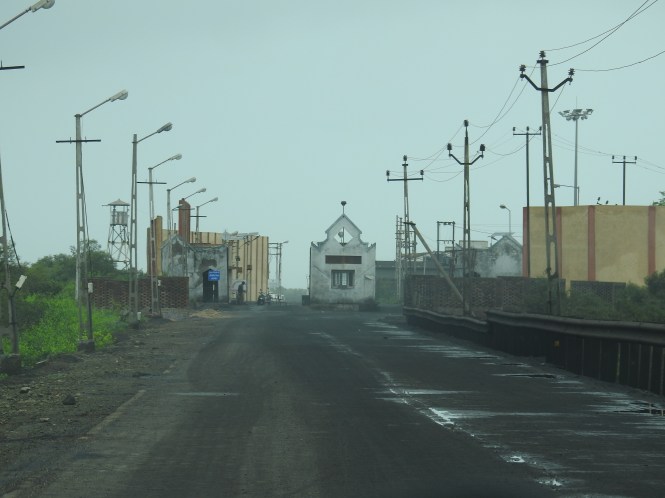
new bedi

From New Bedi we proceed to Bedi. The refusal here is the most polite and with a smiling face. Here is myself,being sent away.
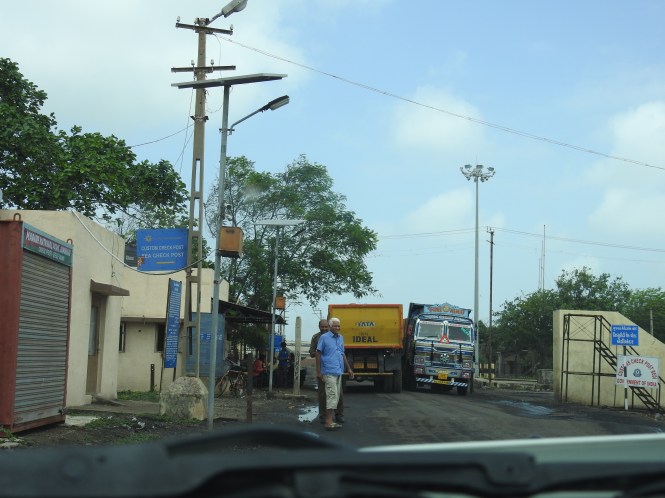
bedi

There are better places in this world than those dirty ports.

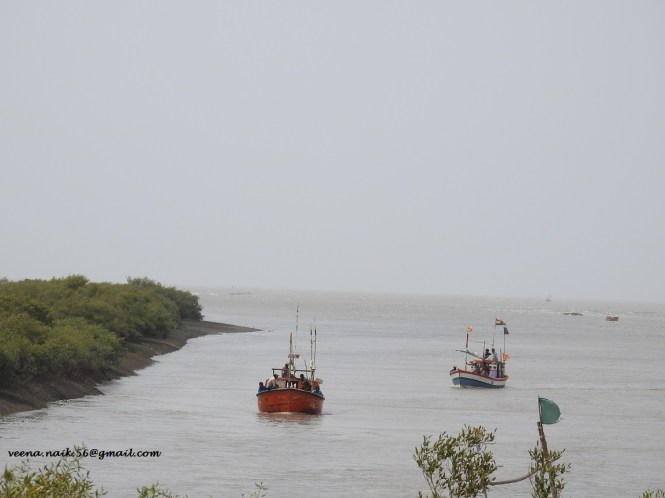
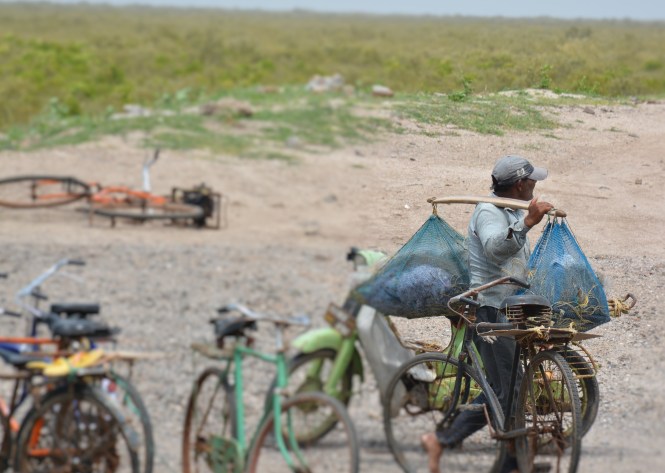
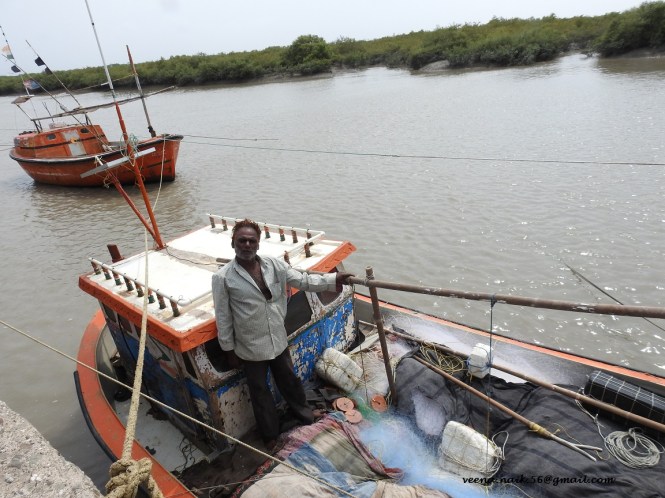
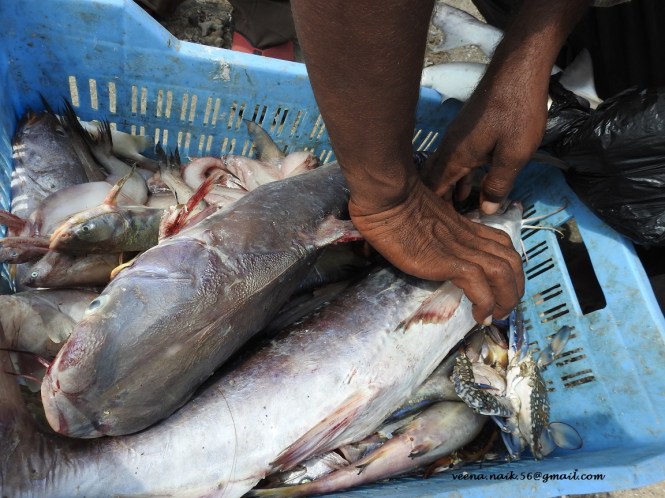
We then go to a small village nearby and visit the Fish Market. People are friendly and the fish cheap by Mumbai/Pune standards. We are salivating but no hotels in the area serve non-vegetarian food except one in Jamnagar.
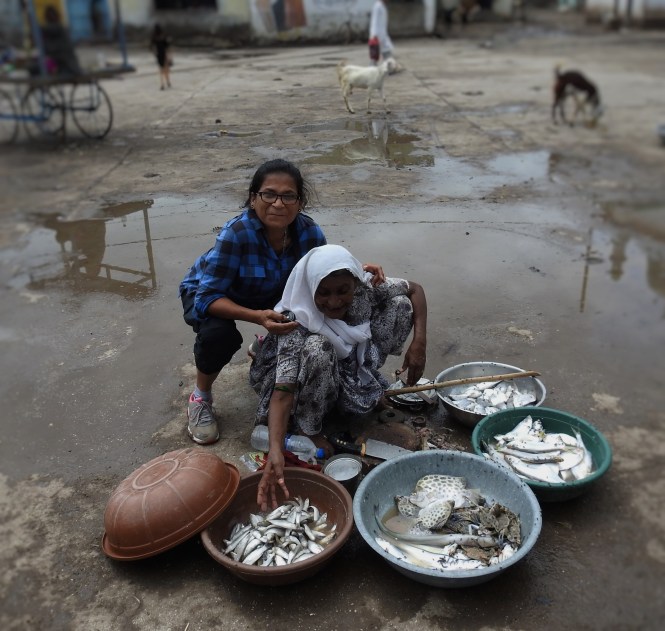
DSCN2968

The refusal to allow to enter ports gave us enough time for birding. The bird pictures are posted on ‘Facebook Birders’, a closed group and also on our Facebook Page ‘The Blue Drive’. Please visit.

Suryakiran & Veena Naik

suryakiran.naik@gmail.com

25.08.2016

Posted on 28.08.2016


15. Jamnagar, Saurashtra

We arrive at Jamnagar to hear bad news. A series of them. To-morrow is a holiday on account of Krishna Janmashathami, everything will be closed, it is raining and will continue to rain to-morrow, the Museum is under renovation and remains closed, the Marine National Park is closed till 15th of October, almost two more months. We had planned for a longer stay at Jamnagar as it is the access point to the Marine National Park. Presumption was that it would open after 15th August the end of monsoons for all practical purposes. We were wrong.

Having come we decided to make the best of whatever was left over and there were quite a few things, lasting us two full days.

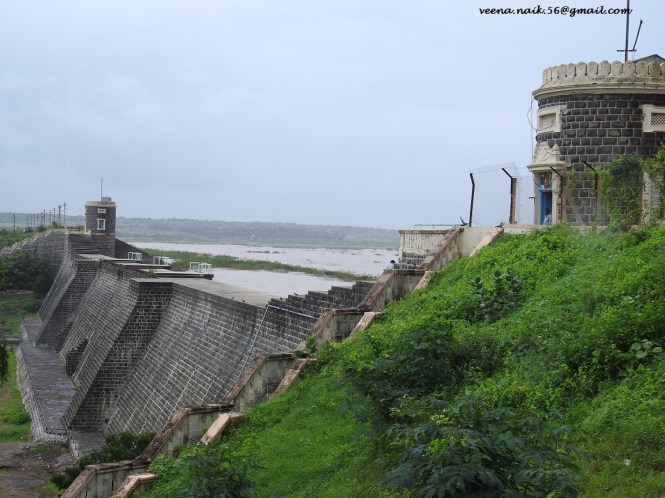
Braving the rains, we drive to the Ranjitsagar Dam. The design shouts at you to tell that it is pre-independence creation of Maharajas.

dam

Next stop is Khijadiya Bird Sanctuary. The guards at the station allow us to drive up to the inner gate and not beyond as the sanctuary is closed for the monsoons. It need not be. It is on the land and is not water-logged. Anyway the government knows better. As we turn back from the gate we saw hundreds of tiny frogs jumping towards the salt pans to the right of the place where the gate is. It was an unforgettable sight but did not come off well in photographs.

Among the places advertised as the highlights of the Jamnagar city are:

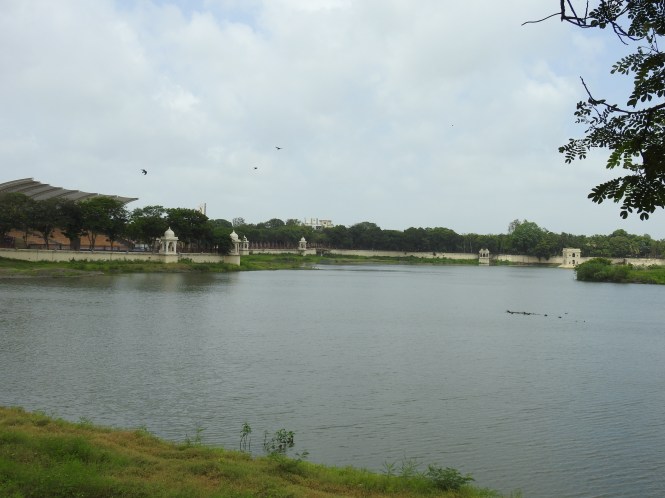
Lakhota Lake and Lakhota Museum (closed for renovation). The lake shores are incredibly clean and well-maintained. Food and food vendors are prohibited inside. This place and the adjoining part of the lake which has free access are together good for a round of city birding.

DSCN2974

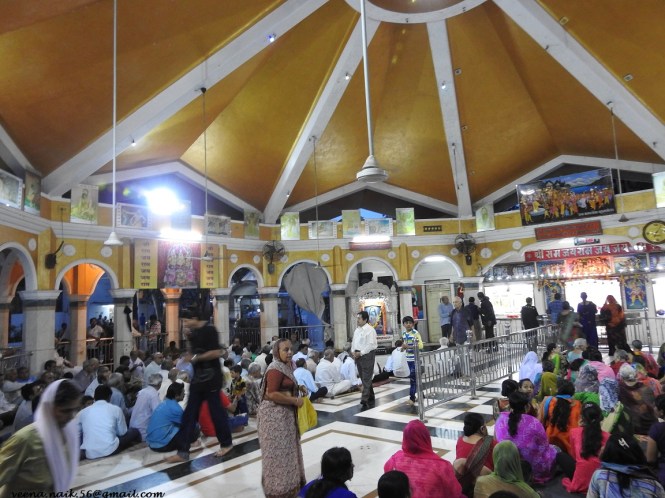
Bala Hanuman Temple is in Jamnagar and in the Guinness Book for its uninterrupted chanting of ‘jai jai ram’ since 1964.

bala hanuman

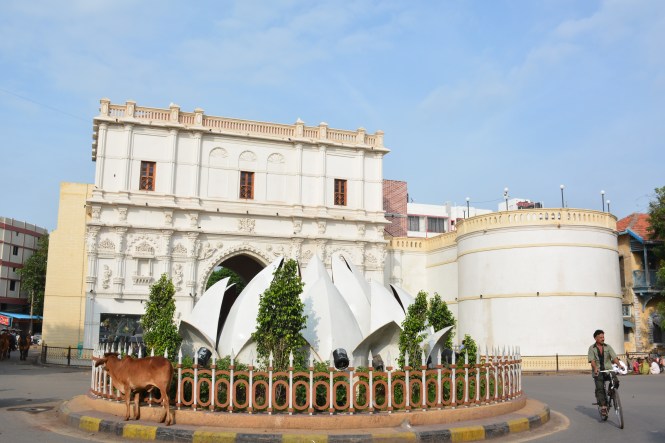
Khambaliya Gate which doubles up as a small museum.

DSC_7168

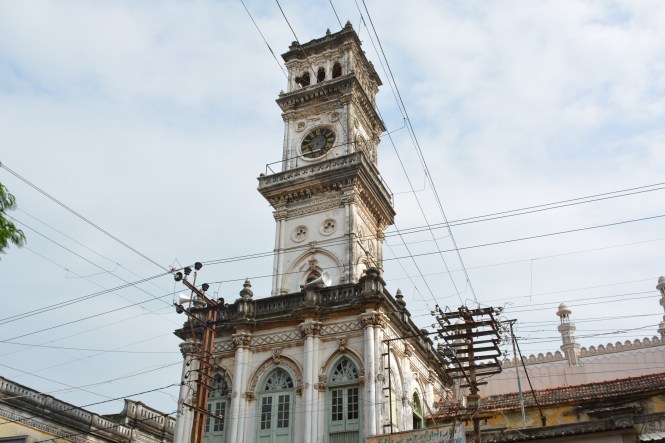
The Tower Of Mandvi looks good architecturally but the way it is occupied, I am sure it must be subject to a lot of litigation.

DSC_7151

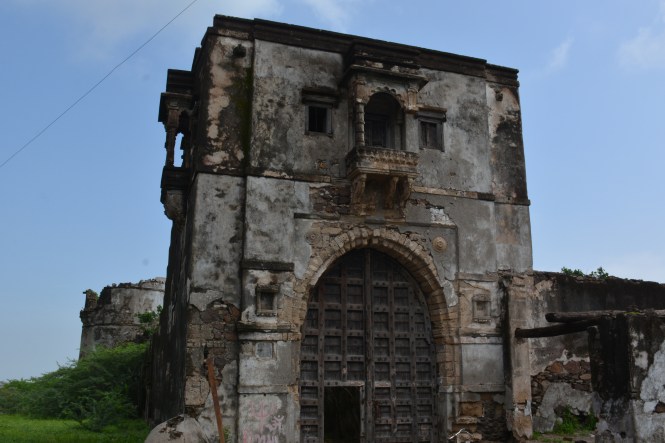
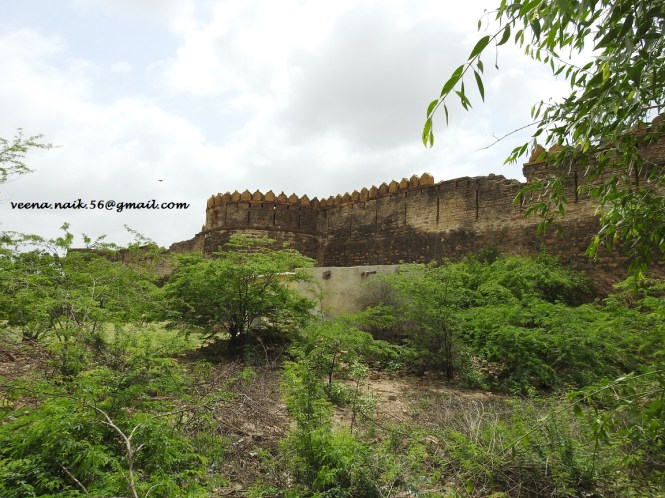
Bhujiyo Koto is a part of the crumbling Lakhota Fort.

fort

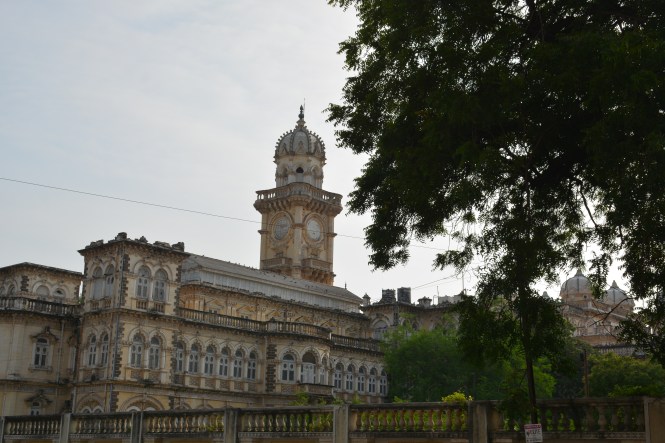
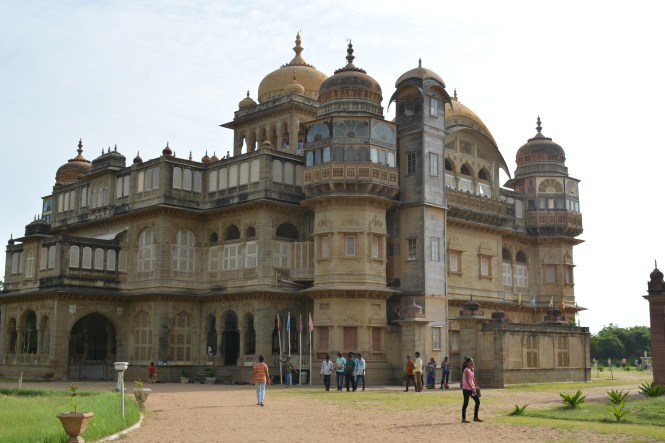
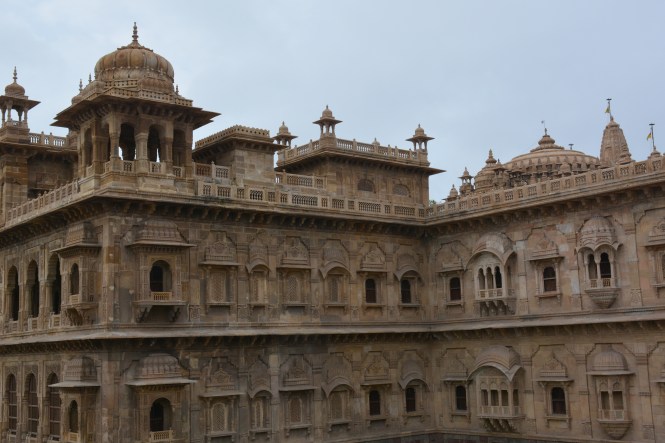
The Pratap Vilas Palace

DSC_7177

Nilkanth Mahadev Temple

DSCN2973

Bhidbhanjan Temple with beautiful carvings. Photography inside is prohibited

DSC_7144

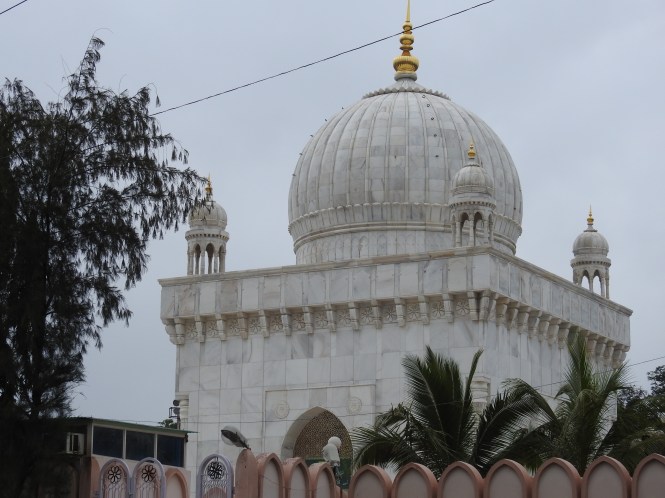
Bohra Hajira, a Bohra community’s place with mausoleums, Mosques and other structures.

DSCN3053

The Jain temple (there are 4 of them in the city) and Swaminarayan Mandir a little away from the town. There appears to be an ongoing competition among the Jains and the BAPS to build temples.

DSCN3056

Most interestingly the city prides itself on its crematorium so much so that it appears in the list of places to be visited in Jamnagar. It is billed as ‘Model’ crematorium. For us it would be strange to go to an operational crematorium as a tourists and not mourners. We decided to give it a try. As we near the gate we see a funeral procession entering. We decided to retreat and move on to the world of the living.

DSCN3047

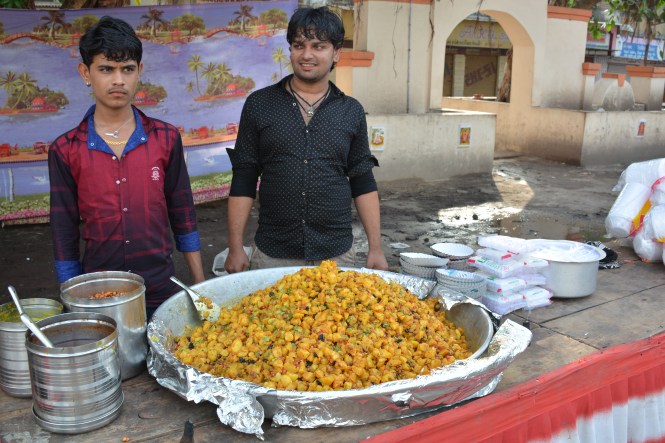
In the living world people are busy preparing huge quantities of ‘farari’ food for the Janmashthami celebrations. It is difficult to find a good restaurant in Jamnagar. Most of the people eat ‘paan’, and those who eat other food,  do so standing up at the ‘farsan’ shops. I will remember Jamnagar for it’s huge Paan shops.

DSC_7172

Suryakiran & Veena Naik

suryakiran.naik@gmail.com

24.08.2016

Posted on 28.08.2016
14. Jodiya & Balachadi

We leave Morbi with the intention of staying at either Jodiya or at Balachadi, the seaside towns on the way to Jamnagar. Both places turn out to be small villages with neither accommodation nor food. However, they had to offer some interesting glimpses.

Jodiya is a fishing village. It once used to be a port but in course of time the waterway silted and reduced the place to a fishing village. We reached there at around 2 pm. The motorized fishing boats were expected back at around 3 pm with the high tide. During this hour we saw an interesting phenomenon. The fishermen hunting crabs were returning with their catch just in time to beat the high tide, to be followed by the boats.

1st

crab catch

The boats, including the one owned by Yusufbhai brought the fish. He is not happy with to-day’s catch. It is too little for the time and the efforts. In comparison the crabbers appear to be making good money walking on the shore at low tide. Nobody came with less than 5 kgs. All fish is bought by traders for sale in larger towns.

yusuf1

yusuf2

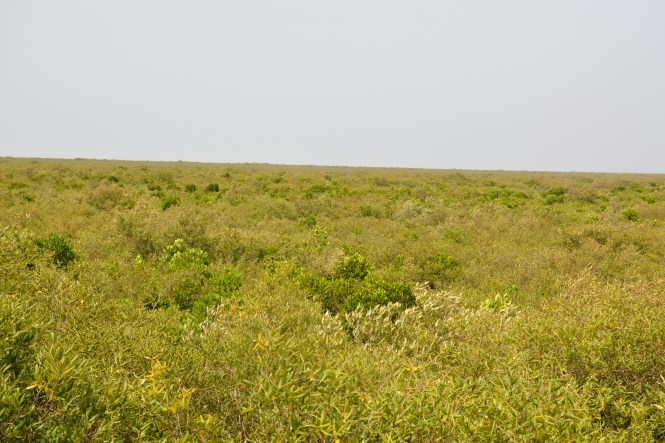
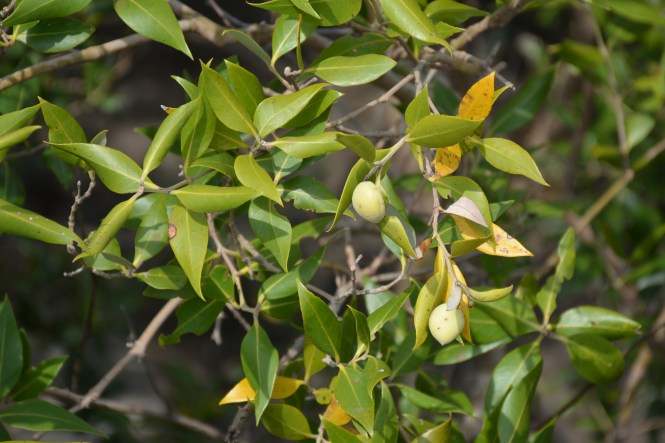
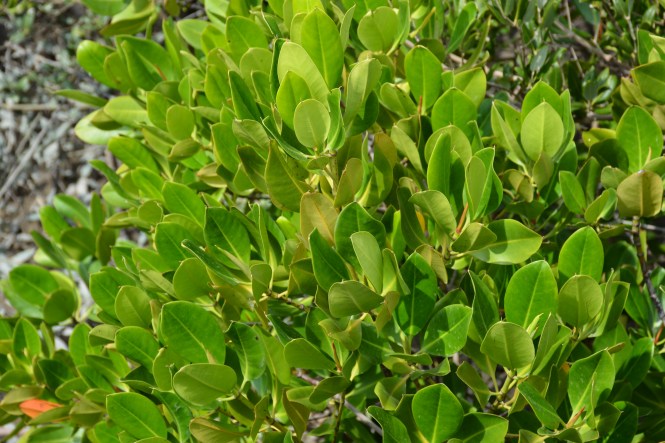
The silting of the waterways allows growth of Mangroves and in turn crab fishing. With that kind of mangrove cover, I expected Prawns / Shrimp breeding around. The fisher folk have no knowledge of such creatures. They are happy hunting the crabs – the Blue Crab as well as the grey Mud Crab. The former can be picked up from the floor, the latter needs nets. Here one can see several species of the Mangroves unlike up north at Jakhau where one can see only one dwarf species.

m1

m2

m3

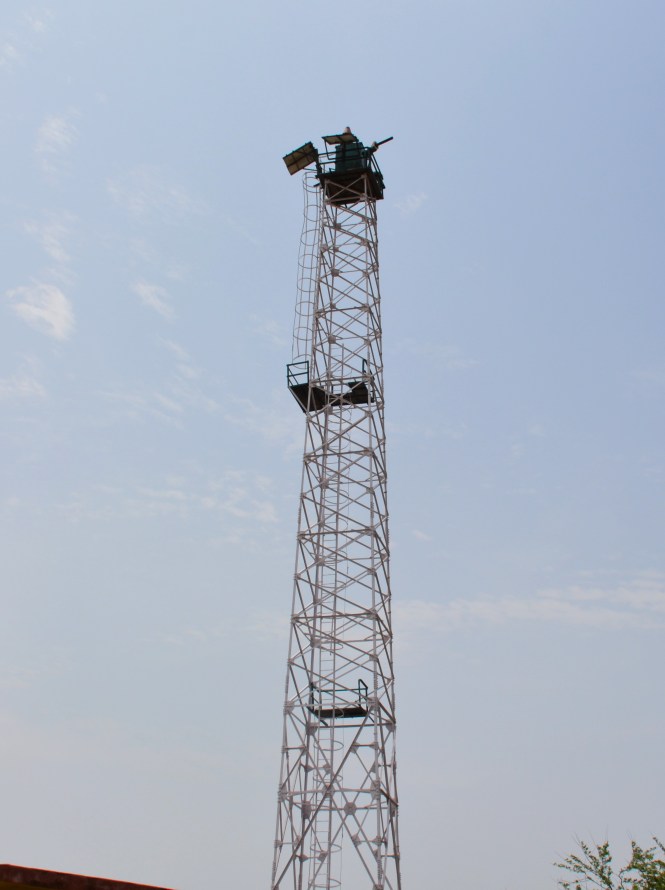
Jodiya has a Lighthouse. Not the masonry type but a lattice steel structure. We don’t know if it is functional. The gate was locked and there was none in attendance.

Diwadandi

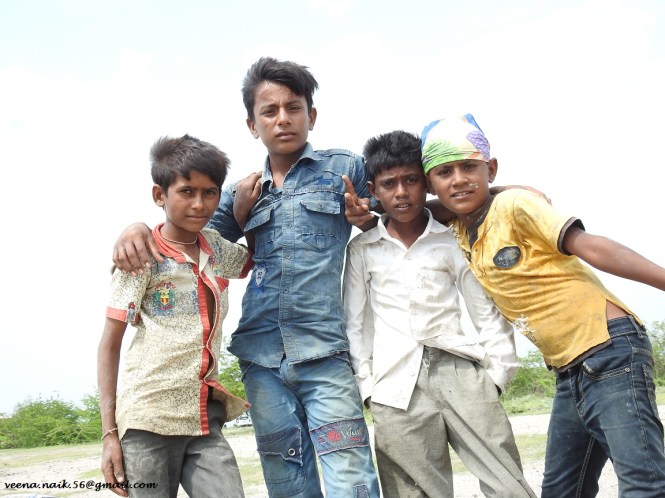
The boys on the waterfront take a break from trying to catch crabs to pose for a picture.

boys

The next place along the coast is Balachadi which is quite close to the town of Porbandar.

Balachadi has a Sainik School and a large part of the village is covered by the school’s compounds.

A small beach, nothing to write home about. It is a part of the Marine National Park and the Sanctuary.

Balachadi beach

The place is recommended for birding during winter. Even in August it is not bad but you will all the local species not the ‘foreigners’ who come in winters.

birds

The Dargah of Yakubshah Pir is an attractive structure and is among the major places of pilgrimage in the area.

Yakubsha Pir

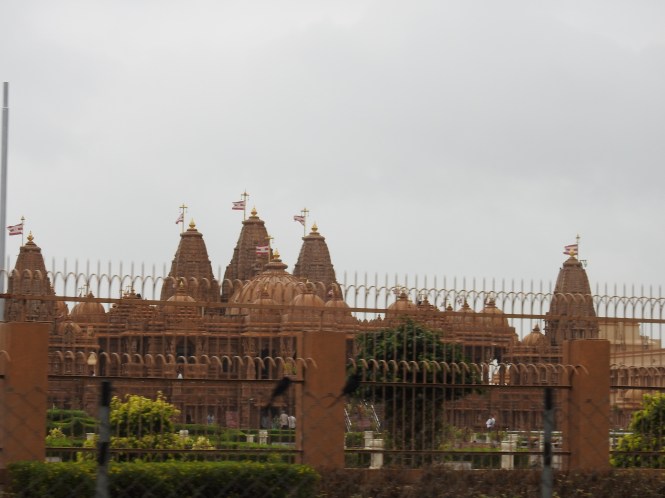
We round off the visit a visit to the Diwadandi. It looks majestic. Located on a hillock quite away from the seashore and has a large compound.  We were denied access and shooed away.

Balachadi Diwadandi 

Suryakiran & Veena Naik

suryakiran.naik@gmail.com

27.08.2016


MORBI, Saurashtra.

Morbi is a typical princely state town where the remnants of the royal rule mix with the post-independence architecture and lifestyle. We get up early in the morning and start looking at the landmarks of Morbi. It is an interesting place. Founded in 1698, it was an 11-Gun salute state during the British rule.

This is the Green Tower. I like it because it has a library on the first floor. No, you are not allowed to go above that.

DSC_6867

The Palace turned into Hotel

DSC_6872

The Jhulta Pool. Hanging bridge across the river Machchu, connecting old and new parts of the town

DSC_6885

Incidentally, 27 years ago a dam across this river failed causing a major disaster killing an estimated 25000 people.

DSC_6895

The pre-independence Engineering college and a palace is on the other side. We were not allowed to enter the palace grounds.

DSC_6901

The Police Stations in Morbi look beautiful unlike their counterparts in other parts of the country.

DSC_6922

Mani Mandir is a temple complex in the secretariat compound of the Morbi State. This is reported to be built by the ruler in memory of a woman called Mani or Manibai.

DSC_6941

The secretariat has this statue of Marques of Willingdon the Viceroy and Governor General of India, which I think does not fit well with the architecture around.

DSC_6931

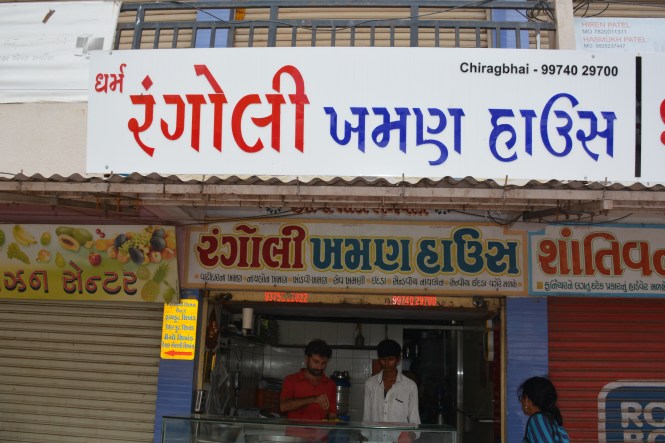
Rangoli Khaman House offers the best Dhokla in town, in fact several varieties of it. Chiragbhai made us to taste a bit of each, followed by tea from a nearby place. Preparation of food and tea are considered different functions in this part of the world. They are always sold by different establishments.

DSC_6954

Suryakiran & Veena Naik

26.8.2016.

Note : In order to keep the Blog to reasonable size, we post the pictures on a Facebook Page. Please check out at The Blue Drive.


Gandhidham-Navlakhi

We start in the morning from Gandhidham. This is an industrial town which owes much to the Sindhi refugees who settled here after the partition of India. Apart from the large number of industries and Kandla port nearby, nothing much to write about.

gandhidham

We drive through the Little Runn of Kutch and Asiatic Wild Ass Sanctuary. With this we are out of the Kutch region. At a place called Malia, one enters the Morbi district of SAURASHTRA, also known as KATHIAWAD.

otw1

otw2

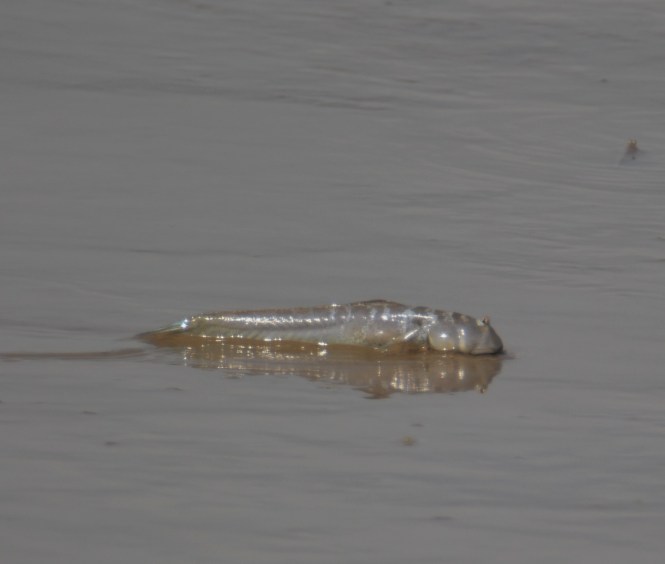
The Mudskipper is a fish found in abundance in the marshes. It was amazing to see them coming on to the surface and then instantly disappear in the mud, the moment they sense a bird flying overhead, looking for food.

otw4

otw5

Birds of various species make their presence felt along the creek.

otw3

So do the modes of transport.

otw6

Our first spot at Morbi is Navlakhi port. A small port currently involved in importing bulk coal for power plants. We know there is a Lighthouse inside the port but the permission to enter is denied. The port authority person allows us to communicate with his boss and permission is given to enter the port area with a condition that we will not use our cameras. We comply.

The Chief Photographer of this expedition is restless and tries to photograph the Divadandi from outside which is not prohibited. The results are not bad considering the distance and the time of the day.

navlakhi lighthouse

The road from Morbi town and Navlakhi port has a beautiful straight road and a parallel railway line. One can see extensive Mangrove area and beautiful flamingos. The railways as well as the port are pre-independence creations of erstwhile rulers of Morbi.

navlakhi2

navlakhi4

The Salt pans and the small hills of salt cant be missed.

Navlakhi1

Photography demands fitness and involves acrobatics

DSC_6846

Suryakiran & Veena Naik

25.08.2016
Mundra-Kandla-Bhadreshwar


Between Mandvi in Kutch and Morbi in Kathiawad Peninsula, there lies a huge area which is a wet desert, neither land nor sea. The marshes are extensive and inaccessible. In the northern parts abutting Pakistan, Border Security Force uses special all-terrain vehicles.

In view of the inaccessible sea-front, we are moving faster than originally envisaged.

Industrialization is taking place wherever possible mainly in the form of power plants. The ports of Mundra and Kandla and the town of Gandhidham are the major activity spots. The little Rann of Kutch and the sanctuary protecting the Asiatic White Ass occupies a major part of the landscape. After Monsoons it is flooded and inaccessible.

We start from Mandvi with a view to make a stopover at Mundra or a nearby place. We skip the beautiful highway and take a smaller road nearer to the coast. In fact, we return back to Mandvi after driving 15 Kms. on the highway. We take the Mandvi-Gundiyali-Nana Bhadiya-Shiracha- Mundra road.

We experience our first flat tyre. The Michelin pump we bought passes the first test successfully.

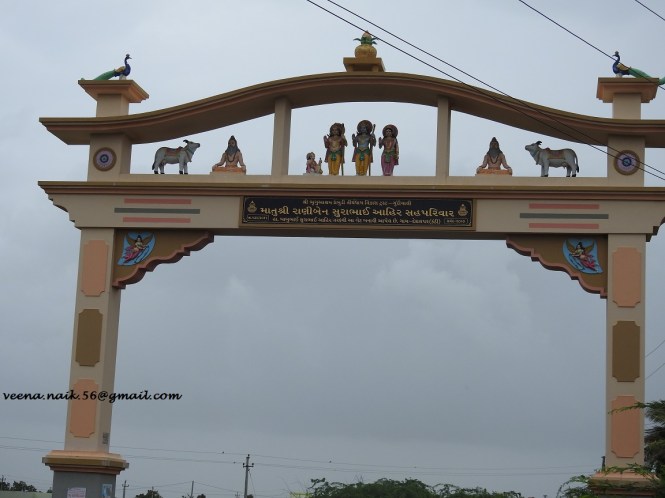
On the way temples galore.

1

2

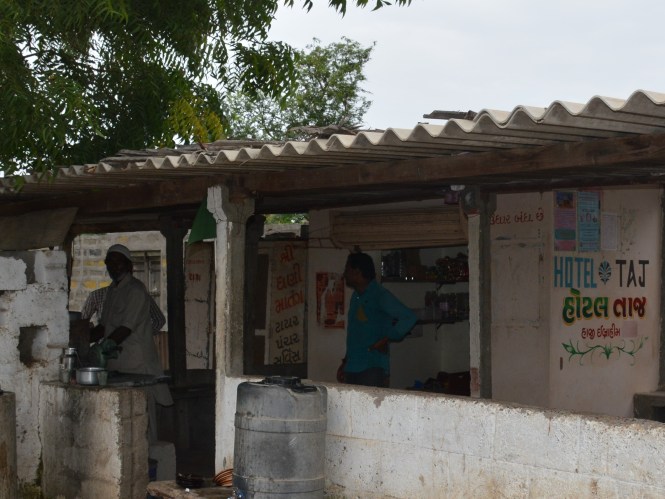
Temples are accompanied by Tea Shops serving the milky brew of rural life. This is haji Ibrahim’s shop at Nana Ladiya.

3

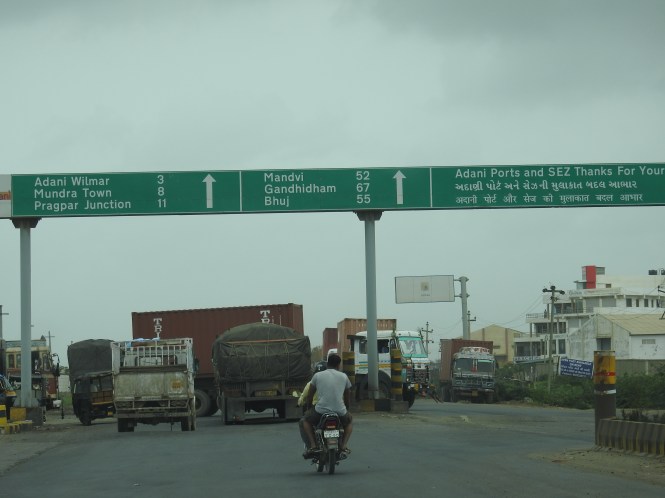
A part of the landscape is dominated by two power plants. One of Tatas and the other of Adani group.

4

5

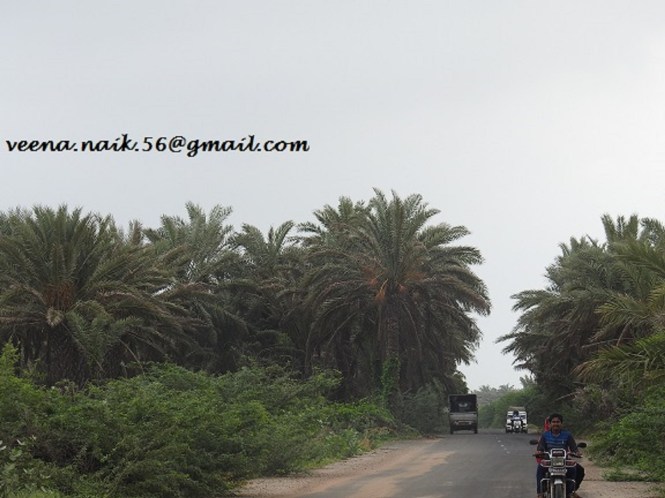
Once it was dominated by the Kharik palm, the dry date palm. It is still cultivated commercially.

6

It is green everywhere after the recent rains but one can see it is temporary. The dryness of the desert will return shortly. We arrive at Mundra and decide to skip the port area. Ports and industrial units are not on our agenda unless we get an easy access.

7

We move on through the old town towards the next place. The Bhandreshwar is an ancient Jain centre and an important Jain pilgrimage place. We have our lunch here. Rs. 50/- for Jains and Rs. 60/- for Hindus. The eating places are different within the same hall.

8

9

Bhadreshwar has a beach and a Diwadandi. I think the Gujarati word Diwadandi describes the structure better than the English word Lighthouse.

As usual permission to enter was refused.

DSC_6736

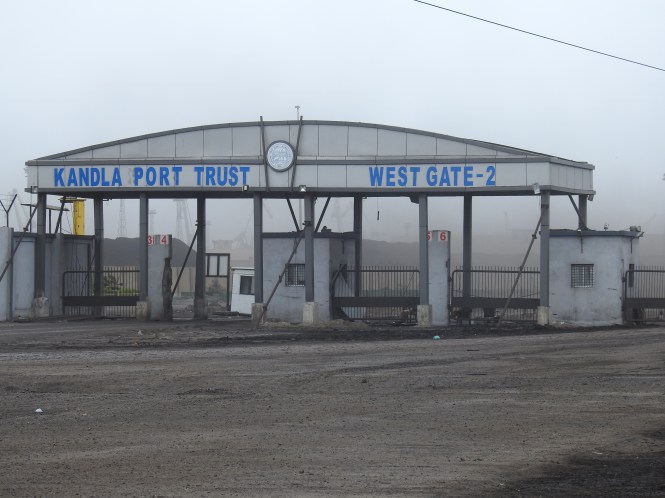
The next stop is Kandla. Looks deserted, almost a ghost town. This was once among the top five ports of India.

11

12

We look at the Diwadandi from a distance. Don’t want to ask for permission to enter.

13

One needs to go through the town of Gandhidham to reach Kandla. In fact, Gandhidham is the town and Kandla is the port. We stay overnight at Gandhidham after a long day on the road.

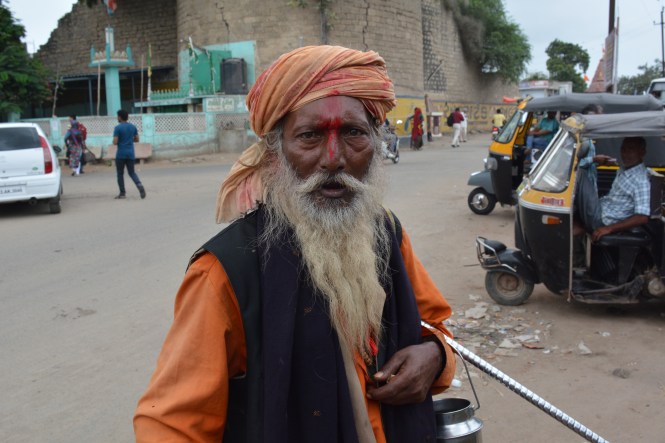
We found this man on the way collecting taxes in the name of Ashapura Mata.

14

Suryakiran Naik &

Veena Naik

24.08.2016

Ships of Mandvi

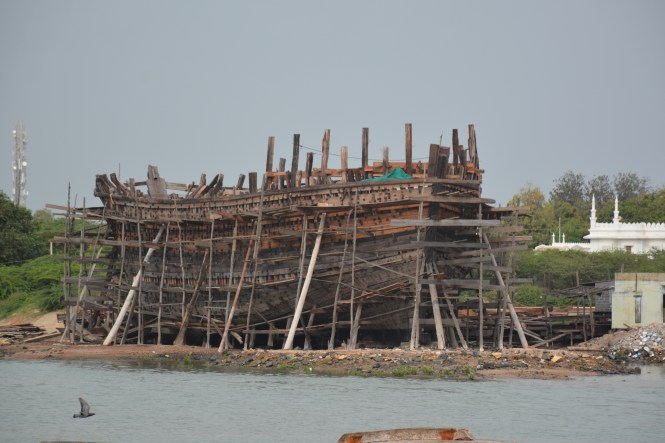
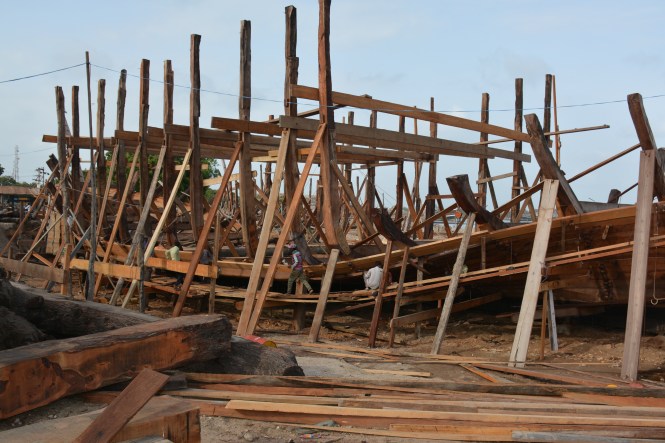
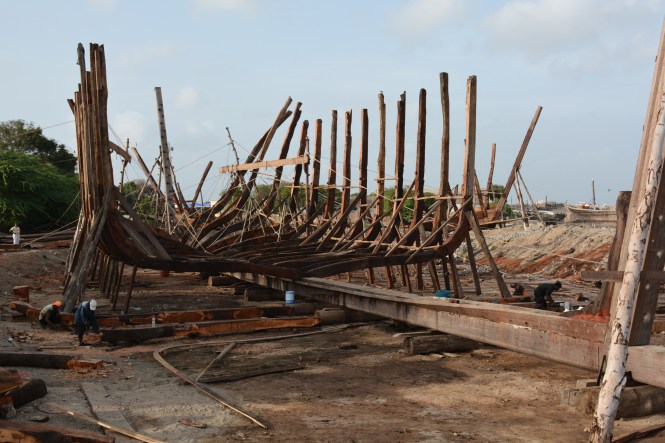
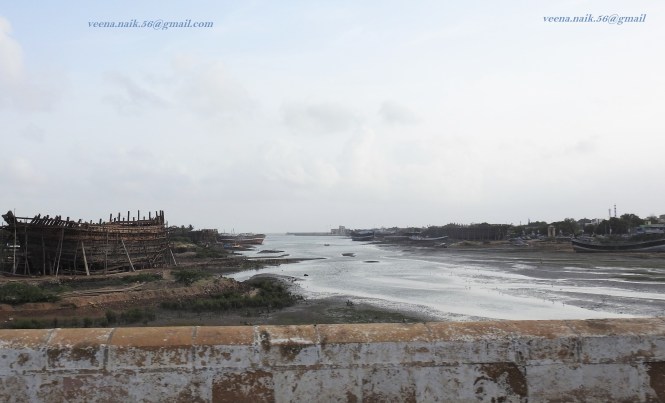
Shipbuilding at Mandvi is a part of the town’s heritage, I must say a major part of it. The craftsmen from Mandvi were known for their quality Dhows and other timber vessels which were used extensively in the western Indian Ocean trade involving Arabia, Eastern Africa and other ports within the Indian sub-continent. The activity and the tradition still continues although sails have been replaced by diesel engines.

1

2

Timber for shipbuilding on this scale is not available in the Kutch region. Most of it is being imported. Inquiries reveal that the labour is also not local, it is mostly from the East coast- Andhra Pradesh and Odisha.

3

Haji Hassan is among the ship-owners. He is a veteran seafarer and now owns three ships.

5

‘’ No, we don’t build ships for others. We build and ply them. It is just like owning trucks’’.

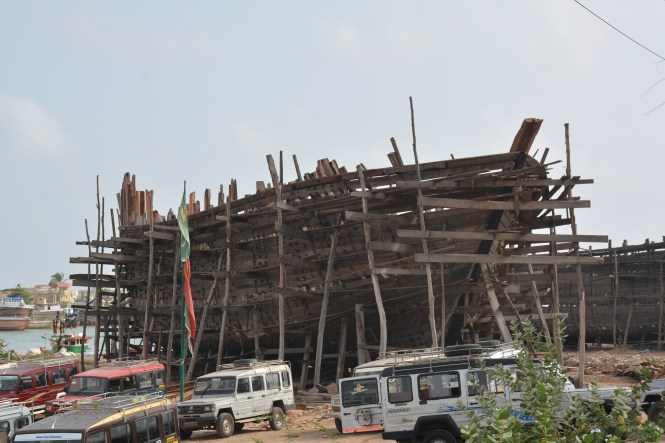
His 4th ship is under construction behind where he sits.

4

What is the life-span of these ships?

‘’ with good maintenance they can last a hundred years’’

Where are your ships plying?

‘’ the Gulf and East Africa- Mombasa’’

The construction takes up to 4 years and during this time the ship has to compete for space on the land with the other vehicles.

6

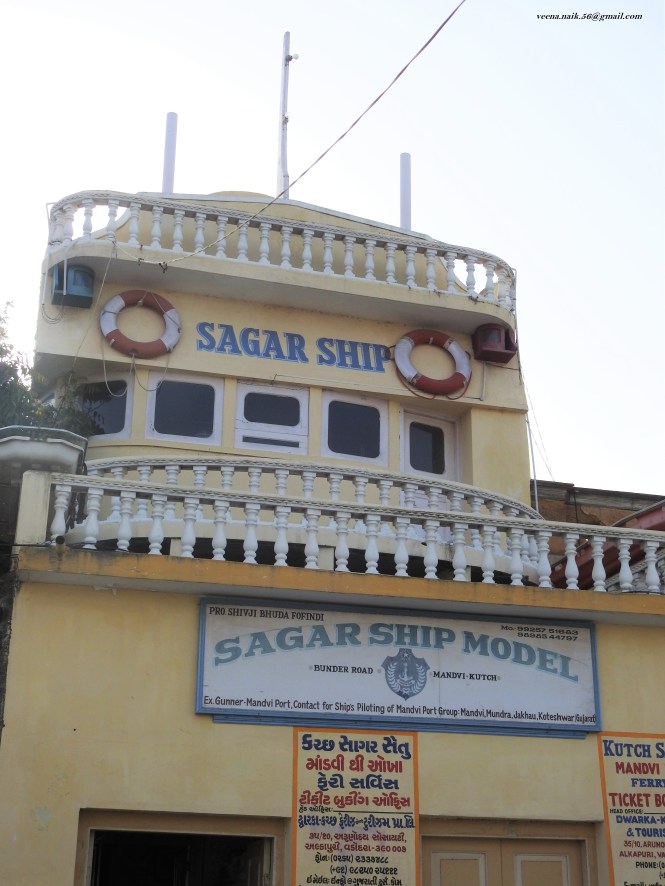
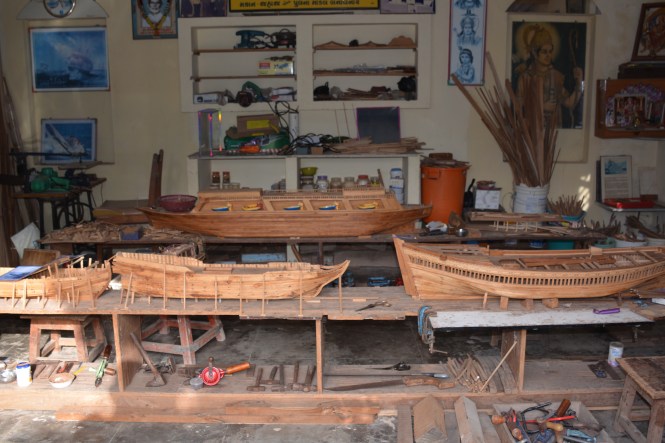
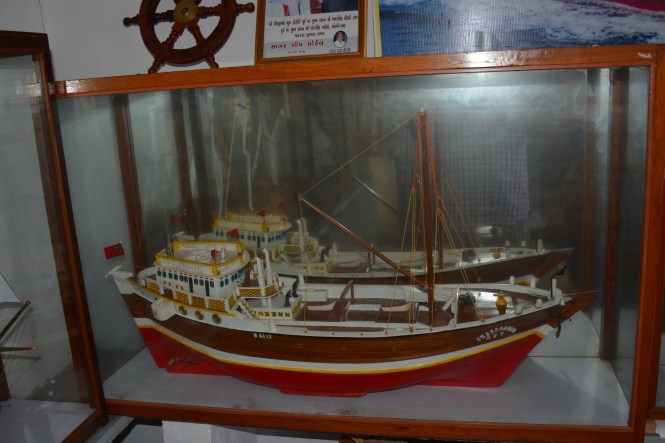
Less than a hundred meters from where Haji Hassan supervises his ship-building , young Nishant Fofindi is supervising another business started by his grandfather. It is called Sagar Ship Models.

7

Craftsmen are making scale models of various ships, not necessarily those made in Mandvi.

8

9

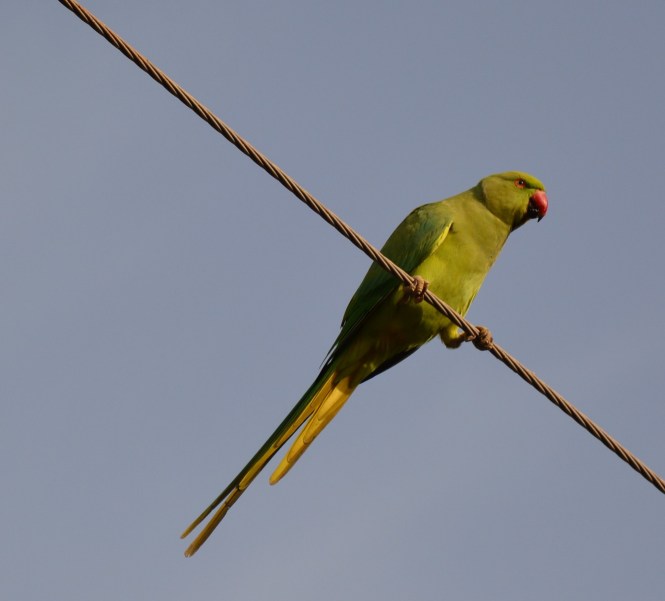
Outside, large number of parrots like this one supervise the work of makers of both types of ships.

11

Suryakiran & Veena Naik

22.08.2016   suryakiran.naik@gmail.com
 

Day 6. Mandvi.

Mandvi ( Continued)

Mandvi is a small town, a Tehsil town where river Rukmavati drains into the Arabian sea. There is not much to drain, it is almost dry.

a

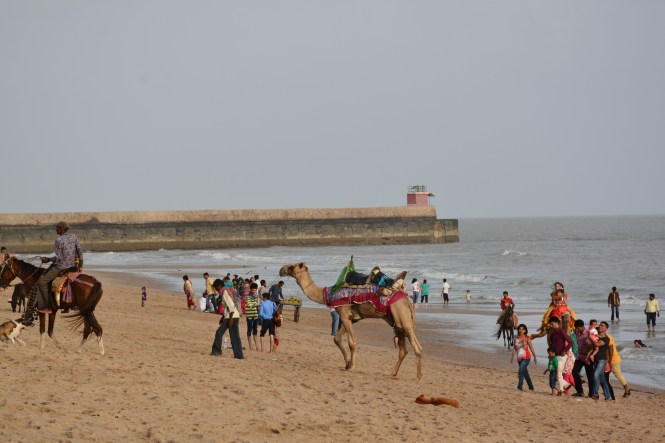
The highlights of the town are the beaches (various stretches on either side of the river). This one is called Windmill beach.

b

This one has a lot of dogs, camels and horses around.

c

A much better beach is not far from the city. The beach behind the Ashapura Mata temple at Laija is a wonderful stretch of endless white sand.

f

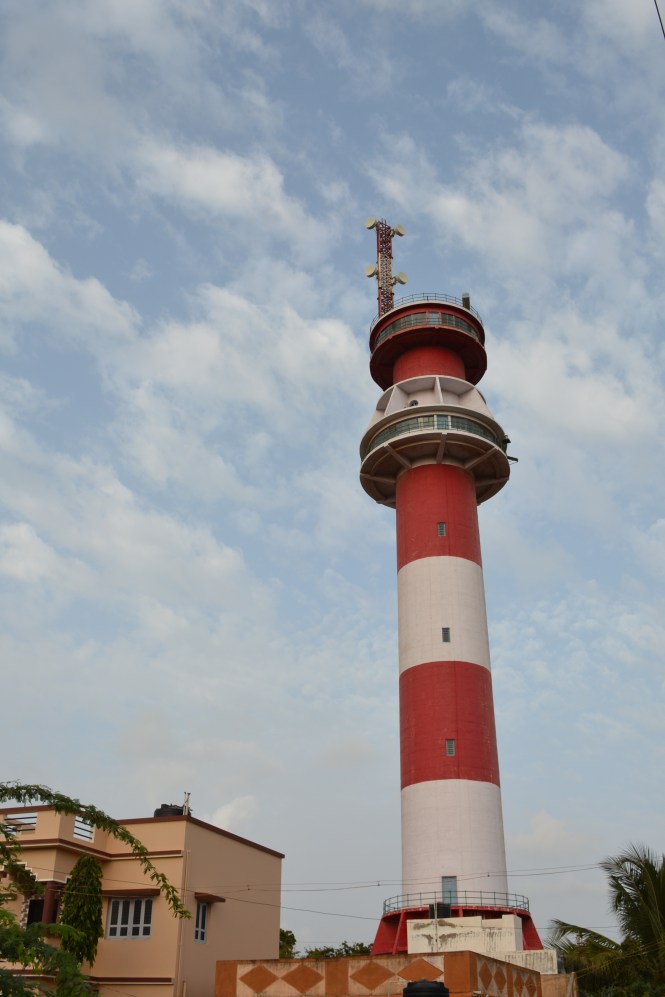
And the Lighthouse in the town. This is the rebuilt one. The original was destroyed in the last earthquake.

d

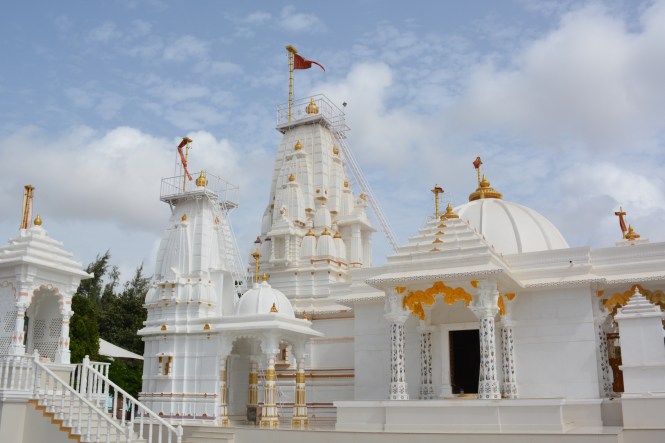
The famous Jai Ambe temple is at Godhra nearby.

g

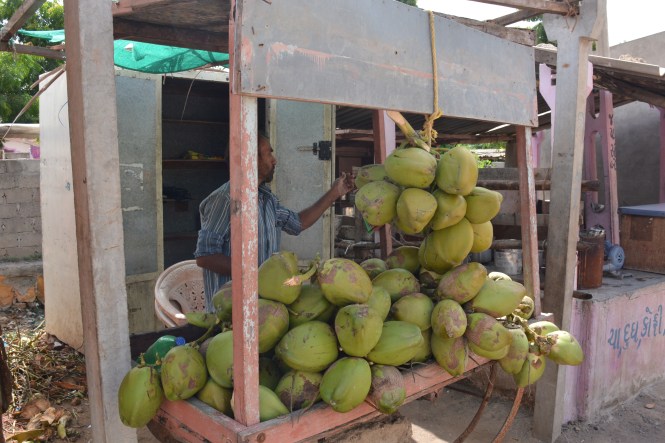
Green coconuts are sold here at Rs. 10/- apiece as against Rs.30/- at the beach near the city.

h

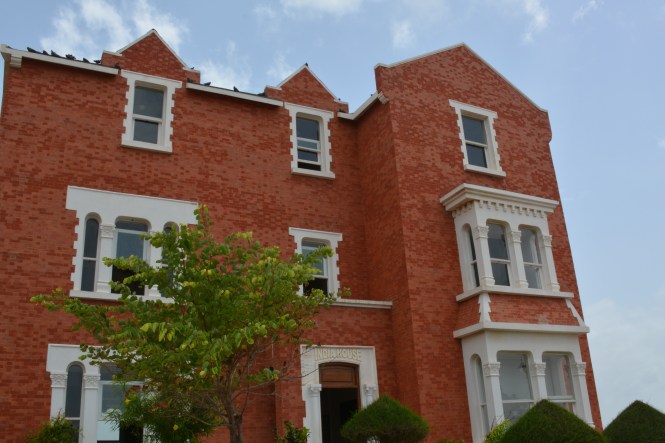
Kranti Tirth is the memorial to freedom fighter Shyamji Krishna Varma whose birthplace is Mandvi. It is located outside the town in an extremely well laid out site and complete in all possible facilities. The memorial includes a full size replica of India House in London from where S K Varma carried out his activities.

i

Mandvi has seen better days than it does now. It used to be a busy port trading with East Africa, Persian Gulf and other ports in the Indian sub-continent.

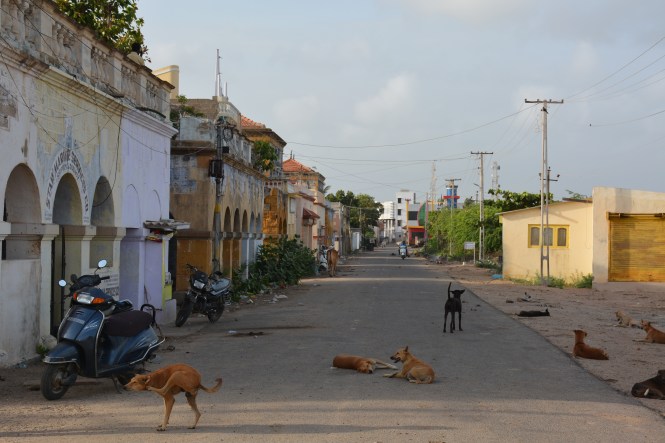
The Brahmapuri waterfront with the Customs House at the end should have been a busy place once but is now deserted except for the numerous stray dogs. The Customs House is still operational as is the port. Bureaucratic arrogance prevents us from entering the place.

j

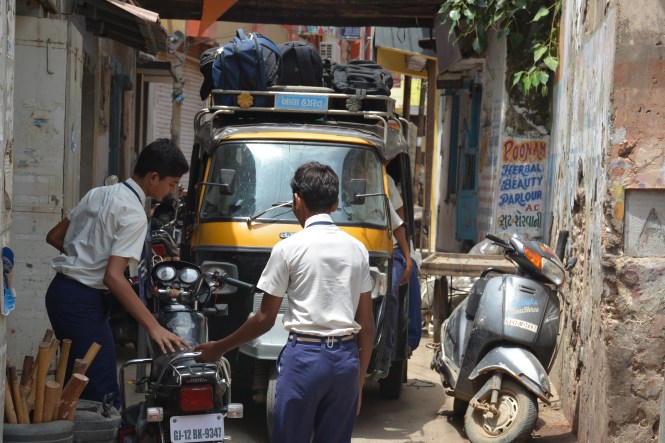
The inner city which was once inside quite a large fort is congested like most other Indian towns. The student passengers of the rickshaws have to clear the road of other vehicles to allow theirs to pass.

k

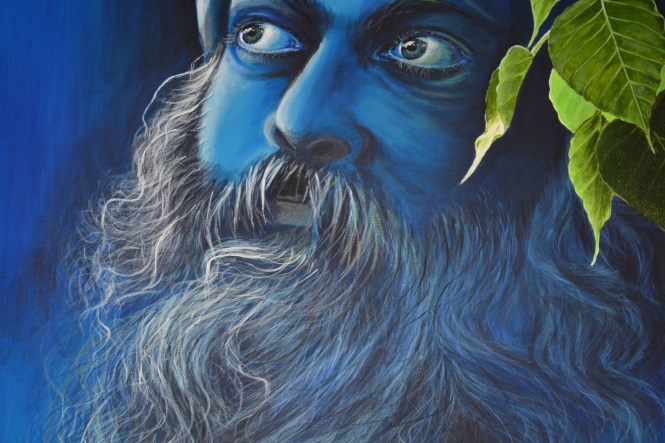
The best known eatery in Mandvi is called OSHO. The pictures we took inside did not come off well except the one below which is the picture of a picture behind the cash counter. Here you can eat as much as you can (vegetarian food) for Rs. 110/- . In fact the staff and the owner make the rounds of the tables forcing people to eat.

l

There is one more aspect of Mandvi which needs to be looked at in a bit more detail and hence I keep it for the next Blog.

Thanks for reading.

Suryakiran Naik & Veena Naik

21.08.2016

Day 5. Naliya- Mandvi

We have done with much of Naliya and its surroundings. We are about to leave when we hear about a Heritage Village surrounding an old fort built by Jadeja rulers at a place called TERA, about 15 Kms. from Naliya. We decide to have a look. It was a disappointment. There is nothing like a Heritage Village except for the tourism department’s sign post at the entrance to the village. With some difficulty we could access the Fort. It was closed, locked. We could see the cows through the chinks in the main door. It is quite clear that it is used as a cowshed. Nobody could tell us anything about the fort and it’s history.

reva fort

reva 2

The next place we are going to visit is Mandvi, another historic place and an ancient trading and shipbuilding centre. But before that we need to visit a Lighthouse which is located between Jakhau and Mandvi ports. The Lighthouse is about 18 Kms. from the Naliya- Mandvi road. Finding the place was an adventure. The lighthouse is majestic, the beach in the front is alluring and the babhul forest between the Lighthouse and the village is amazing. The person in-charge of the Lighthouse stays alone at this place, the nearest human beings about 2 kilometres away in the Chhachhi village

Chhachhi

Chchachi Lighthouse

During the return journey we lost our way and wandered in the forest for about an hour until Abbas rescued us and showed us the way out of the maze. He left his buffaloes and came to show us the way out. He refused to sit in the car. He has a phobia of automobiles. Does the English language have a word for this?
abbas

Even the smallest villages in Kutch offer extremely good quality tea, made on coal fire. Here is such a small place between the Lighthouse and the main road.

cha

Back on the main road, the drive to Mandvi is a pleasure on the beautiful, smooth and straight road. As we enter Mandvi we get the first glimpse of the Coconut palm since we started. For those born in brought up in Goa, like both of us, the seashore is unthinkable without the coconut palm. However, the first about 150 kilometers of Indian coast does not have coconut palms. The ones appearing in the picture are tall plants and one of them has grown in a Zigzag fashion.

coconut

We start looking at  Mandvi shortly after our arrival. This is the bridge on Rukmavati river which divides the town into two parts- one in the old fort (which no longer exists) and the other side, on the way down south towards Mundra.

Mandvi1

The Vijay Vilas Palace of the Jadeja rulers made famous by Bollywood movies ( including HDDCS) is billed as a highlight of the town. It is located about 3 kms from the town.

Vijay Vilas

Vijay Vilas2

On display in the palace are many photographs, paintings, stuffed animals hunted by the Maharaja. The admission to the palace is as under. At the gate for the vehicle rs. 20/-, visit to the palace Rs. 30/- (pp) , Still Camera Rs. 50/- Mobile camera Rs. 15/-, Movie camera Rs 100/-. They are not abreast of the technology.

Among the displays is this beautiful painting.

VV3

On the way back we came across this group of deer. The rainwater accumulated in the ditches attracted quite a few species of birds as well.

hiran

Mandvi is an interesting place. Will touch on the remaining aspects in the next post.

20.08.2016
suryakiran.naik@gmail.com


Day 3 & 4. Naliya, Kutch.

The distance from Narayan Sarovar to Naliya is only 68 Kms. but it is an interesting drive through the desert and within a short range of the Arabian sea and several industries.

A short distance from Narayan Sarovar and within it’s village Panchayat area lies GUHAR MOTI or GUHAR MOTA or simply GUHER as per the official records. If correct, the importance of this place lies in the fact that it is the western-most INHABITATED village of India. There appear to be BSF observation posts beyond this but no permanent settlement.

My equipment recorded the co-ordinates as under:

23.630172, 68.581296 Or

23d 37’ 48.6’’ N, 68d 34’ 52.7’’ E

DSC_6437

A few more kilometers south your map shows you Harudi Lighthouse. It also appears on the list of Lighthouses on the website of the Directorate General of Lighthouses and Lightships. One starts looking for it without any success. Our inquiries with the village elder reveals that there is a ‘Diwadandi’ nearby but it does not have lights. He directs us to the place nearby. Yes, we find it shortly to get the explanation for the absence of the light in the ‘Diwadandi’. No, it has not been shut down. It is merely a signal relay station and not a typical Lighthouse. The officer at the station was very helpful with the explanation of how it works.

DSCN2152

(In fact we had missed these two items when we travelled from Narayan Sarovar to Naliya on 16th and drove back to-day, 18th to cover the gap)

17th August.

Spent the first half day looking for a single species of bird. The Great Indian Bustard. It was an unsuccessful search at three different locations covering a vast area. No. Nothing. We had to satisfy ourselves with some commoner birds and this pretty hare jumping.

hare

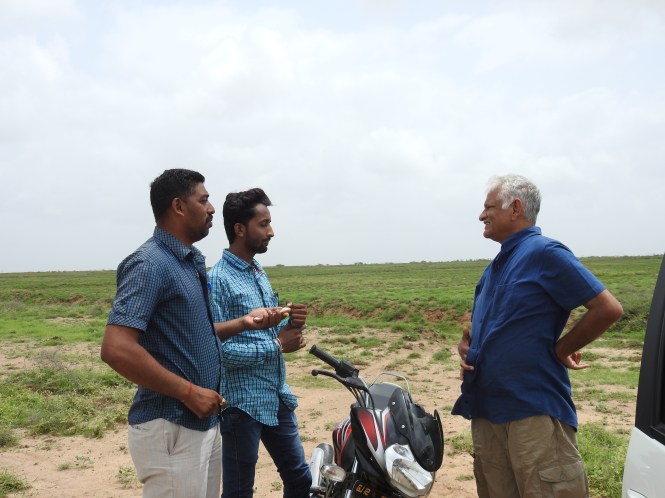
These two local guys- Charan Sinh Gadhvi and Ram Gadhvi spent a lot of time looking for the bird in the vast grassland which is being developed as a sanctuary. Our sincere thanks to them. Ram later on helped us with our internet connection. Charan is a lawyer, Ram works for Vodafone.


Gadhvi

The next location nearer to Naliya is Jhakau (pronounced more like Jhako by the locals). It is an ancient port known to have traded with Arabia and Eastern Africa including Zanzibar. This place also appears to have been a victim of changes brought about by nature- the sea, earthquakes etc. Now it is difficult to believe that this place was once a thriving international port. Salt transportation appears to be a major activity.

salt

This place also sports the tallest lighthouse in India at 46 meters. The one on the left is the new one. The older one is on the right. It looks brighter as it is freshly painted.

Lighthouse

This place also appears to be the first place on the western coast of India to sport a mangrove forest. The species of mangrove here in the creak is very short in size. We found some people fishing mud-crabs using a fishing line, not nets as is the practice on the southern part of the coast.

Mangrove

This Blog appears to be about a lot of records. First the western-most village, then the tallest Lighthouse, perhaps the western-most Mangrove forest. Now let us wind this up with the northern-most and western-most sea beach of India. It is called PINGLESHWAR.

beach

There is the temple of Pingleshwar Mahadev two kms. before the beach. One is expected to make an entry in the register maintained before driving to the beach. When asked the reason for the same, the security person explained that it is because people go to the beach to commit suicide. I spent a lot of time wondering how maintaining the register will prevent people from committing suicide and what about those who can walk to the beach?

Pingleshwar Mahadev

The Gujarat Police use this vehicle for Coastal Patrolling.

tractor

Thank you for reading.

18.08.2016