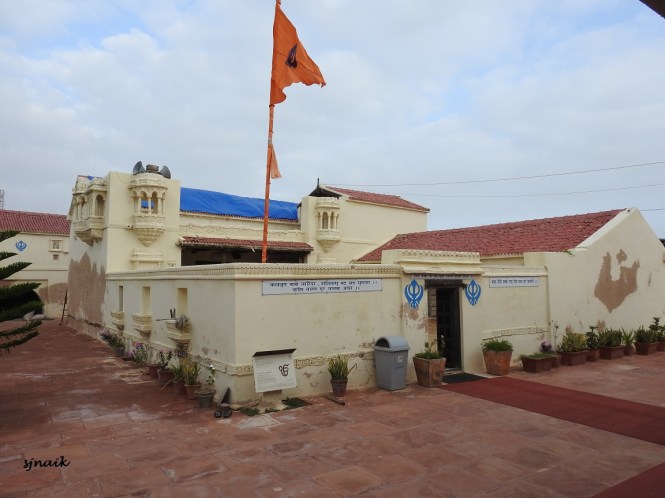
Day 2. Narayan Sarovar

Narayan Sarovar & Koteshwar Mahadev Temple.

After a delightful 38 kilometres’ journey through the post-monsoon greenery of the Kutch scrub forest, we reached our next station- Narayan Sarovar. In fact, this part was designated a wildlife sanctuary but was later on de-notified to accommodate Lignite mining. A 250X2 MW power plant can be seen from the road towards the west. The highlight on the vegetation side are these white mushrooms seen almost everywhere. Later on we were told that this is an edible species of mushroom. Edible when it is young and not fully spawned as in this picture.
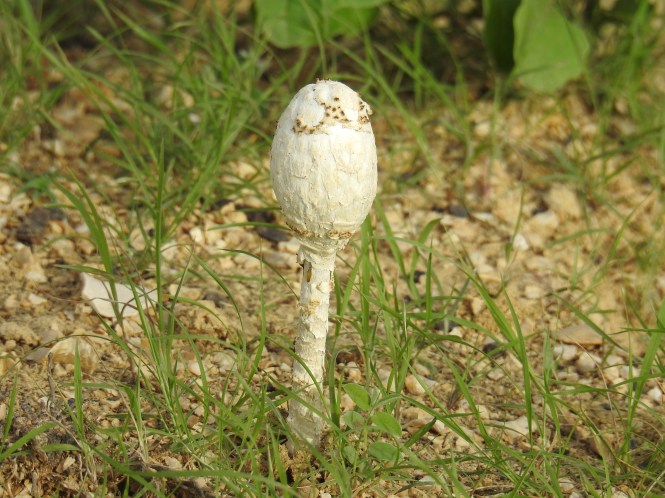
mushroom

Narayan Sarovar has quite a bit of history and religious significance as it is claimed to be one of the five Holy Lakes of Hinduism. However, there is not much of water because of changes in the landscape.

Narayan Sarovar

N Sarovar

More visible and equally important temple is one of Koteshwar Mahadev, 2 Kms. from Narayan Sarovar.

Before starting from Pune, we had checked on this place on the internet. The Wikipedia article provided the valuable information that it is an ancient Shiva Temple. There is a tendency to call most temples ‘ancient’. It is high time we define the term ‘ancient’. The more damaging information provided is ‘ Koteshwar Shiva is said to be Bhairava of Hinglaj Mata residing at Hinglaj. The virtuous devotees are therefore recommended to visit Koteshwar after they have visited Hinglaj Mata’. This looks quite simple until you learn that Hinglaj Mata currently resides 250 kms north-west of Karachi in Balochistan. As this place is beyond my means to visit, I decide to become a non-virtuous devotee. As an atheist I am entitled to this non-compliance anyways.
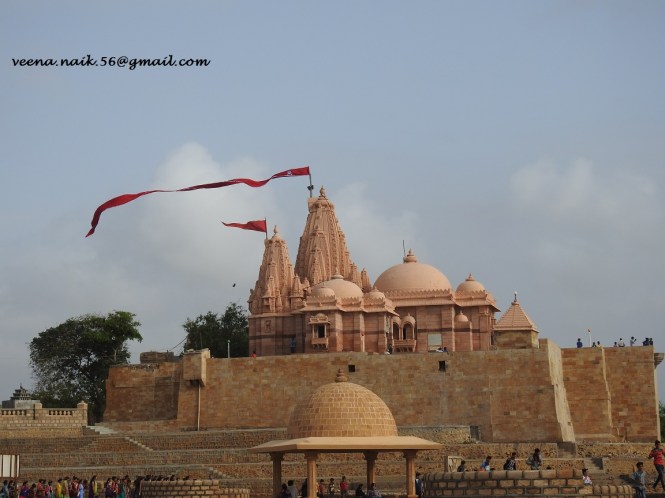
Koteshwar

The seashore near the lake is an important fishing harbor. The boats however are laid off for the Monsoons. They will back to the sea on 17th the full moon night.
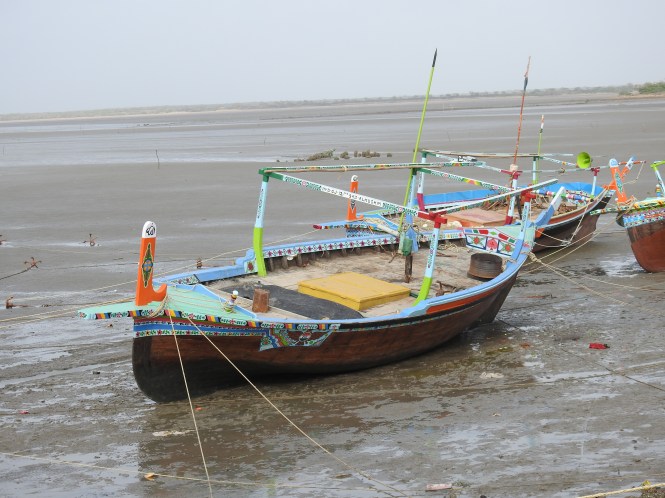
fishing boats.

The place between the two temples have a specimen of a more modern architecture- a Lighthouse. This lighthouse happens to be the western-most and northern-most on India’s coast. Presently under the guard of Border Security Force and one cannot possibly go up to see the view from the top. We were shooed away.
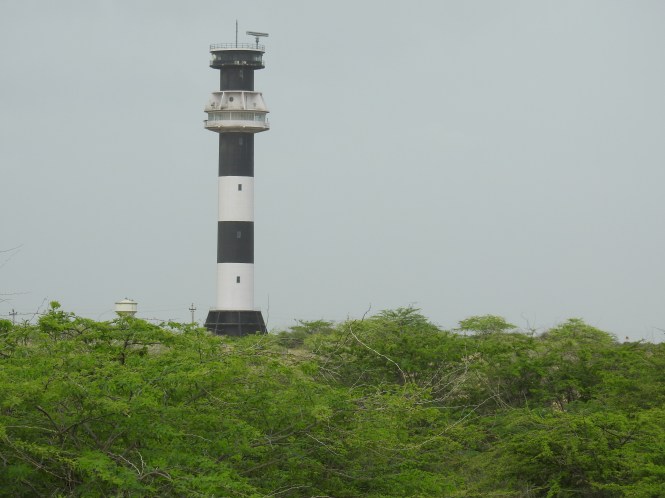
 Lighthouse

After the previous night at a Gurudwara, we spent this night in the accommodation attached to the Narayan Sarovar temple. Neat and clean place and at Rs. 200/-, thanks to the donors to the temple. Food is free for all twice a day, hence there are no eateries except small tea & snacks stalls.

residence

Day One. (Part 2.)

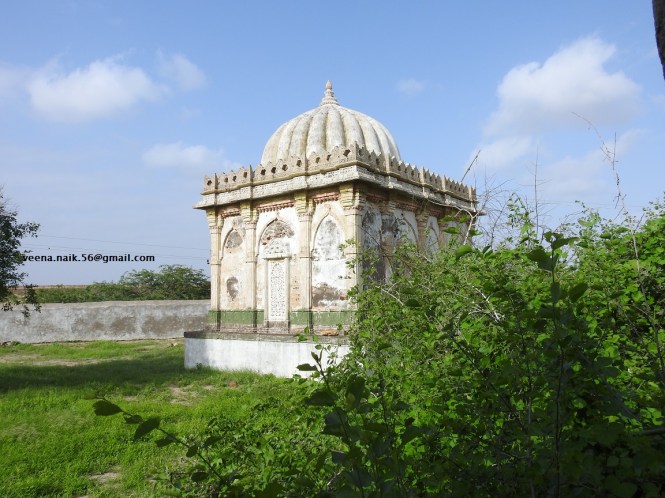
Apart from the Gurudwara , various temples and mosques, the Fort has two Dargahs of Sufi saints.

The one of Ghous Mohammed is majestic and has beautiful carvings in stone.

darga1

and with the dargah of Pir Kamalshah form the Sufi heritage of the place. Mr. Usman Notiyar who resides in the fort is  a guide and is well- versed with the history of the Fort. Everyone knows him and he can be easily reached.


darga2

Here the expedition starts. The vehicle and the driver are ready, the national flag is flying, people are having their tea in the right-hand corner.

take off

The National Bird is present in large numbers inside as well as outside Fort Lakhpat, that’s how they write it in Gujarati- Kot Lakhpat.


peacock

At a short few kilometers there is this distraction on the roadside. Two Mongooses. Veena says they were fighting. I have my reservations. I think they were up to something more serious. Please see the pictures and let us know.

mungose

mungose2

We look forward to your comments.

17.08.2016

Day One

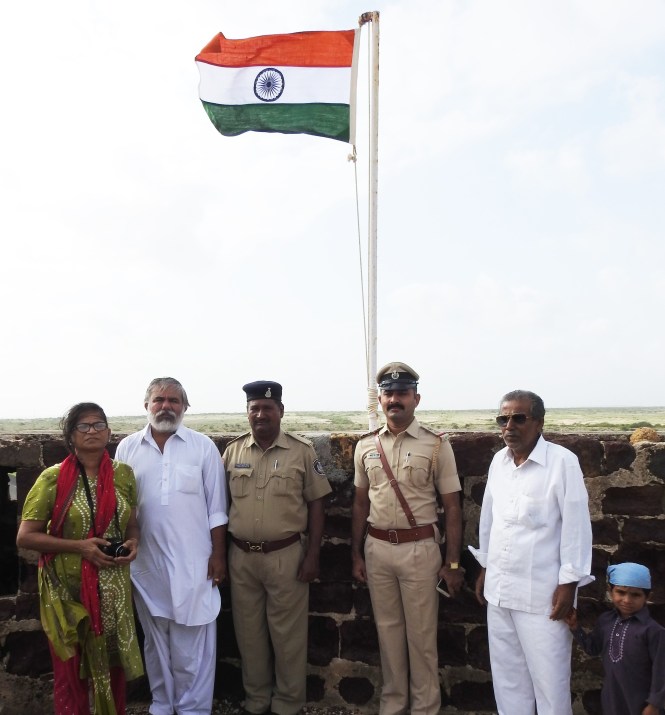
TheBlueDrive Our expedition along the coast of India started yesterday, the 59th Independence Day of India. The starting point is the place Lakhpat in the district of Kutch in Gujarat. We started off after the flag-hoisting on the fort in the hands of Mr. K B Zala, the police inspector in charge of the place


flag

One interesting information we received here is that the flag hoisting on the Lakhpat Fort and Red Fort at Delhi has to take place precisely at the same time. Mr. Narendra Modi and Mr. Zala have therefore to act in great harmony and precision. I hope they achieved it.

Now, why Lakhpat? Is it the westernmost point of India? No. the westernmost point is Guhar Moti which is a little down south in the same district. Is it the northernmost along the sea? Perhaps not if you consider the Arabian sea proper. The sea is starting a bit down south again but the creeks and marshes along the coast can be easily considered part of the sea. The Sir Creek is the disputed boundary with Pakistan.

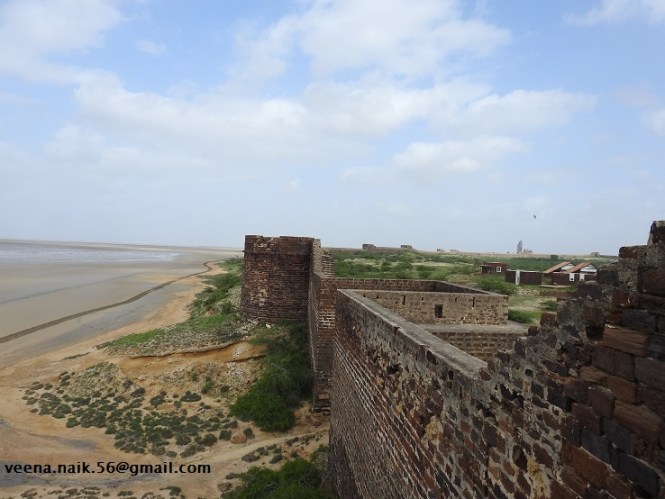
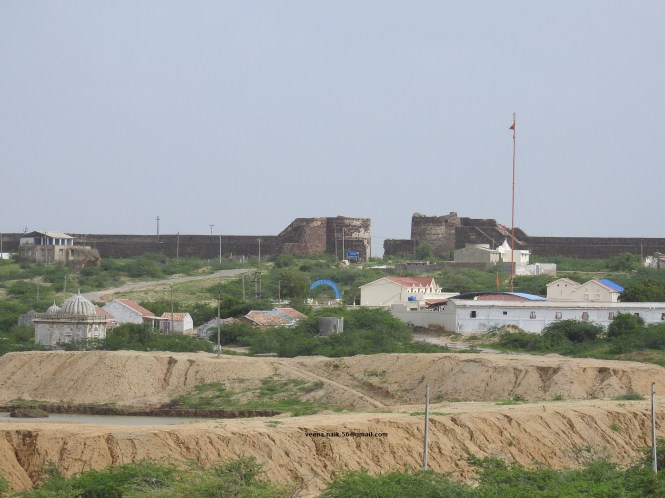
What made us to decide on Lakhpat is the fact that it is a named village with a civilian road nearest to the westernmost point of India. And then this place also has a lot of history and a huge fort.fort2

Lakhpat used to be a prosperous town which acted as a border between Gujarat and Sindh provinces of colonial India with the Sindhu river flowing near Lakhpat. Looking at the terrain now, one can’t believe this place was used for rice cultivation in a big way. After an earthquake 197 years ago the Sindhu river decided to change her course and flow from a more northerly place in Sindh, leaving Lakhpat and its surroundings a desert which now forms a part of great Rann of Kutch.  2011 census recorded 566 souls inhabiting the village in the fort. One cement factory (or its remains) lie abandoned not far from the Fort. The places beyond are under the care and control of Border Security Force, being close to the Pakistan Border.

fort1

The small village boasts of a Fort with 7 Kms. long walls (1801 vintage) couple of Tombs of Sufi saints, a temple and a Gurudwara. The last is quite interesting. It is said that Guru Nanak stayed at this place on his way to Mecca for Hajj. It is not clear if this was a route for Hajj pilgrims in those days in the 16th century AD. Perhaps it was used to get into Sindh and then proceed towards Arabia by land route or simply to reach one of the Gujarat ports with sea route to Arabia. The Gurudwara hosts the palkhi and the wooden sandals of Guru Nanak.gurudwara 1

We stayed here the night of 14th August. The Granthis and others in the Gurudwara are very hospitable and helpful. We had lunch and dinner at the Langar. This was our first time to be in a Gurudwara.

gurdwara2

When did Guru Nanak visit this place? According to the Granthi at the Gurudwara it was in 1512-13. I guess he meant the round trip. When asked how the Guru travelled, the Granthi said it was by way of the Arabian sea, ruling out the possibility of a land route. 

We are at a place called Naliya in Kutch. The internet connectivity is bad. Cant upload pictures. Will try again to-morrow with the remaining part of this blog.

16th August 2016.


The Start

Great people have explored land from the sea, idiots. We are exploring the seas from the land. Starting from 15th August 2016 we start driving along the coast of India and exploring Arabian Sea, Indian Ocean and the Bay of Bengal.

Why?

  1. How does one get to eat all kind of seafood? Fish, shellfish, seagrass, all kinds of weird marine creatures which are not frozen, F R E S H ?
  2. How does one see different kind of sea beaches with different kind of sands, colours of sunsets, collect different species of shells? See and photograph wide variety of Birds- local and migratory visiting the seashores?
  3. How does one see the different fishing methods and fish varieties and piscine cuisine without paying a fortune?
  4.      How does one see the architecture of forts, temples, mosques, churches and other monuments along the coast?
  5. How does one see the mysterious Lighthouses which can exist only on the seashore and nowhere else?
  6. (please add) or send me an e-mail

Obviously, one can’t do all the above from the comfort of an armchair. One needs to travel along the coast. There appear to be no railway train service or Airlines service meeting our requirements. The options left are Walking or Cycling (ruled out by our age) or Driving. This is precisely what we are doing. Covering the Arabian Sea, Indian Ocean and the Bay of Bengal abutting India over the next 18 months subject to our survival. Bad health and Bankruptcy are other possible causes of discontinuation.

We will be writing periodically about what we see and post photographs of what we see. Your comments and suggestions are welcome.

Our friends are welcome to join us for limited duration trips or Holidays, if not for the whole journey. We will be keeping you informed of our whereabouts and the calendar for the next week.