26. PIPAVAV GAM, VICTOR BANDAR, CHANCH, MAHUVA, UNCH KOTADA, GOPNATH

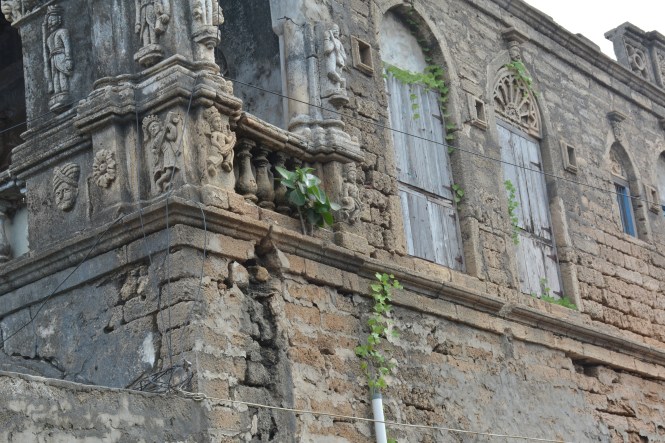
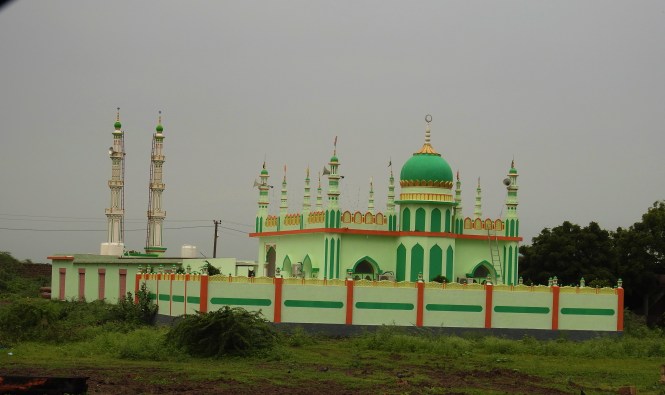
We start the day at Hindorma near Rajula, district Amreli. Within a short distance we come across a signpost showing Pipavav and a temple. This is the original village VAV , a step well after which the village and now a major port is named.

1

2

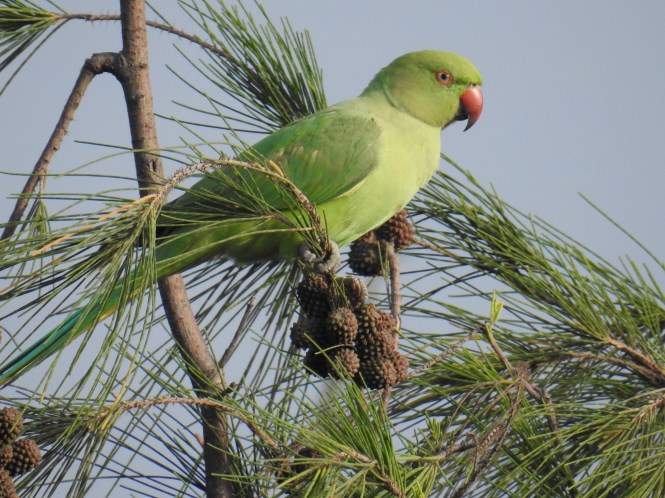
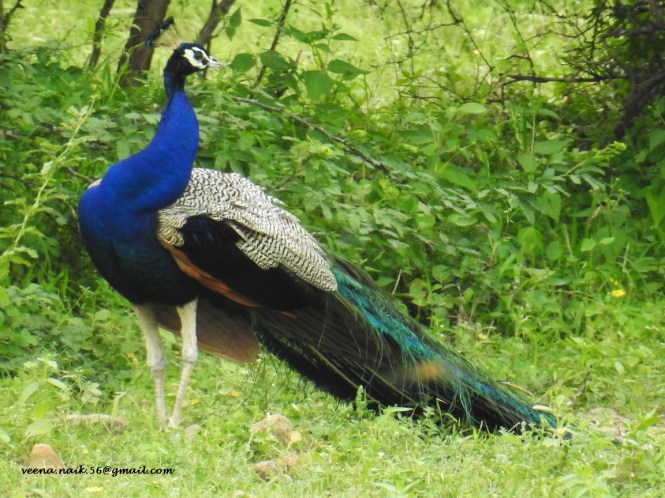
and the peacocks in abundance. This one is making a pass at the cow.


3

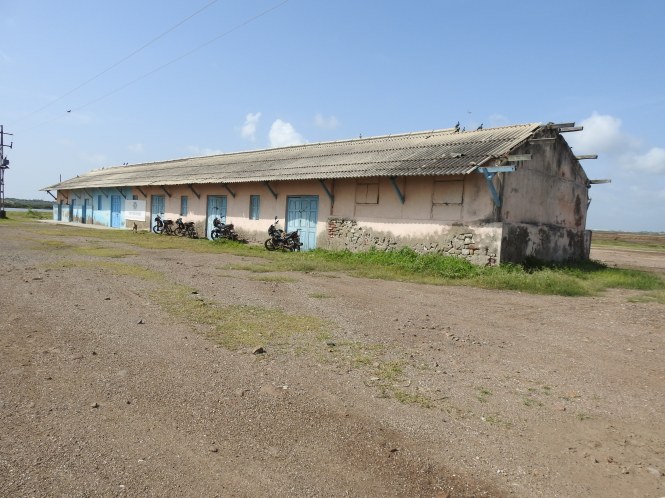
As we drive towards Bhavnagar ( not knowing where we will close the day), we come across a huge signage showing directions to Victor Bandar or Port Victor, an unusual name for a place in Kathiawad. As suspected it turns out that this place is named after an Englishman. We could not find the full story. We drive on 1.5 Kms of cement road and then through 2.5 Kms of field of ditches knee deep to be told that the port is dysfunctional or nearly so. There is a small signpost and entry is not restricted. An old office block indicates that there was some economic activity here in the distant past.

4

5

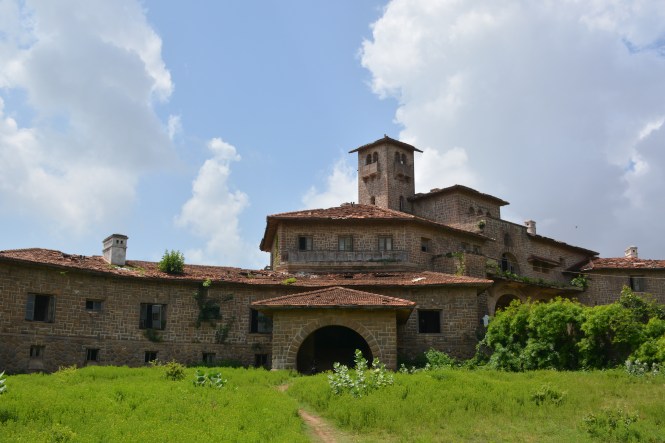
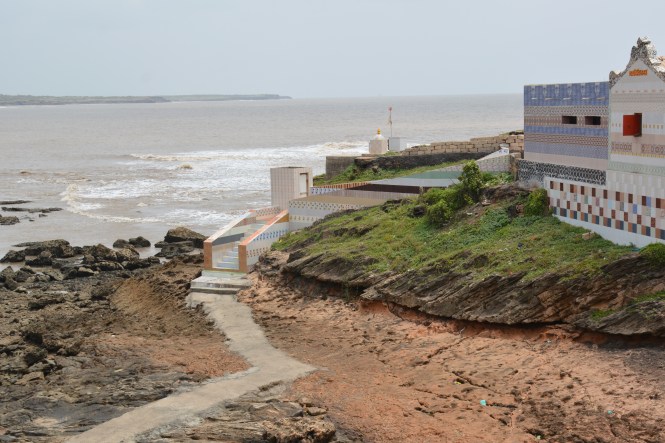
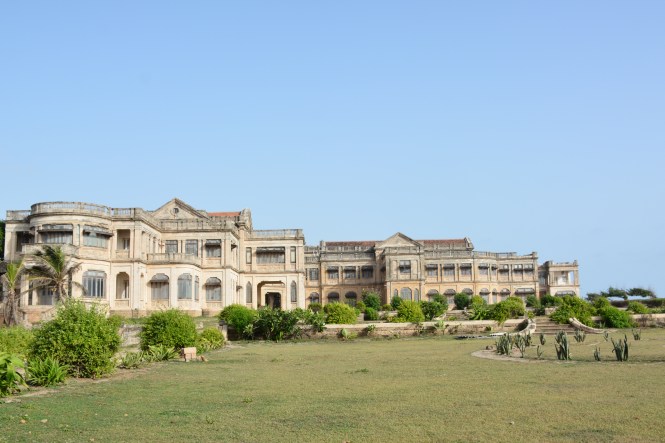
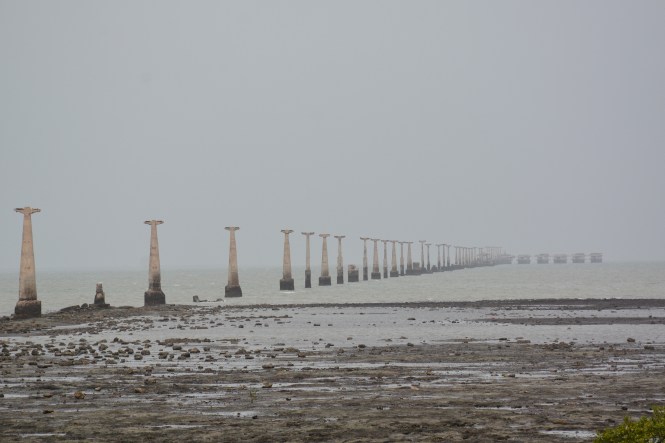
This place is on a creek, not on the seashore. What attracts our attention is an oldish looking structure well beyond the other side of the water. The creek can be crossed by a boat which can take a motorcycle, not a car. But then this structure is very attractive, it is on the seashore and must be seen. Our research before starting had not revealed any such thing. At least it is not in my notes. Google map also fails to reveal anything. We make inquiries with the people at the crossing. Yes. It is a palace and the place is called Chanch and is also a port or used to be a port for transporting salt in good old days. How do we go there? ‘Go back to the main, drive towards Bhavnagar about 20 kms, take a right turn and drive another 16 Kms’. In the event, this drive revealed something which you do not find on the internet, at least we did not. An 84 room palace of the Maharajas of Bhavnagar, built in 1945. Not in a very good shape internally but cannot be called dilapidated. It has excellent view of the sea but does not have a beach. It is on a cliff and overlooks the Arabian sea. We are told that it has been sold to be developed as a Heritage hotel.

6

7

8

9

11

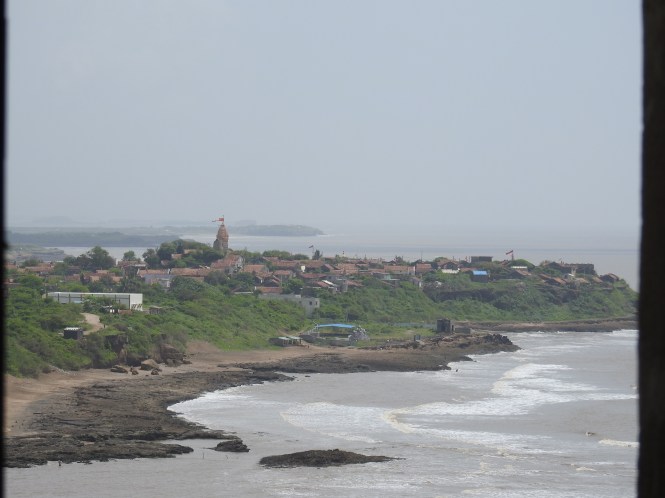
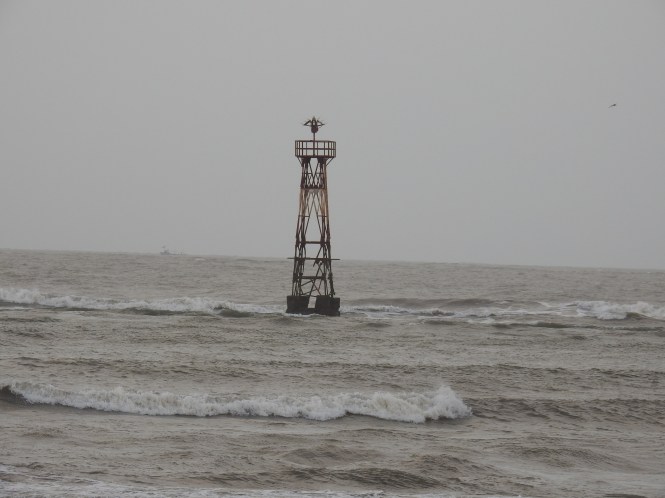
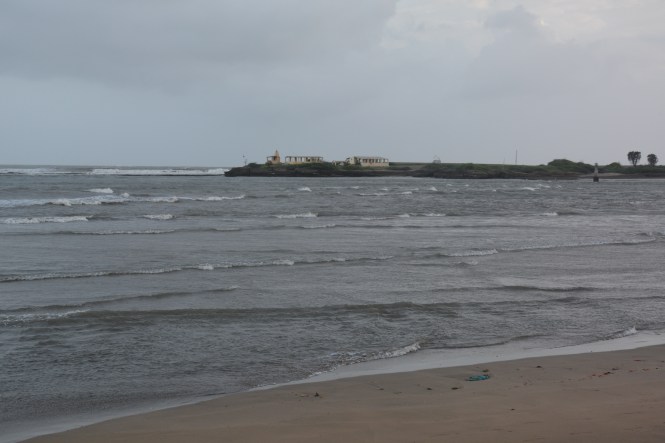
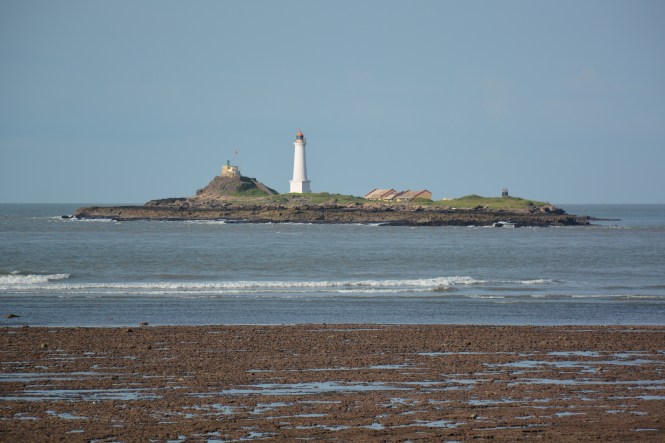
From the huge galleries of the Haveli, as it is called locally, one can see Pipavav Port, Shiyalbet and also another smaller island behind Shiyalbet. This smaller island is not visible from the Pipavav Port side. It has a Lighthouse.

13

12

We come back to state highway and drive towards Bhavnagar. At around lunchtime we come across Mahuva town. We decide to look around the town and spend the night here as accommodation is available, Mahuva does not have much to write home about but the outskirts towards the west have some beautiful places.

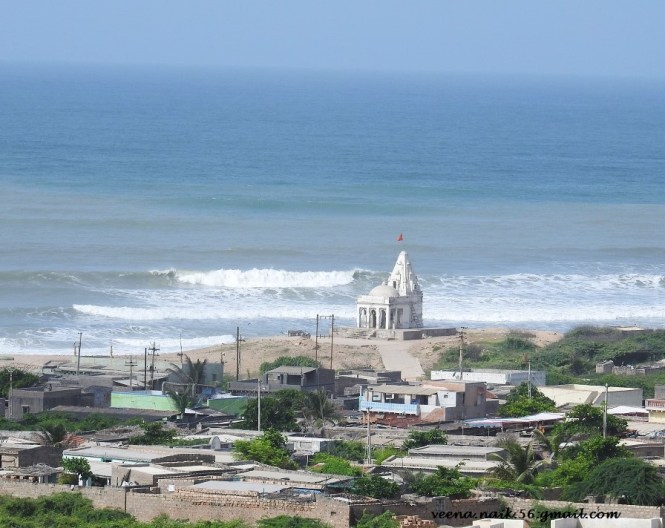
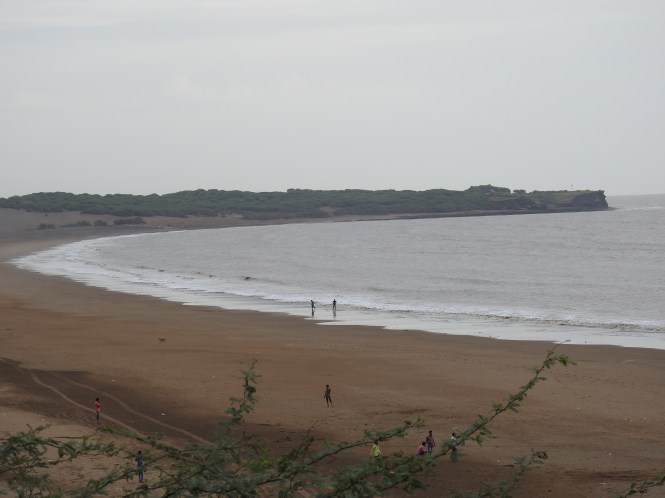
Bhavani Mandir on a cliff on Bhavani Beach is worth visiting.
14

15

Childless couples make an offering of these little wooden cradles to the Goddess for the desired result.

16

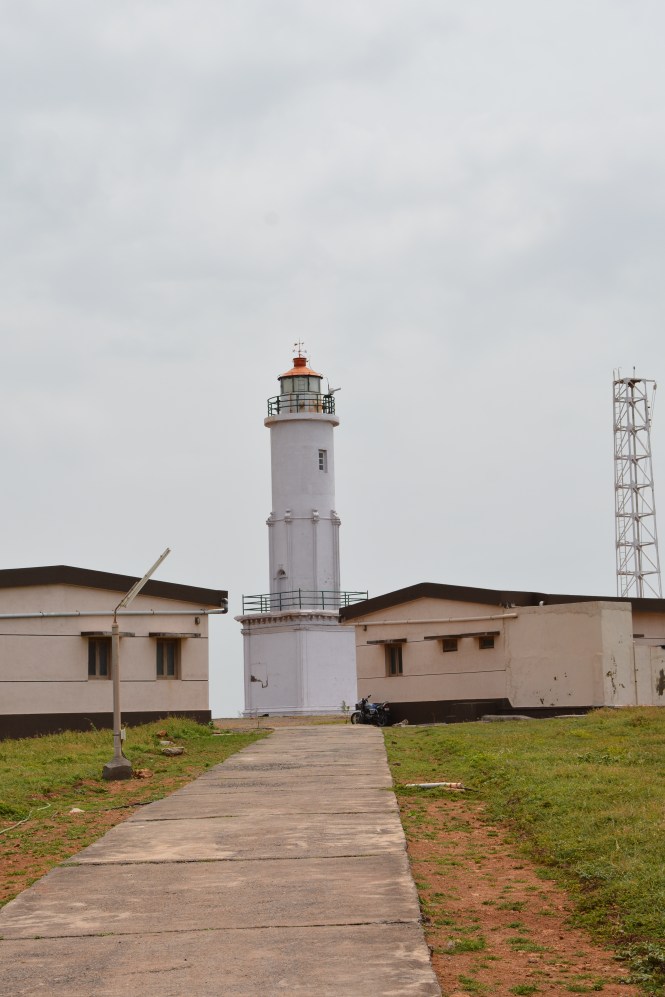
This lighthouse called Jegari on the hill opposite the temple take us some time to reach as we have to return to the town  and drive again in the same direction but from another place. The Lighthouse surprised us by saying that we are welcome and we bought the visit tickets, camera tickets etc. The next moment they tell us that we cannot go up as the lights have already come on and the regulations do not allow us to climb up at this time. We have to come back tomorrow evening at 4 pm. This information is revealed only after we buy the tickets for Rs. 90/-

19

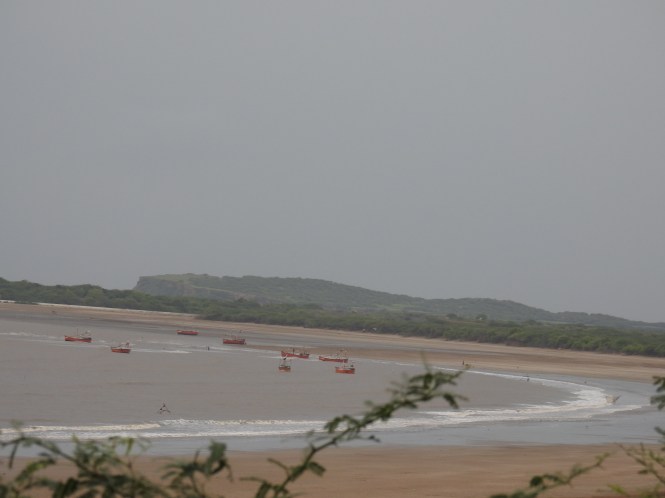
The port of Mahuva is a minor port and it has silted and used only for fishing boats.

20

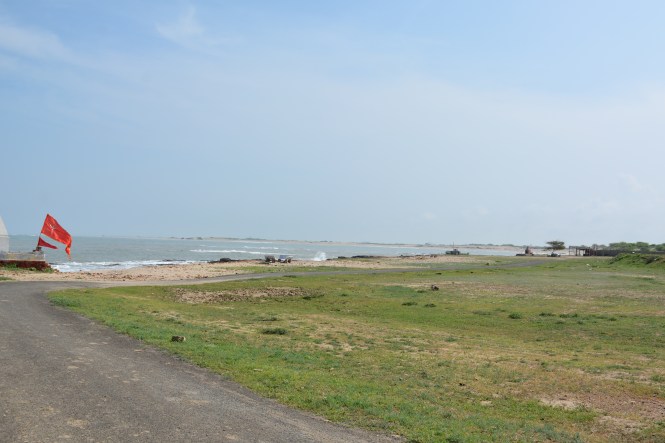
The next day (Saturday, 10th Sept.) we leave Mahuva to see Unch Kotada, a town by seaside famous for a temple complex and a beach. We drive on the smaller village roads nearer to the seashore instead of taking the better roads connecting cities.

23

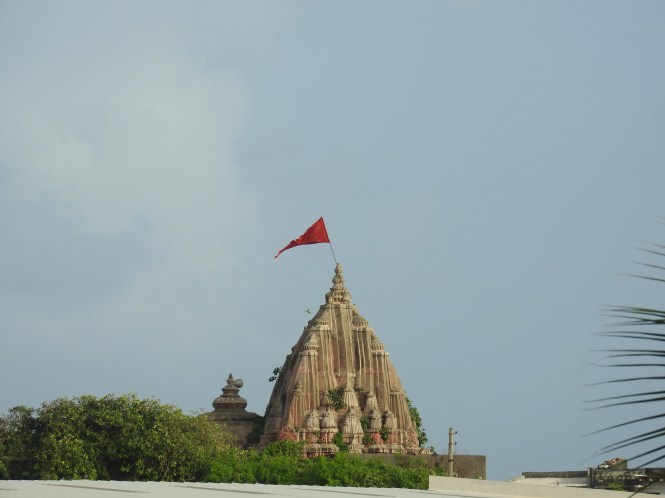
Practically every village which has a seaside has it’s own temple, especially if it has a hill or hillock. The main temple is on Unch Kothada a hill but one can drive up there. One cannot see the sea clearly from there as a wall surrounds the place.

22

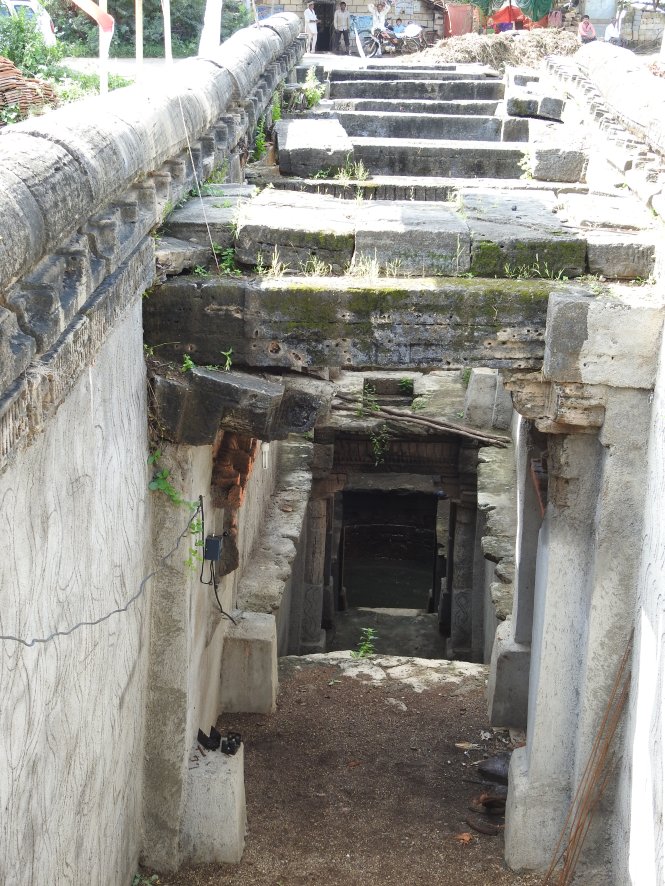
Our next station is Gopnath. On the way we find this step well (Vav) at Vejodari. The Vav is an important institution in this part of the world often accompanied by a temple. The Vavs have been kept alive even at those places that have piped water.

24

25

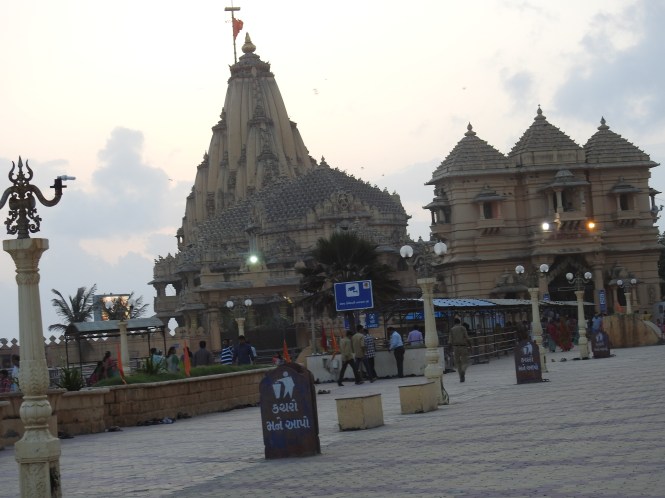
Gopnath or Gopnath Mahadev is known for it’s temple (s) and the sea shore.

26

27

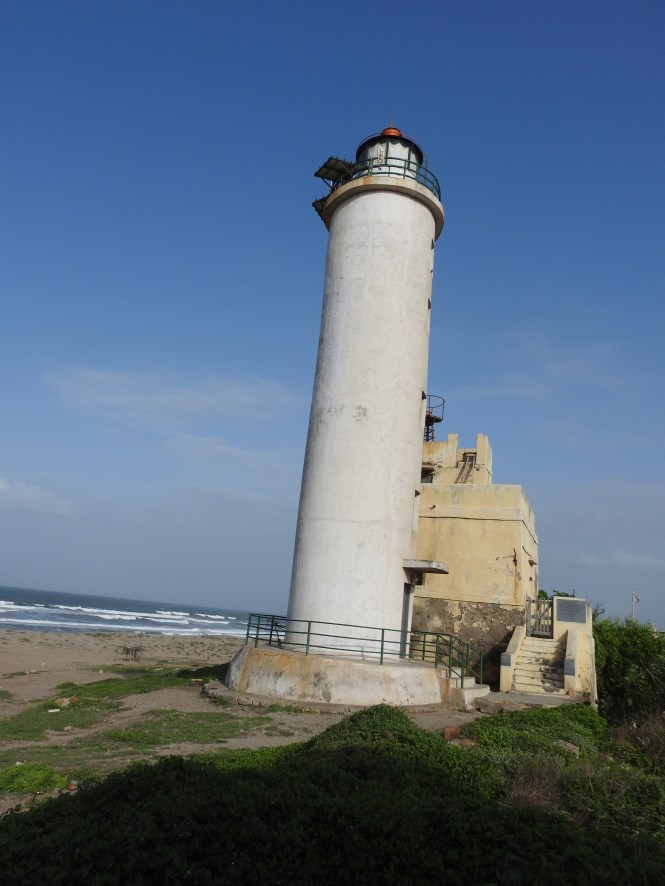
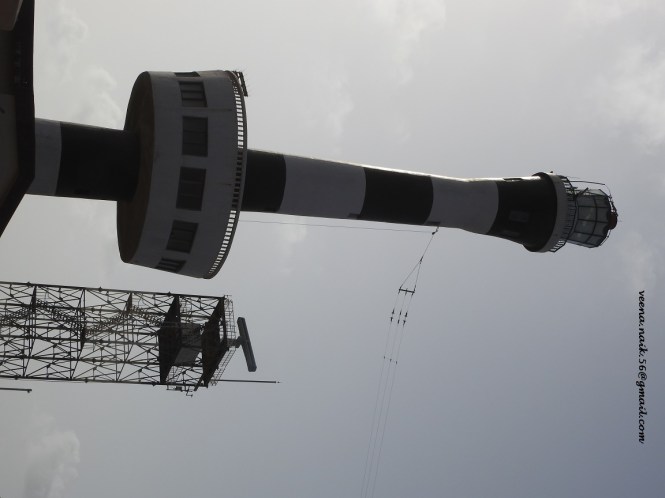
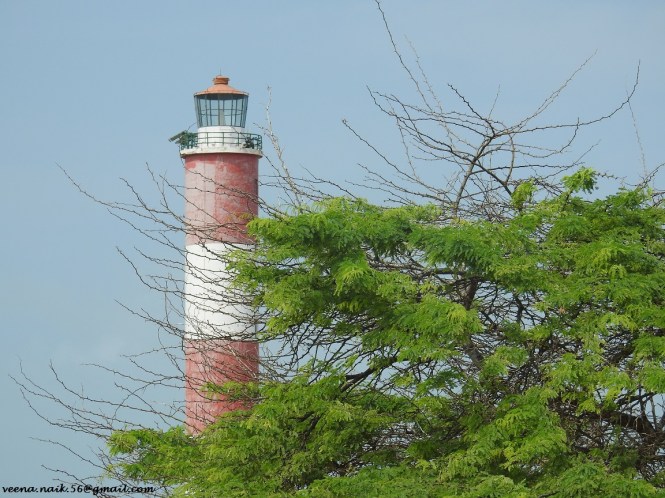
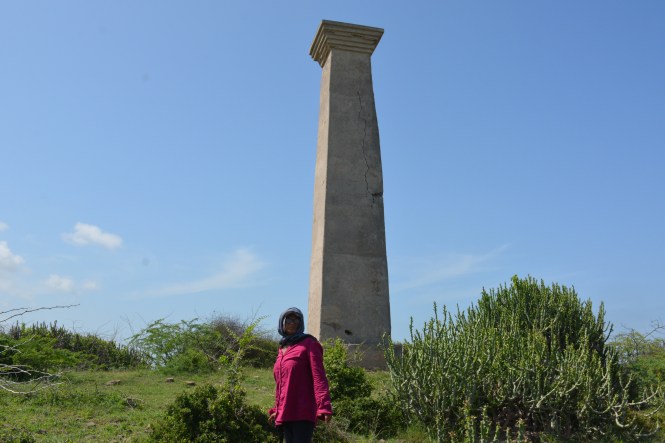
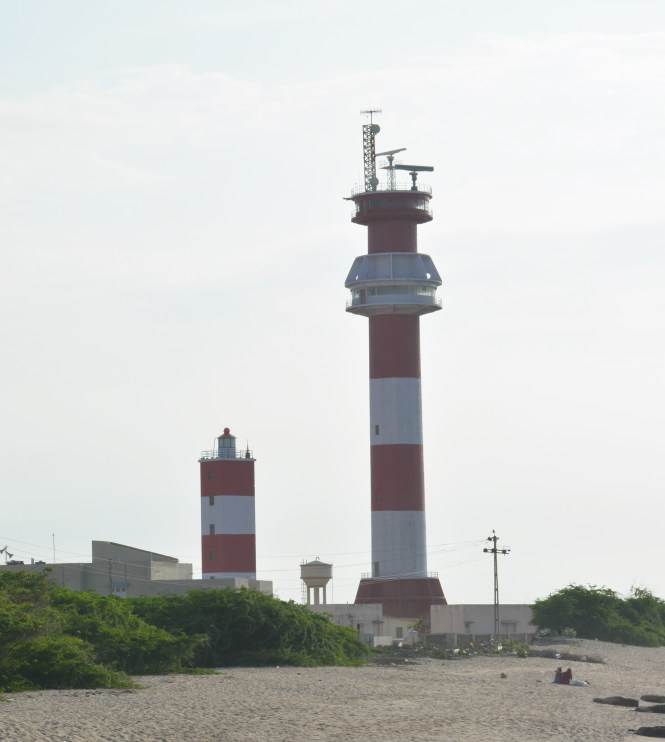
It also has a Lighthouse. In fact this place had a lighthouse during the reign of the Maharajas. The remnants of the old one can still be seen.

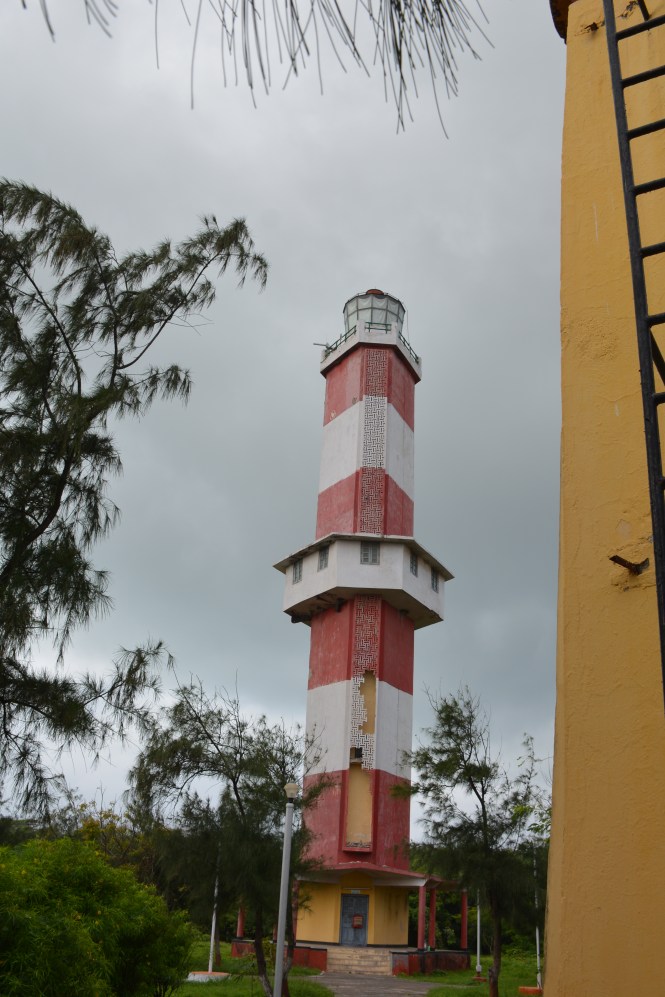
The new operational Lighthouse:

28

The old one.

dscn4671

The ‘Floating Stones; is a major attraction in the temple complex.

dsc_9415

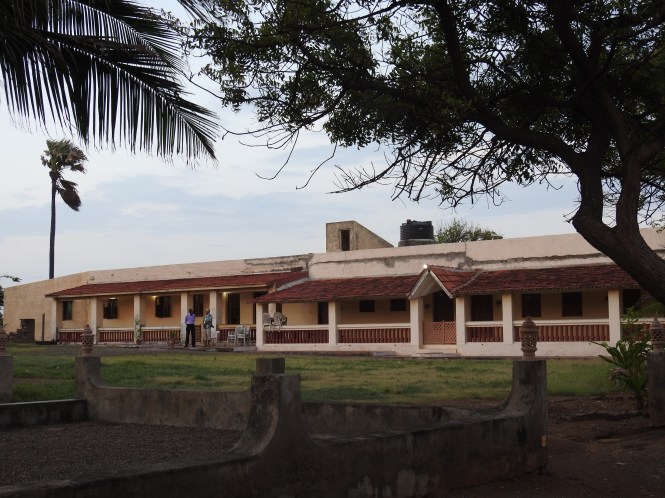
The interesting part of Gopanath is that it has hotel accommodation. An old property overlooking the see belonging to the Maharaja of Bhavnagar has been converted into a hotel.  We decide to spend the night here to have a feel of how the royalty spent it’s time or rather where they spent their spare time. The manager of the hotel  Mr. Ajay Singh treats us well.
dscn4658

9th &10th September 2016

Posted on 1th September 2016

suryakiran.naik@gmail.com


25. GUPT PRAYAG, JAFARABAD, PIPAVAV, SHIYALBET .

We leave Diu early in the morning and proceed to the next place which could be either Nava Bandar or Gupt Prayag with a little early morning thrown in as bonus. Delvada is the junction on the way from which these two places are to be accessed.

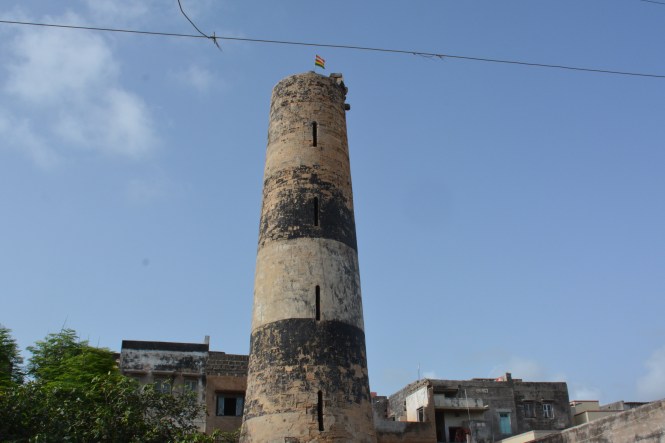
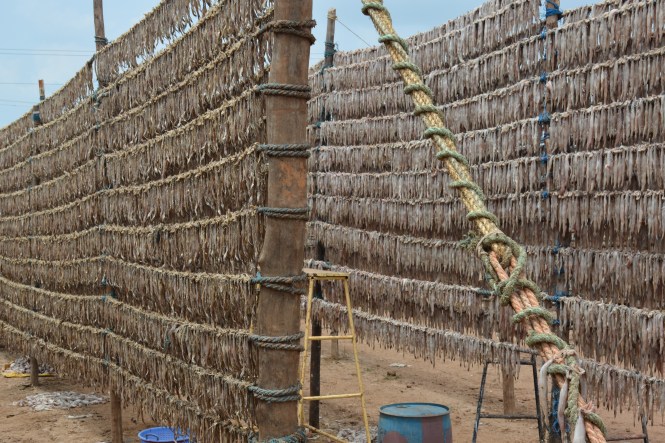
As things turned out we make it to Nava Bandar first. Another fishing harbour, another Lighthouse another mosque. Nothing out of the way except that the method of dying fish hanging by ropes starts from here.

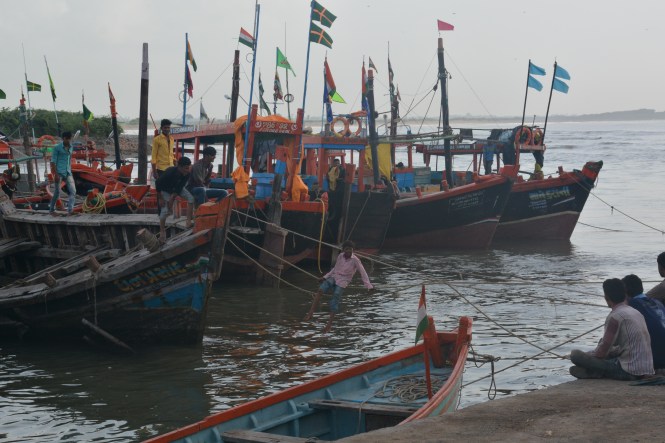
The first picture shows how people go to and from the fishing boat.

1

The Lighthose

2

The Mosque

3

4

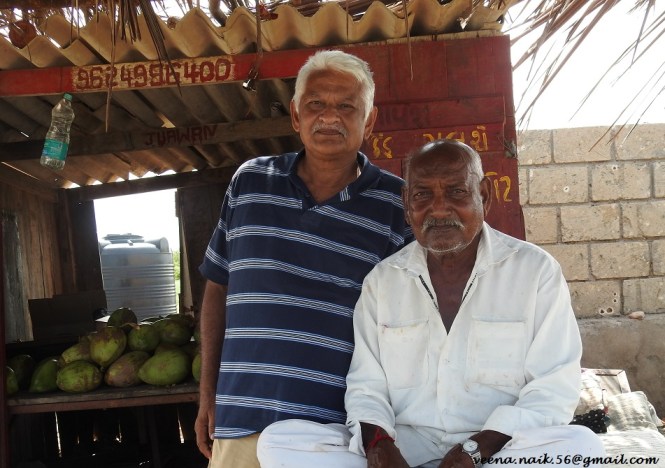
Back to Delvada for a refreshing green coconut at Rs.10/- each. Move on to Gupt Prayag. It has a temple or temples and a story. Lord Vishnu disappeared from the rest of the world and lived here for one year. This is the story told locally and we have no means of verifying it at the moment.

5

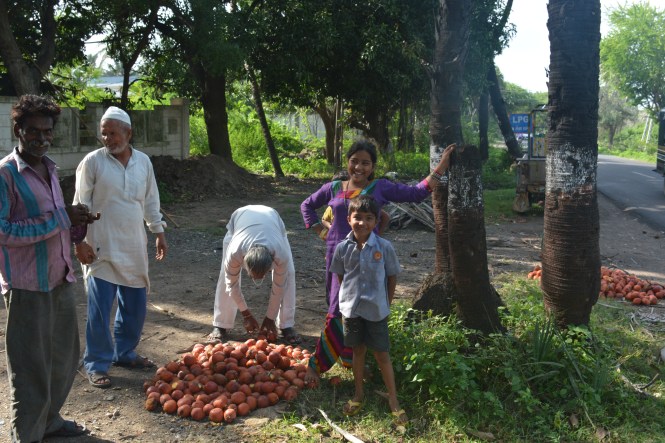
Back to Delvada and towards Jafarabad. On the way we witness harvesting of nuts of another palm called Hoka.

6

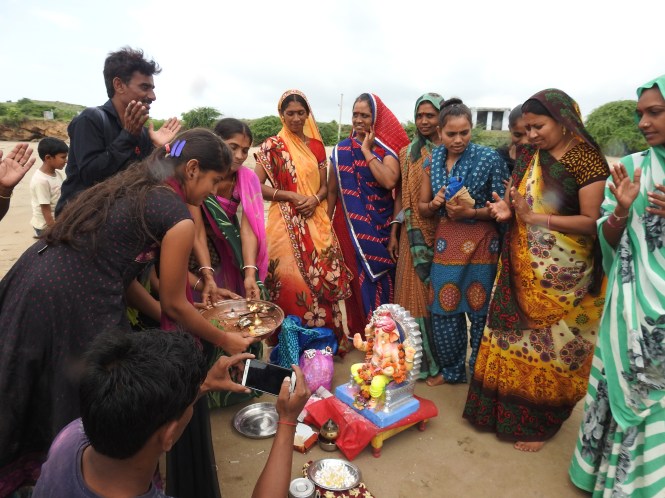
Before reaching Jafarabad, we take a detour to a small village with a beach called Sarkeshwar. Nice little beach with a little temple. In the village it is time for Ganapati Visarjan. We are promptly appointed the official photographers of the event. Just about everybody wants to be photographed. I ask for an e-mail Id for sending the photographs. Someone volunteered with a wrong one. The pictures will perhaps be never seen by the enthusiastic folks.

7

8

We start Jafarabad with the Lighthouse and the jetty beyond. The beach is rocky and has a temple like most other populated seaside towns.

9

10a

11

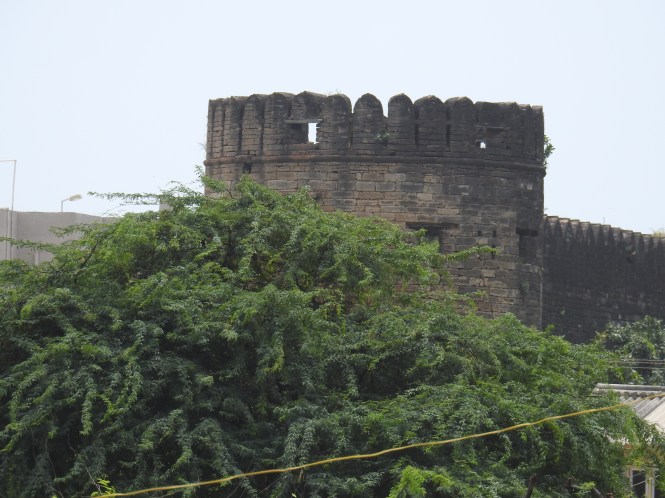
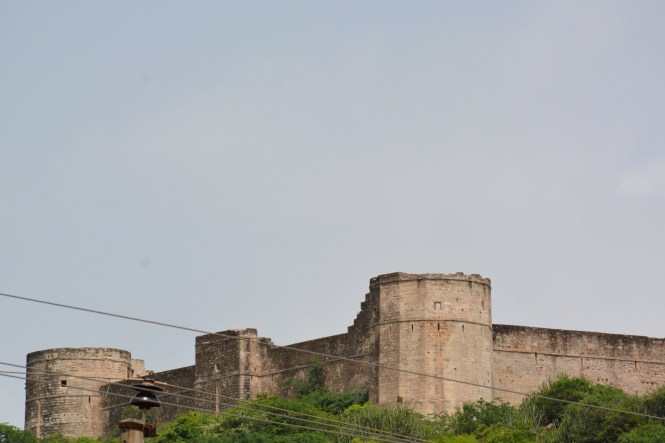
The town has an old fort counting its last days and has been partly converted into a public health facility.

12

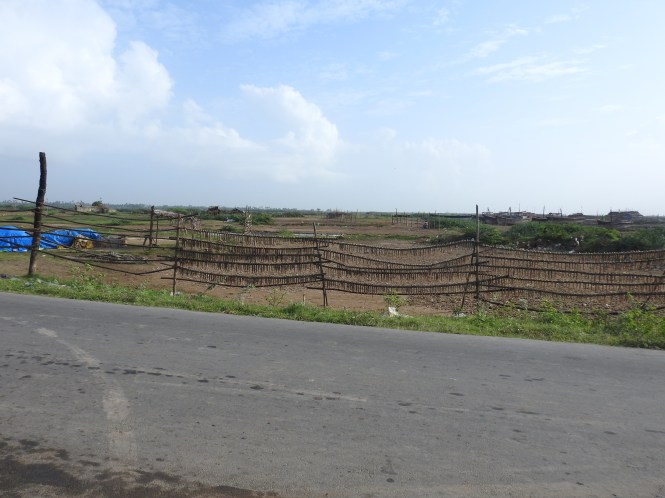
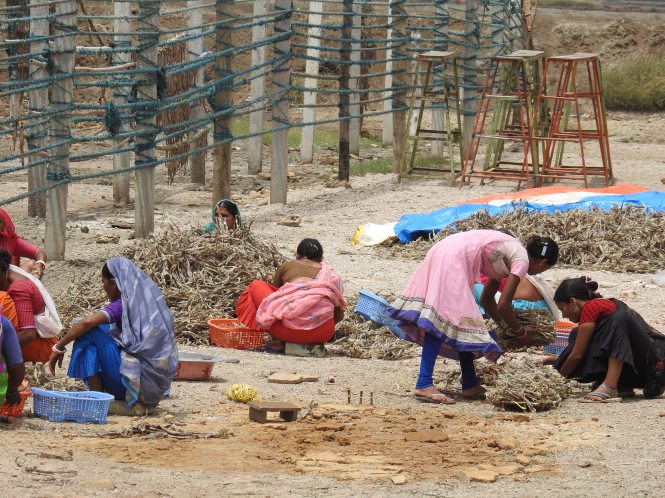
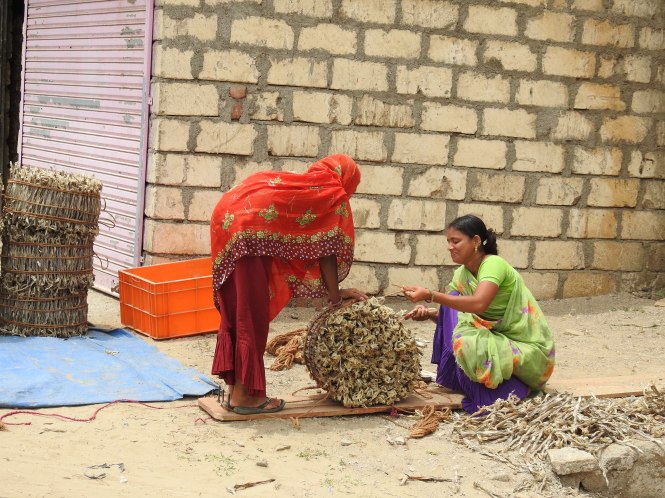
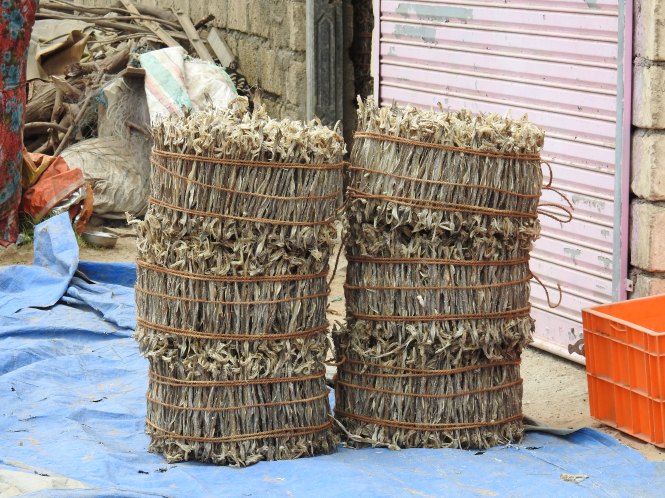
The most outstanding feature of this town is the trade in a single species of Lizard Fish popularly called Bombay Duck or (Mombil ,Bombala etc. in Indian languages), Harpadon nehereus to the biologists. Almost the entire town (or at least the female part of the town) is engaged in the handling, drying and making ready for sale this species in what appears to be in huge quantities. I don’t know why they call it Bombay Duck, it should be called Jafarabad Duck. Incidentally most of the catch from here is sent to Mumbai. Here are some of the activities captured by us.

13

13a

14

15

16

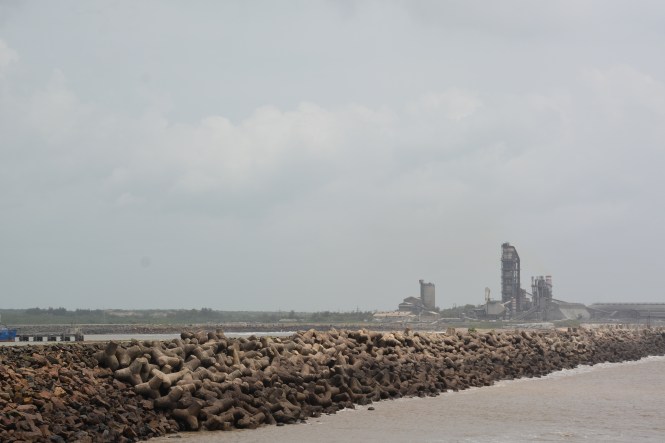
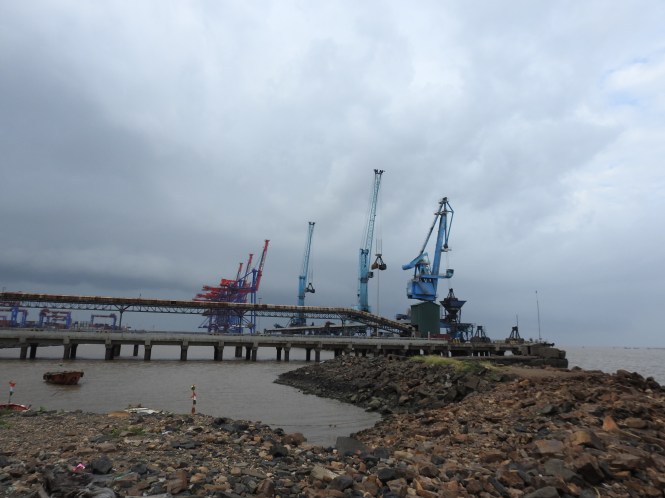
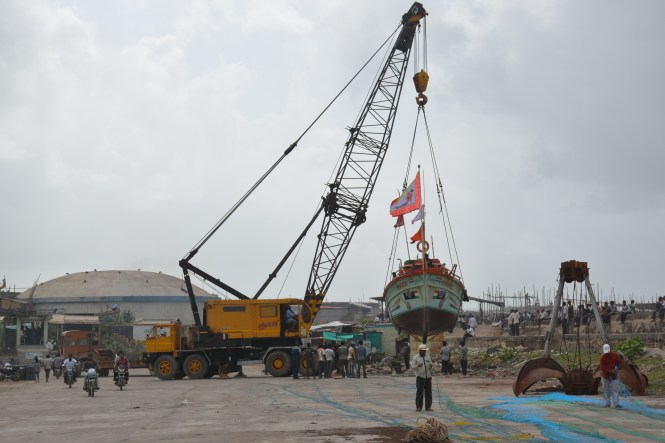
We move on. Hindorma near Rajula on the way to Mahuwa has nice accommodation. Hotel Siddhi is well managed.  We decide to break here for bit of a rest. In the evening we make a trip to Pipavav port and Shialbet island. We need to take permission from the port authorities to enter the port on our way to Shialbet. One can see the activities in the port which includes shipbuilding and handling of petroleum.

dscn4432

dscn4431

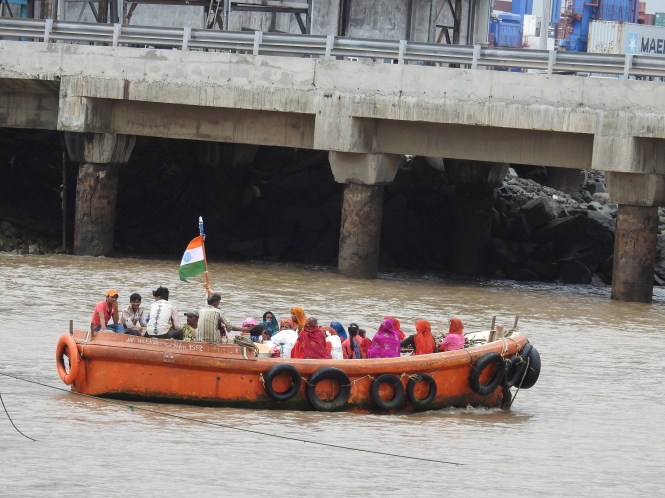
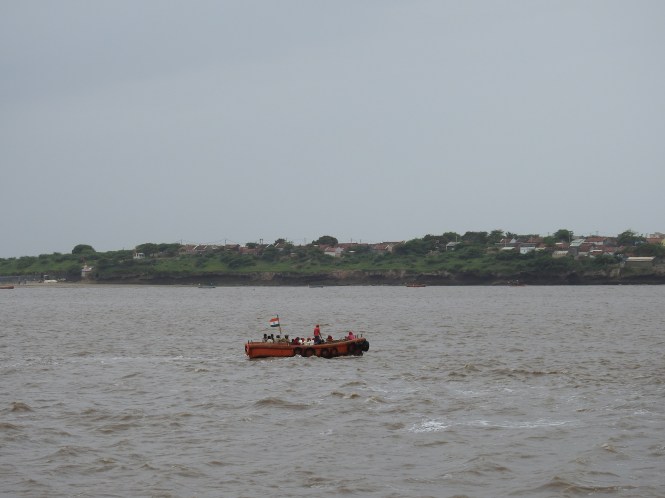
By the time we reach the place from where they ferry the residents of the island across, it is bit late and windy. We decide not to cross to the island which does not have any local transport and our car cannot be carried across. No, not even motorcycles. This island did not have electricity until last year although it has a population of more than 5000 and even has education facilities up to 10+2.

dscn4424

dscn4426

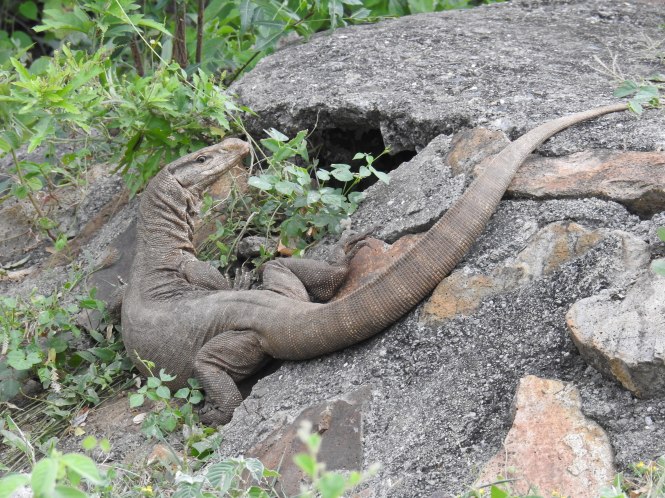
On the way back to the hotel we stop at  Reliance petrol station near Rajula to be greeted by this huge lizard.

dscn4435

8th September 2016

Posted  on 9th Sept. 2016

suryakiran.naik@gmail.com


24. DIU

The tiny half of Union Territory of Daman & Diu and earlier a tinier part of Goa, Daman & Diu and still earlier a part of Portuguese colony Estado da India is a faint memory of my childhood. I was born in Goa and remember the horror stories of government servants being transferred to Diu if they misbehaved in Goa. It was considered a punishment posting to a faraway island.

As we enter the island from Kodinar side(north), we immediately realize that the place is a beauty. It is also very neat and clean thanks to the Union Territory administration.

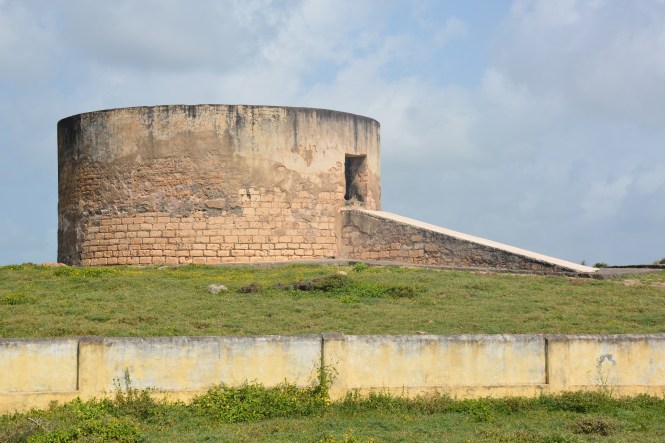
When we mention Diu, we immediately remember the Portuguese. Many people do not know that when the Persian Zoroastrians came to India, their first ship which came from Hormuz made its landfall at Diu in 936 AD, a good five centuries before the Portuguese. They had to leave their land for their faith. Nothing much is left of this part of the history except a couple of buildings on a small hill. The Tower of Silence has survived well or perhaps maintained well.

1

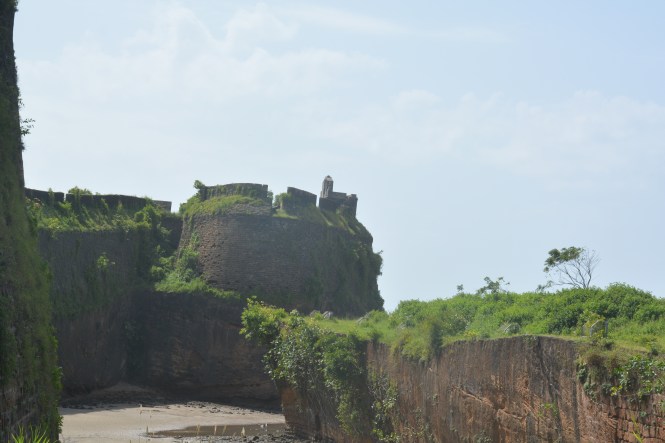
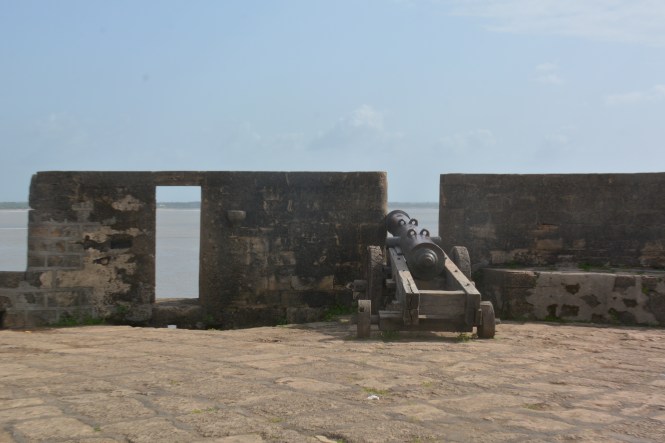
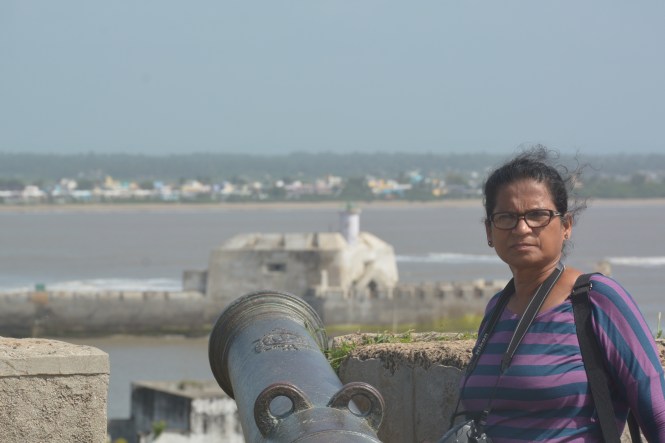
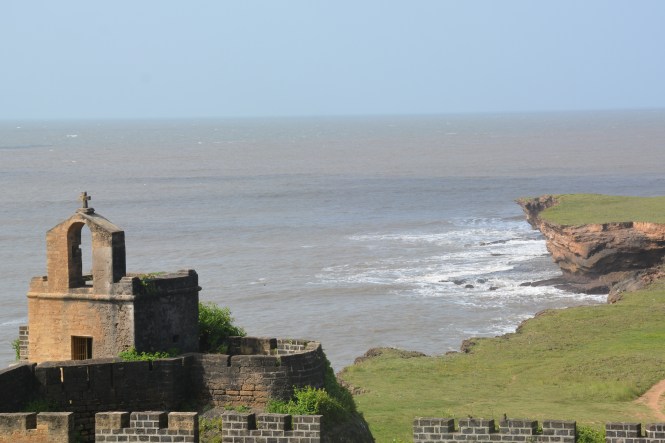
Following the chronology (but giving a miss to a lot of history in between), we go on to the Portuguese built fort which is the major tourist attraction. Let the pictures speak for themselves as it is a complex piece of architecture and fort design.

5

2

43

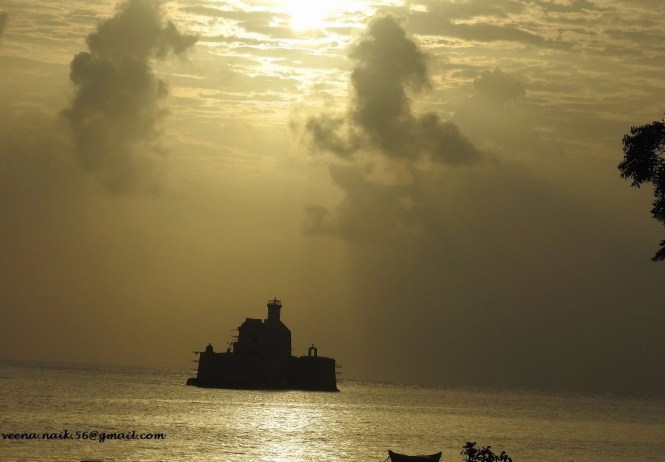
It has an outcrop separated from the main fort and is called Pani Kotha. This is at sunrise not sunset.

6

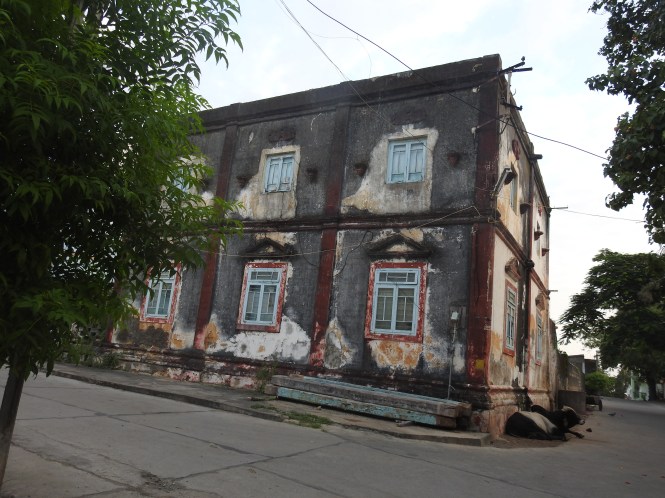
We move around looking for the tell-tale marks of Portuguese occupation of the place. We find some but not as many as expected. Unlike in Goa, the Portuguese failed to make any impact on the cuisine of Diu, for example. Here are some structures and signs that ring Portuguese bells.

7


12

11

10

The electricity generation station.

9

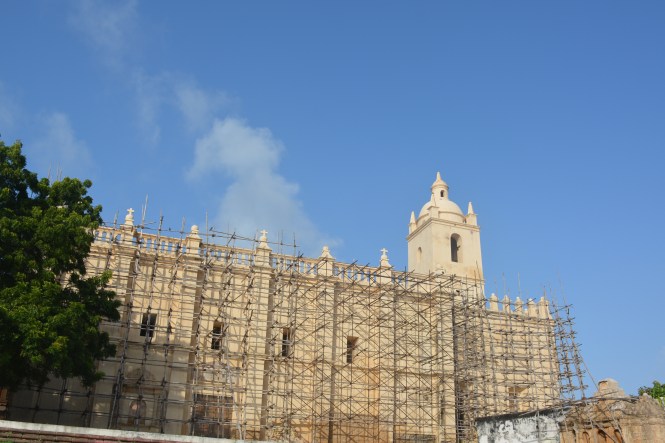
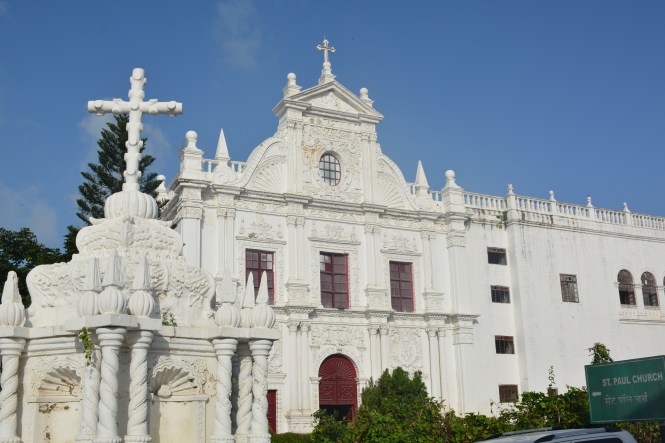
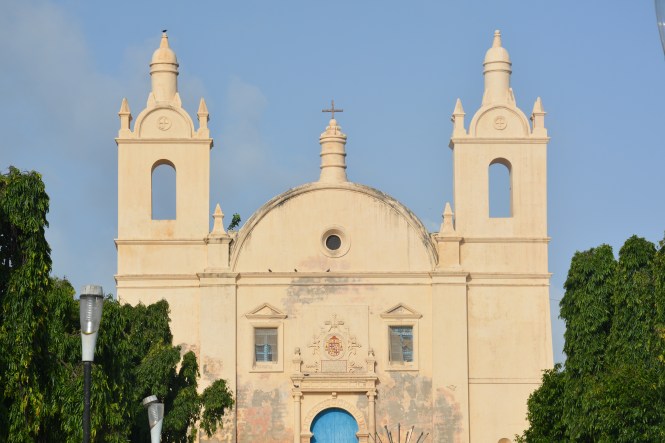
There are three churches, one of which is under renovation and another one is used as a Museum.

13

14

15

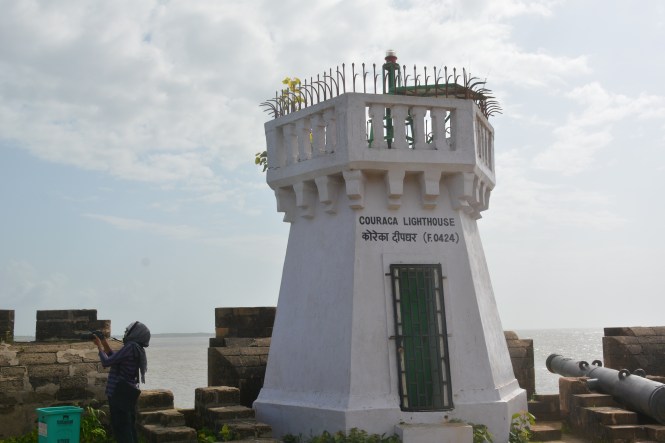
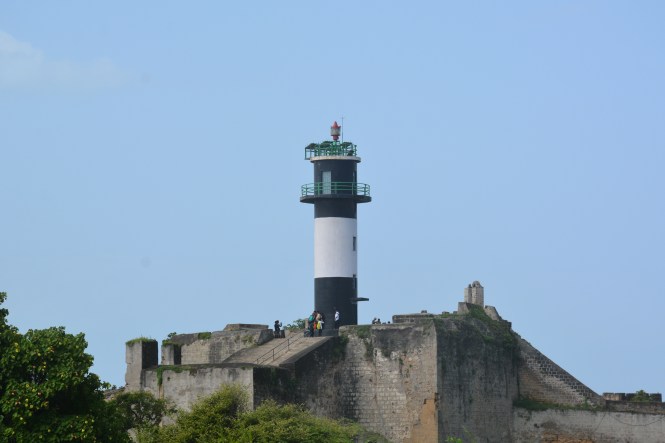
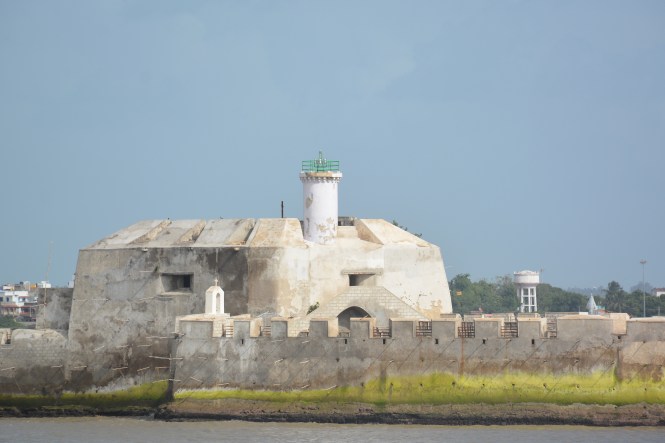
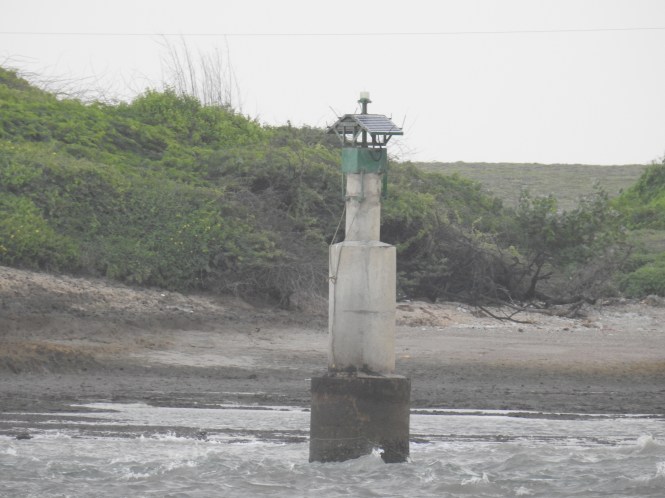
The small island of Diu is graced by 5 Lighthouses or objects serving the similar objective. The two major ones are inside the Fort. The third one is in the vicinity on the Pani Kotha. There are two others are at the Vanakbara beach. Shown here in that order. The last two at the mouth of the creek to guide the fishing boats.

16

17

18

19

20

 Naida Caves. If you ask anyone in Diu about the places to be visited, after the Fort, the most recommended place would be the caves. They are worth a visit. They are not a wet, dark scary place. They are airy, with a lot of light coming in from the top and are very pleasant which is not expected of caves. It is speculated that the caves were formed when the Portuguese cut for stones for building the fort which is not far away. If they did that, I am inclined to think that they cut the stones or slabs skillfully to make another structure under the ground.

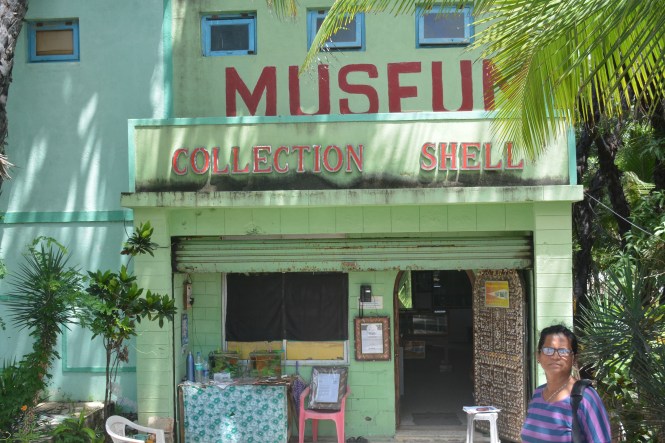
Among other things one can have look at is the Sea Shell Museum which is unique. It houses the collection of shells belonging to one individual who has passionately collected them from many parts of the world. Capt. Devjibhai Fulbaria served in merchant navy and has retired for 15 years devoting his time for the Museum. What this labour of love is seriously lacking in is scientific display technique.

24

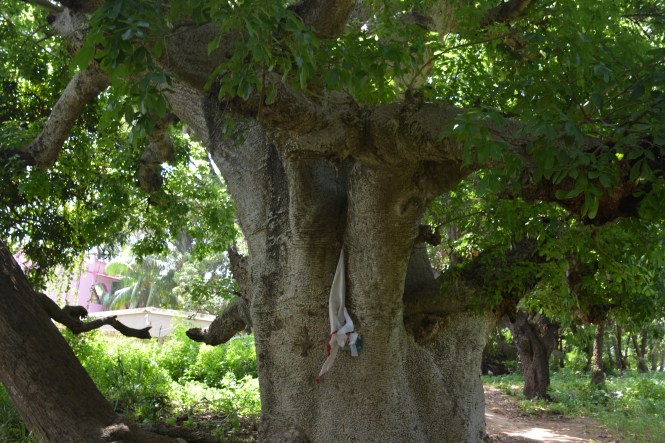
There is a tree called Rukhda tree which is claimed to be 400 years old (you will find this kind of claims almost everywhere). It is supposed to be a Baobab tree of Madagascar origin. For me it appears to have too many branches and leaves to be called a Baobab but then I am not the authority.

25

And then of course there are the beaches. Diu island as well as the portion on the mainland have several beaches. Barring one or two, they are rocky and could be dangerous for swimmers. They have one place which has two beaches within the earshot which would be rare anywhere.

26

This one is at Vanakbara, the fishing village.

27

What I found very interesting among the places of Diu is this very unassuming but a place of historical importance.

At Vankabara one can see this small creek with Sarkhadi peninsula on the other side. At one time this small creek formed the boundary between the British and Portuguese empires. Currently, I am told, people cross to the Diu side for a peg or two and then return to the ‘prohibited’ Gujarat.

28

5th, 6th & 7th September 2016

Posted on 8th September 2016

suryakiran.naik@gmail.com
 

23. VERAVAL, SUTRAPADA, DHAMLEJ, MUL DWARKA

We had entered Somnath-Dwarka twin towns through Veraval but had decided to stay at Prabhas-Patan, closest to Lord Somnath. In the process we did not have a look at the beauty of Veraval. On our way out of Somnath-Veraval-Prabhas Patan confusion we decide to go through the town.

Veraval is a large port and from what one can see must have been a busy one in its heyday. Now it is a fishing harbor with some boat-building activity. It is hurting to see towns and port towns which we studied in our geography lessons some years back, like this one,  becoming ghost towns.

1

2

3

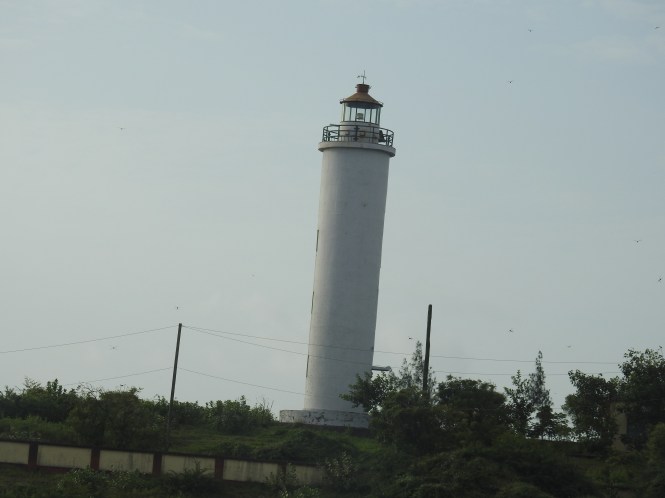
Veraval has a Horseshoe-shaped Lighthouse on the seashore located a bit far away from the port.

dscn4075

We move on in southerly direction with a view to make a night halt at Mul-Dwarka or Kodinar. On the way we come across a place which is shown on the Google map as Sutrapada Chowpaty. We drive in to face a cremation in progress. ‘Chowpaty’ here means cremation grounds. On the way back we see this Shani Temple. Now, let those people who claim that only Shani Temple in India is at Shani-Shinganapur in Maharashtra know that they have competition.

4

There is a coastal forest belt at Sutrapada. We waited for permission at the office till 10 am and nobody turned up. We decide to drive on instead of waiting for the Great Indian Bureaucracy to arrive. Dhamlej is the name of next place on the coast. This is an out and out a fishing village with a very small Lighthouse, the smallest we have seen so far. It is not functional.

5

It is Ganesh Chaturthi today and people are busy with the preparations for the festival.

7

On the fishermen’s jetty we see a mound of these seashells. We are told that they are not caught deliberately, they come with the fishes and are utterly useless.

6

It is a bit hot to-day. The sun has come up in full force. We have two more places to do before we rest for the day. We have Mul Dwarka coming up. Mul Dwarka is a huge confusion. There are at least three places in Gujarat coast that claim to be the ‘Mul’ the original Dwarka from where Lord Krishna moved to his current official residence. The one we are about to visit is one of those ‘Mul Dwarkas’.

The place is completely overshadowed by the huge cement plant owned by Ambuja Cement.

So much so, to reach the temple on the seashore one has to pass under the property  owned by the successors to Joseph-Auguste Pavin de Lafarge, the French businessman. Lord Krishna would definitely have refused to pass under this material handling plant.

9

The temple(s) are not spectacular, ordinary temples that you find in villages all over India.

11

The people are keen to be photographed.

img_4437

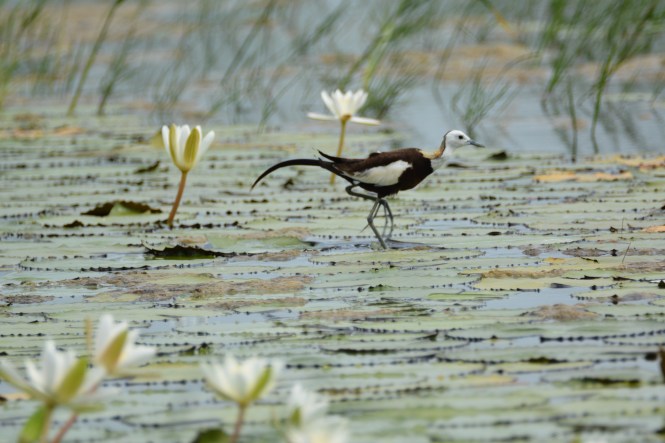
The really interesting thing about the place is a small wetland directly opposite the cement plant which is hosting several species of birds. We could count nearly a dozen late morning.

Here is a Pheasant Tailed Jacana.

128 

Between Mul Dwarka and Kodinar we stop to photograph this beautiful shrine of Shia Muslims known as karbala.

dsc_8705

We move on with the intention of putting up for the night at Kodinar. On arrival we see that this place has nothing to offer for visitors and is also a bit far off from the sea. And then Diu is only 40 Kms. away. Driving 40 Kms. away from the oppressive policies of Gujarat government is not a big deal after being thirsty for 24 days.

Travelled on 5th September 2015

Posted on 7th September 2015.

suryakiran.naik@gmail.com

22.NAVIBANDAR, MADHAVPUR, SOMNATH

We leave Porbandar without knowing what would be our next night halt. Our Google search reveals that the next town with any kind of hotel accommodation is Veraval 124 Kms away which would be quite a long jump for us. We start driving until we come to a place near Navibandar to be told that a bridge on the road to Veraval had collapsed more than a year ago and a diversion has to be taken. We take it and make it to Navibandar with some difficulty.

1

Navibandar as a port does not have much of an activity especially after the collapse of the bridge. We visit it all the same  mainly because we had since beginning decided to visit all Lighthouses. The Lighthouse here is a functional unit and not a grand affair. It is manned by only person who was away when we visited. Hence we do not know if they allow to climb the place.

2

3

We return to the main road which is at the other end of the collapsed bridge and are about to drive southwards when a flock of birds flying catches our attention. We stop and walk towards a small lake. This place would have been famous had it been near a city. Being a freshwater body near the sea, it supports quite a number of bird species.

DSCN3877

But the main attraction turned out to be a smaller pond with this:

DSC_8318

The road ahead is smooth and straight. A pleasurable drive brings us to another surprise. Madhavpur Beach is surprisingly long, sandy and clean. And more importantly it has a reasonably good hotel. So we decide to stay the night at Madhuban. As we move around we learn that apart from the bridge the village has the remains of a 12th Century temple. I think in the 12th century people did not have any work other than building temples.

DSCN3932

DSCN3909

We also come to know that the village has a Osho Ashram. That’s quite interesting though not surprising. There also another Ashram called Gokul. Both these places offer accommodation presumably to their affiliated people. A long ditch between the two places offers birding opportunities.

DSCN3918

The next day (4th September) we start from Madhavpur and proceed to Mangrol. This is a large fishing harbour and boat-building place. The town is quite large ( 150,000 souls). We spend some time at the harbour watching some activities related to operationalizing the fishing boats after the same were laid up for the monsoons. Some were already at sea and the others were being readied.

DSC_8469

DSC_8475

Some new ones are being built.

DSCN4022

Mangrol has a fish market, two in fact, one for the wholesale trade and one for retail.

DSCN3976

We buy some fish and proceed on to the New National Restaurant. It is too early for lunch and we have to help Khansaaab with his preparations including cutting the onions.

DSCN4025

Shri Goswami owns a tanker that supplies drinking water to the fishing vessels about to sail. He insists on being photographed with his water tanker.

DSC_8468

The Port has a Lighthouse. Permission has to be sought for visiting and if granted one has to climb 200 steps on the staircase. No, thank you.

DSC_8465

The next place we visit is Chorwad made famous by Dhirubhai Ambani, the founder of Reliance group. Before we visit the Memorial ( which is the place where spent his childhood), we reach the beach. A rocky beach with the remains of a palace built by the ruler of this principality of Junagadh. The palace built by Mohabat Khan was appropriately named Dariya Mahal. It was advertised as India’s first Beach Palace hotel. One can only see its ruins now.

DSC_8526

The beach is quite good but we could not see it at low tide. We wanted to stay back and started making inquiries about possible accommodation. There is none. During the inquiries an outrageous suggestion was made by the person selling coconuts on the beach. ‘There is a hospital in the town and they offer rooms’, We did not bother to verify the truth or try out the option.

DSC_8540

Of course we go on to see the Memorial to my one time employer. Nothing much from outside and photography is not allowed inside. This is the entrance to the town. The memorial is a short distance ahead o the left.

DSCN4056

We proceed to Somnath.

Somanth is of course is among the famous temple towns of India. Apart from the main temple, it also has several other temples and also a large one under construction.

DSCN4097

Among the others is the Surya temple which has a lot of plants growing on it, in defiance of the powers of the Sun God.

DSCN4081

Then there is the Triveni Sangam, confluence of three rivers ( and probably the Arabian sea) , a place where Lord Krishna had breathed his last.

 DSC_8570

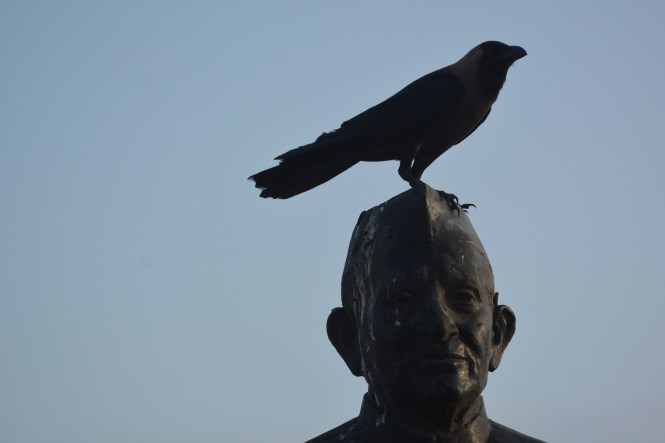
Currently on the Triveni Sangam is the statue of Mr. Morarji Desai, ex Prime Minister of India being badly treated by crows

DSC_8575

In this story I have missed the town of Veraval. It will be included in the next.

3rd & 4th September

suryakiran.naik@gmail.com

Posted on 5th September.


21. HARSHAD MATA &PORBANDAR

The first stop we make on this route is Okamadhi. It has a very long stretch of beach and little else. One wonders why this beach is not developed and commercialized.

10a

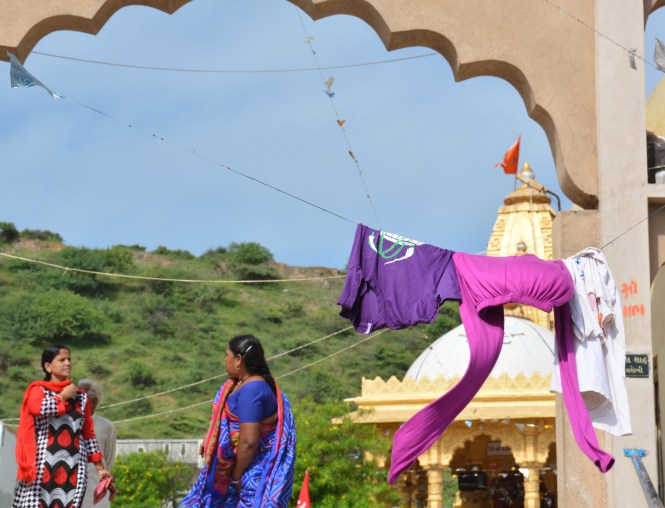
The next major place along this 110 Kms stretch is the place generally known as Harshad. It has two important temples. The first is by the side of the creek and is dedicated to Harsidhanath Mahadev. One has to enter the temple from under the clothes hung for drying by the God’s devotees who had come here the previous night.

1. Harsidhanath mahadev

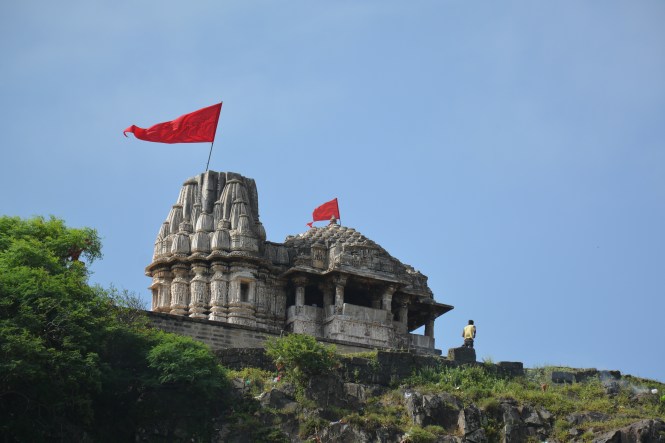
The other temple is on a hill nearby is for Mata Harsidhi popularly called Harshad Mata.

(Those of you who remember late 1980s and early 1990s, a similar temple was proposed to be built to honour Harshad Pita at Dalal Street, Mumbai. The plan had to be shelved when they found that the Pita had already ruined at least two banks and several thousand investors)

2

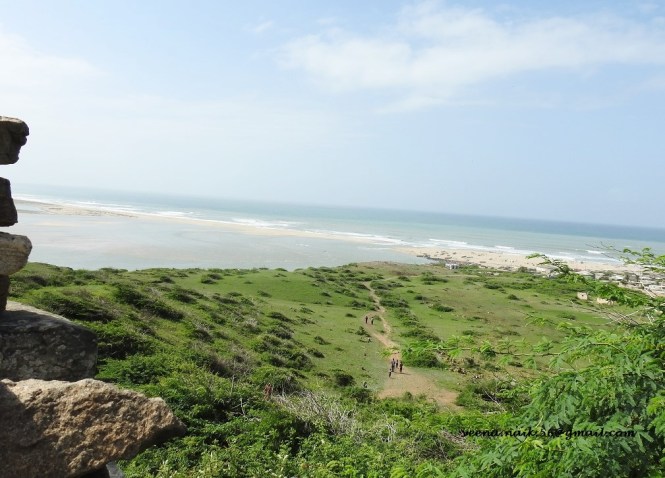
The view from the hilltop is really nice.

4

5

A mobile vegetable shop was found near the temple. The man moves around 100 Kms. a day to various villages vending vegetables.

5a

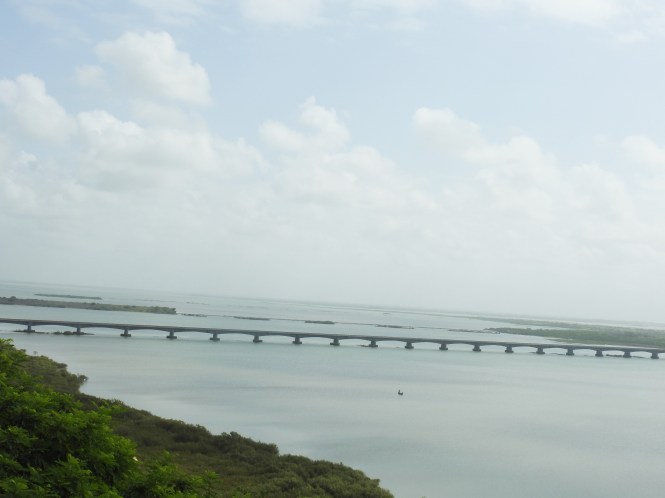
We cross this bridge and get across the creek into Porbandar District leaving behind Devbhoomi Dwarka.

3

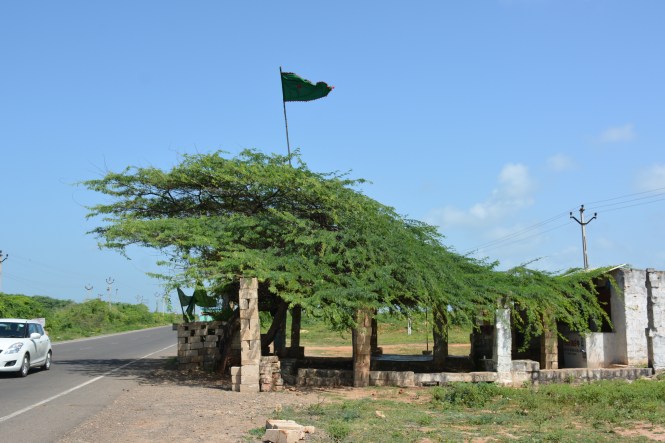
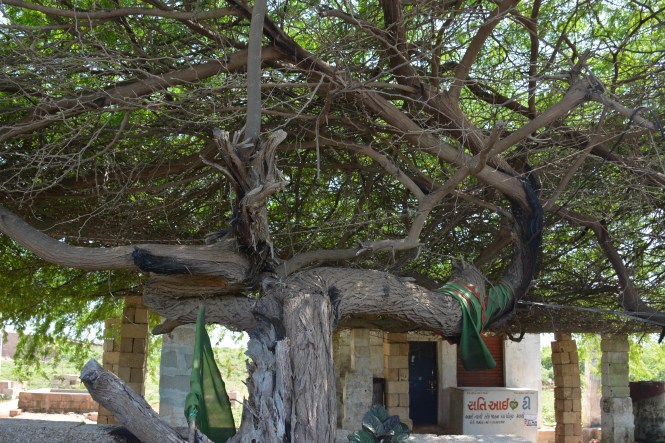
A very ordinary looking structure on the roadside attracts my attention for using a tree in a very innovative way. It is flying a green flag and could have been mistaken for one of those many Dargahs that dot the Gujarat landscape. It happens to be a temple to a Sati. We stop to find a bundle of innovations here:

The first one is that what you see as roof here is provided entirely by a tree, the stone pillars are supporting the tree branches. The second innovation is that it is a self-service establishment. The prayers are recorded and play automatically- canned prayers, hygienically packed and good for spiritual health

6 jai Jivi sati Aayi

7

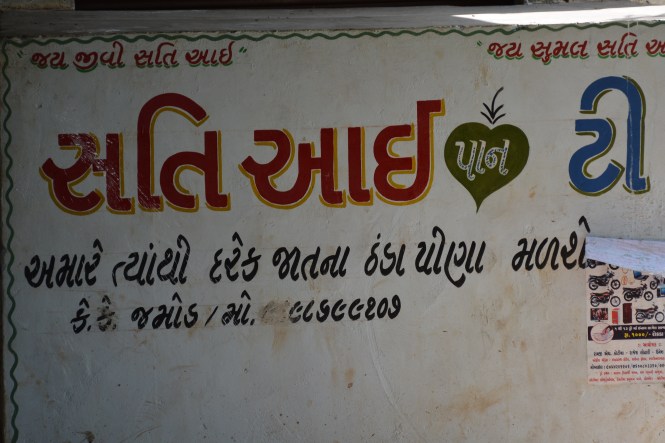
The third one is that Jai Jivi Sati Ayi has been used as a Brand name for Paan being sold at the rear side. Lord William Henry Cavendish-Bentinck surely did not bargain for this when he tried to abolish Sati.

8

We move forward making inquiries about another temple known to be present in the area. This one is to the creator of the universe- Brahma. It takes us a few inquiries to ascertain the way to the temple. We are told to take a right turn at the Essar Petrol Station. It is a pity that the we have to depend on Shri Shashi Ruia’s property as a landmark to find the Creator of the Universe.

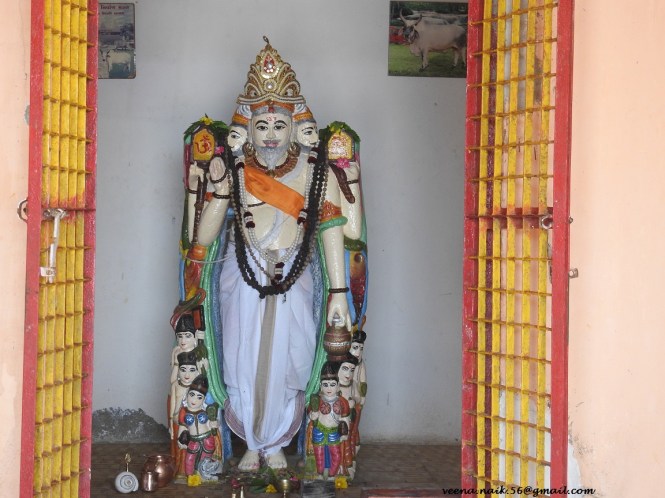
The temple is right on a beach formed on the creek. The idol looks good, the beard looks artificial though.

9

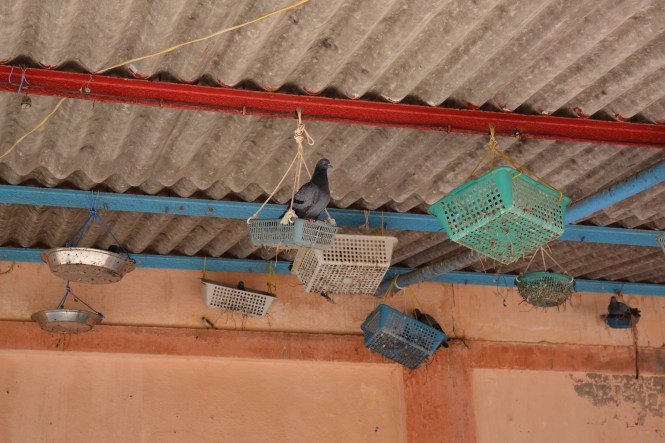
The trustees of the temple have made commendable progress in the art of Pigeon Management.

10

We reach the birthplace of Mahatma Gandhi in the early afternoon. As good citizens of the country, the first thing we do is to is visit the actual birthplace.

11

I was expecting Porbandar to have many more things than it has. In terms of architecture it does not have much to offer. The palace of the ex ruler is a huge seaside property but does not offer any splendor which is expected of a 13-gun salute state. Moreover it is not maintained well.

16

That leaves us with the various temples around the town and the two Lighthouses. The old one was commissioned in 1876 by the Porbandar State and was in use until 1983- 107 years of service and is not even looked at by anyone.

17

The new one is a little outside the town. We are surprised to know that one can actually go up the Lighthouse on payment of a fee of Rs.10/-. But this can be done only at 6.30 pm in the evening and Photography is not allowed. Still after so many earlier refusals this looks refreshing news.

18

(I need to learn how to correct this.)

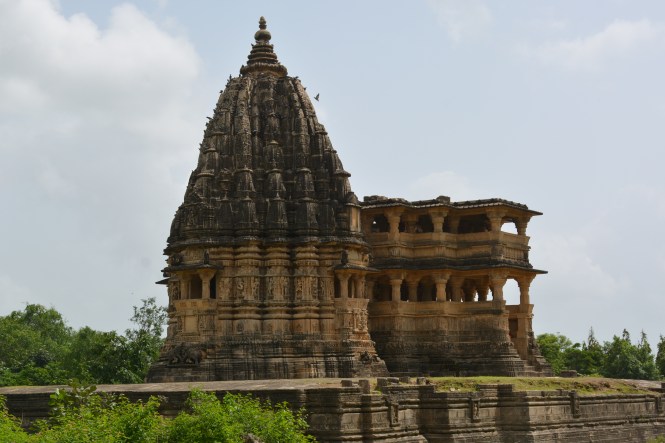
As there is very little in the town we look to places a little away from the town but not far from the coast. We find a place called Ghumli which we are told have ruins of a medieval kingdom. We drive 45 kilometres to find a find a fine specimen of architecture. We are told that this is ‘Solanki’ architecture and belongs to the 12th Century AD. This temple is for Navlakha and is accompanied by a temple of Ganapati which is in ‘Saidhava’ style and belong to the 8th/9th Century.

14 Navalakha solanki

DSCN3818

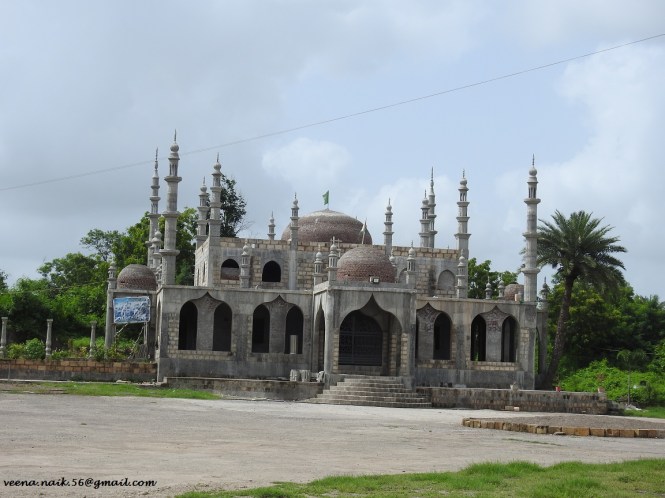
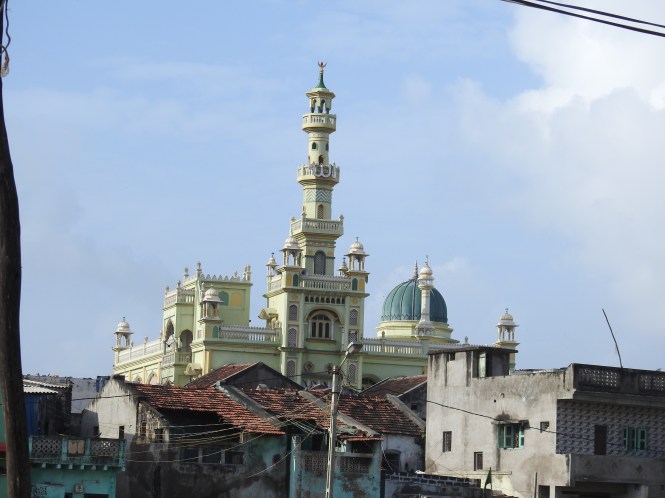
On the way to Ghumli we come across this Islamic structure which appear to have an unusually large number of minarets. I need to find out it is.

13

On the way back from the western side we see a small fort  but do not bother to go up as it is 40+degrees outside. Climbing is not exactly an activity one does at such times. We are dashing for the green coconuts back in Porbandar.

15

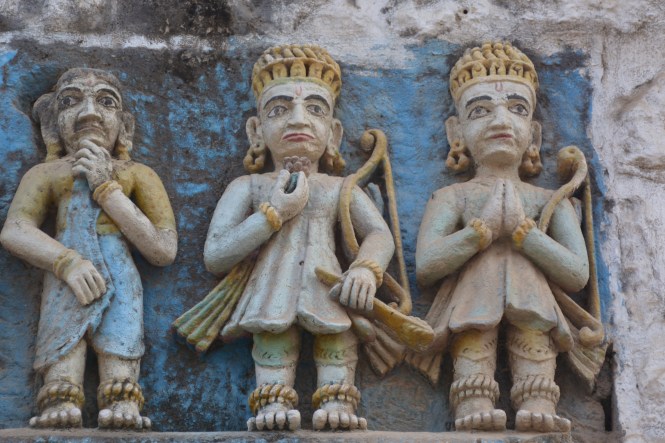
In the city we find this carving in stone on the office of the Superintendent of Post Offices, Porbandar Division, M G Road ( No, not even here they call it Mahatma Gandhi road). Can you please identify the characters?

19

1st & 2nd September 2016

suryakiran.naik@gmail.com
Posted on 3rd September 2016.


20. DWARKA & DWARKADHISH TEMPLE

Much has been written about this place. One of the four Dhams, the holiest of holy places of Hindu faith. This is the western-most and has an estimated five million visitors in a year. The place is well-maintained except for the cows (and bulls) defecating all over the place. If you approach the city from the north, you get to see the Rukshmani temple first. You can see some people trying to catch crabs. They use entirely wrong methods. I try to upgrade their knowledge with my considerable experience with the activity.

1.

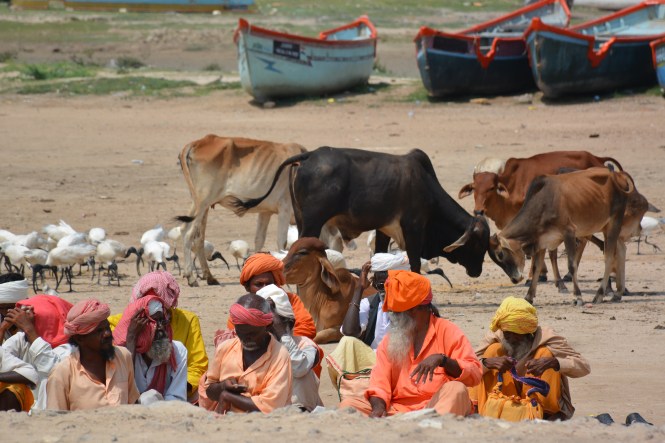
In front of the temple you find this interesting scene. Pious Men, Holy Cows and Sacred Ibis – all looking for food, collectively.

2

Bhadkeshwar Mahadev is an important temple on the seashore. It has been saved from the waves artificially, the surrounding land has surrendered to the sea.

3

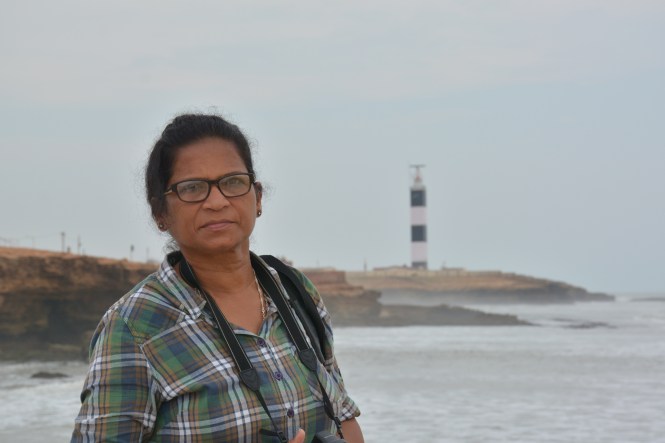
The Diwadandi , Lighthouse has a square design

4

5

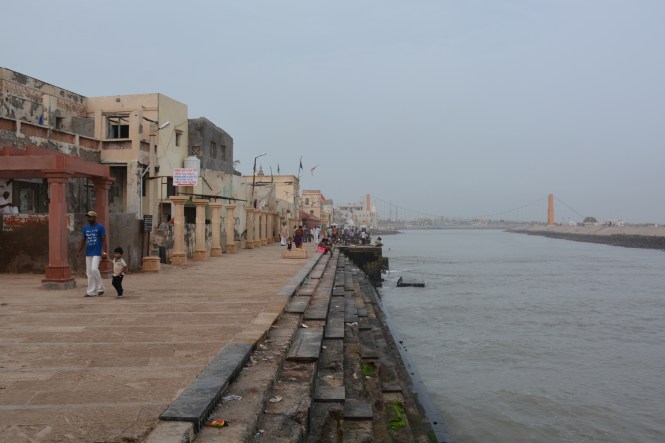
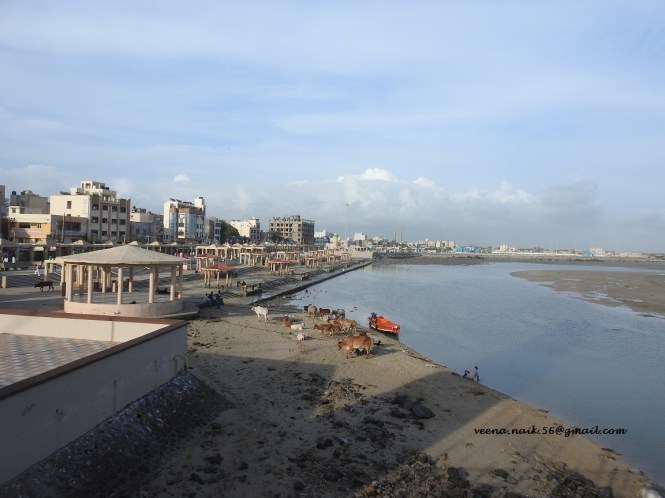
The Ghats are trying to resemble those of other Holy places situated on rivers. The river here is – Gomati- is almost dead. The water you see here is the sea water at high tide.

6

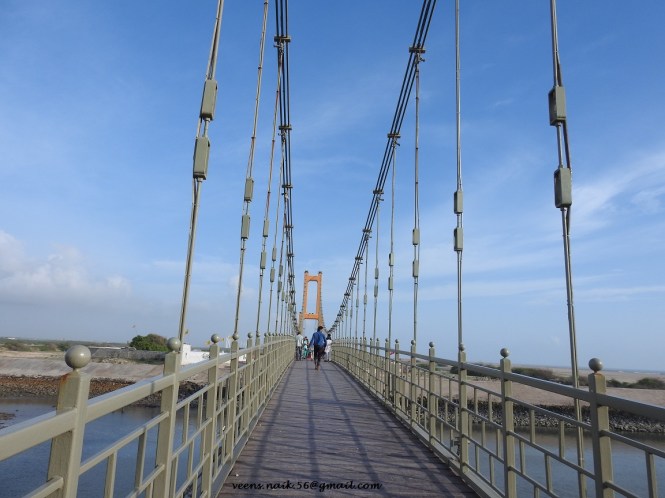
This suspension bridge across ‘River Gomati’ has been sponsored by Reliance Industries and they charge Rs. 10/- per person, both ways. If you cross you have to come back. There is nowhere to go.

8

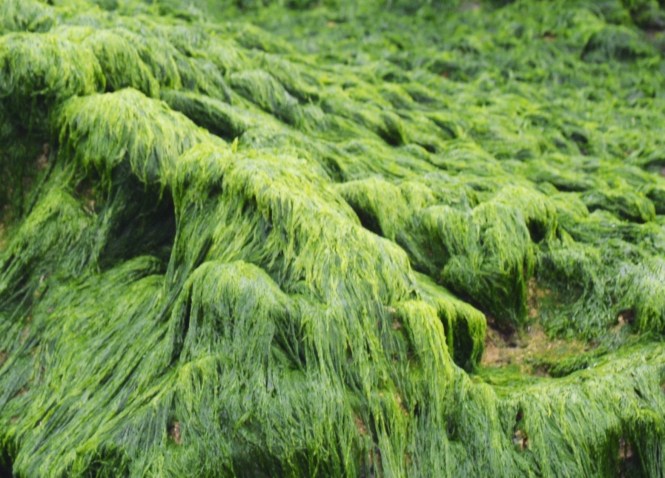
The stones around the Bhadkeshwar Temple has a moss growing on them which we normally find around freshwater bodies. It looks beautiful.

9

The facilities provided to the pilgrims are equally shared by the stray cattle also known as the Holy Cows.

10

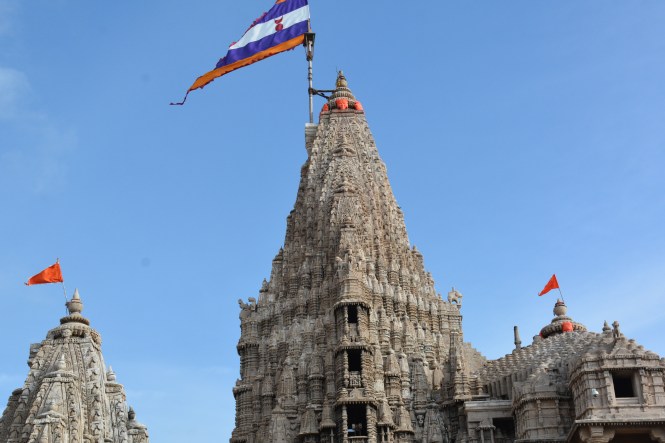
The Dwarkadhish temple, the main temple of Lord Krishna is claimed to be 2500 years old. One cannot take bags, cameras, mobile phones, tobacco products inside. The dome looks artistic.

11

This temple has a national-level importance but the sign boards are only in Gujarati.

12

The temple complex also houses the Jagadguru Shankaracharya’s offices.

13

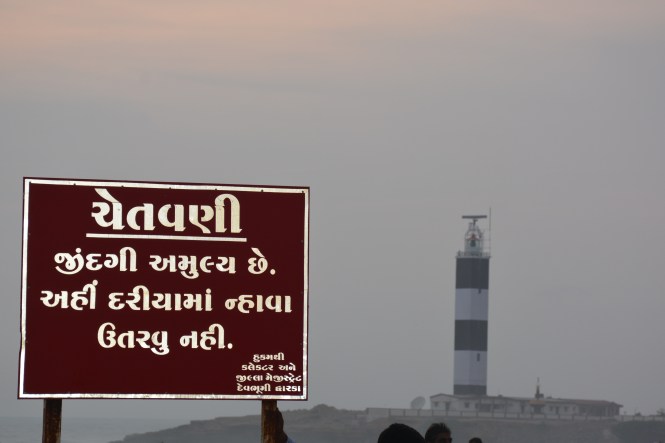
At most places in Gujarat, the signboards are in Gujarati. It is difficult to see how the pilgrims coming from the other states, particularly those from the south, will be able to read them. For example, this signboard advises that the life is precious ( No, it does not say human life), and people not to take bath in the sea. You are likely to take bath in the sea at this holy place if you can’t read Gujarati.

14

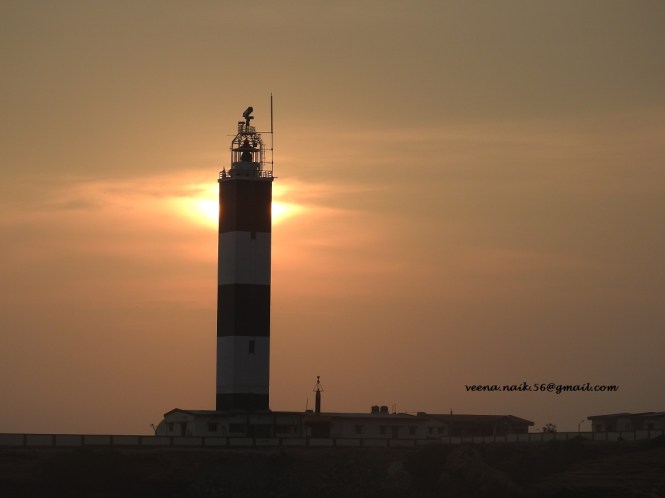
The sunset is quiet and pretty against the Diwadandi.

15

Towards almost the end of my life I have realized that I have something is common with Lord Krishna. Both of us have accounts with HDFC Bank.

16

29 & 30th Aug. 2016

suryakiran.naik@gmail.com
Posted on 31.08.2106.


19. MITHAPUR,SHIVARJPUR, NAGESHWAR.

We leave Okha for Dwarka. The distance is only 30 Kms but with interesting diversions here and there to spend the whole day without getting into Dwarka proper.

Just as you come out of Okha, you enter Mithapur, aptly named as it produces a large quantity of salt. The town has a 75+ year old factory of Tata Chemicals Limited. We drive through the township which is a beautifully planned and maintained place complete with an airstrip and a sea beach.

1

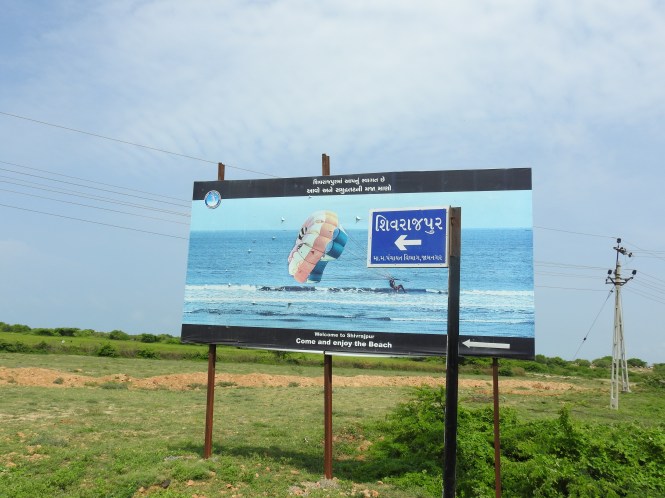
We get back on to the main road and drive on until we come to this signboard.

3

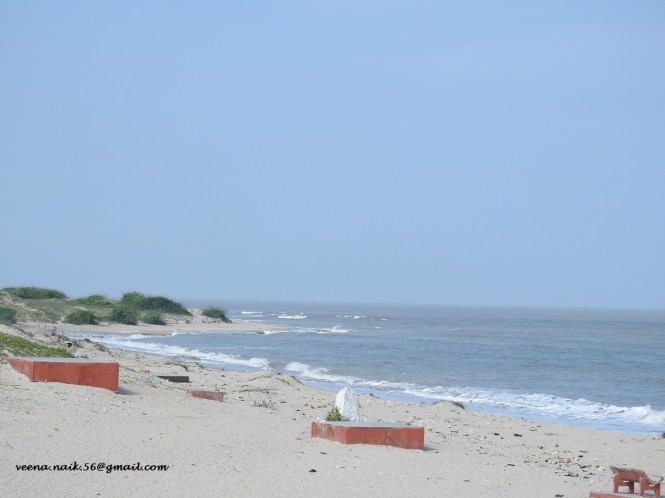
This is a misleading advertisement. There are no such activities around here.The place has a beach, a nice little cove but rocky.

5

Other than that it has jovial Kaka Hari Sinh Vaghela selling green coconuts. He offered us the Jowar rotis in his tiffin  as it was lunch time.

4

And a lighthouse (called Kachchigadh Lighthouse). For a change they said they do allow visitors to go up the lighthouse. We were momentarily delighted. But the ‘concerned person’ is away and might take some time to return. We return back to main road disappointed once again

6

A distance away one can see another Lighthouse. Kaka Hari Singh informs us that it was constructed by the Gaikwads of Baroda when they ruled the territory. It was operated by using lanterns and obviously is no longer operational. We decide to go there- in scorching hot sun. It is not easy to drive up there. The Lighthouse does not have steps to climb. Perhaps they used a ladder.

DSC_7835

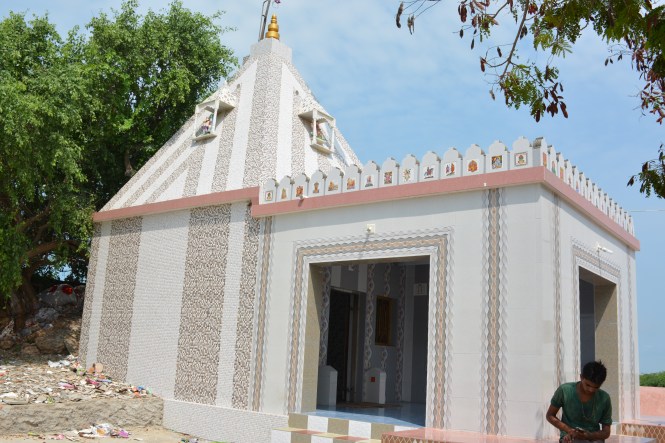
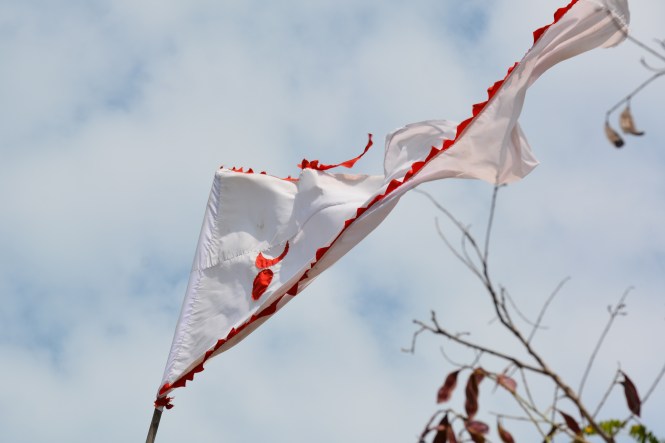
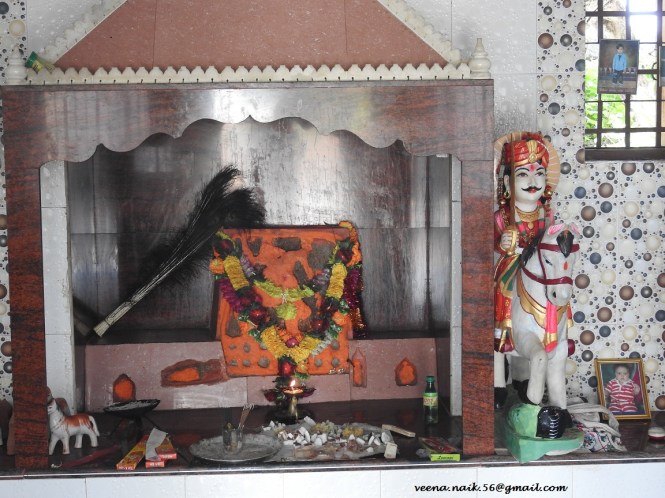
We return back to the main road and drive and see a small temple to our left flying a white flag, not saffron the usual colour. Out of curiosity we go to the temple although we avoid small religious structures as there are too many of them. The information came forth immediately. This is a temple to Karn / Karan  from Mahabharat. A small Ashapura Mata temple is also housed within a short distance.

8

9.JPG

10

On another side towards the north we find the following places:

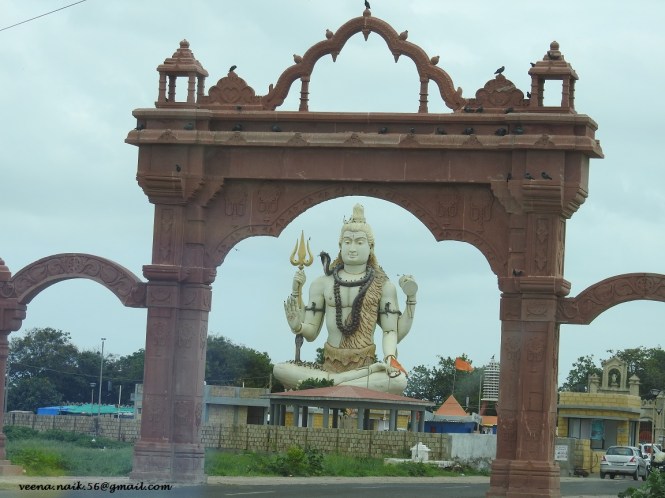
Nageshwar is among the Jyotirlingas. Nothing much to write home about. A grotesque statue of Shiva (donated, we are told by T-Series owners) dominates the landscape. Car parking is Rs. 40/- but green coconuts cost Rs 20/- each.

12

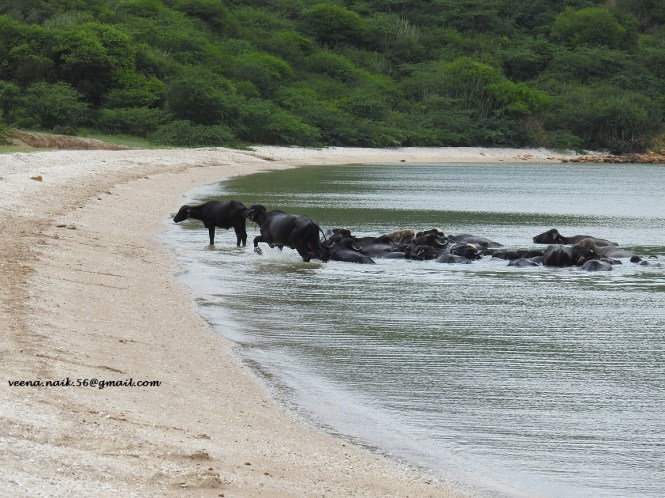
Then there is the Gopi Talav, the place where Krishna’s Gopis used to bathe. For reasons of propriety we decide to skip the place. Another reason is you need to walk more than a kilometre after parking. Instead, we were directed to a beautiful beach where we find buffaloes currently bathing.

buffaloes

I always thought buffaloes use fresh water for cooling themselves but here they are actually using the Arabian Sea. When I suggested that their milk would be slightly salty, the cowherd denied the charge and insisted that they don’t drink the water and their milk tastes the same as that of other buffaloes. Thank you.

The beach is beautiful with the greenery over the low hill at the back.

DSC_7848

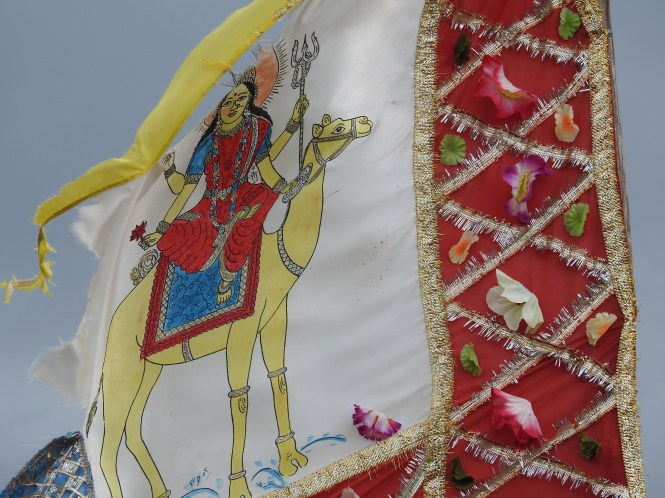
The place is called Momai Dham and has temple of Goddess Momai who comes from Kutch and uses a camel for transport. If you happen to be in the area, please do visit this place 10 Kms away from Nageshwar.

DSCN3583

DSCN3658

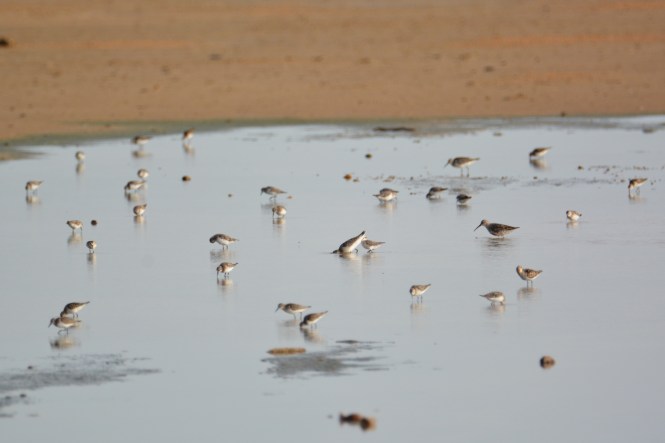
We also passed by Charkala a place known for its salt pans and migratory birds. As winter migration is still far away we could see some local species and not in great numbers.

11 

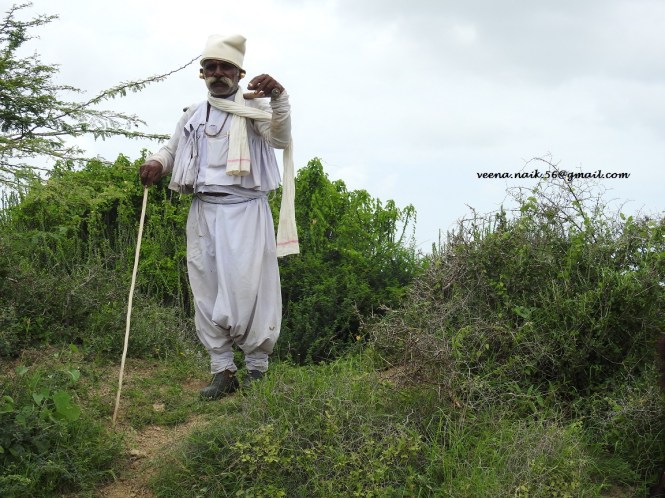
If you are bored by too many Gods and Goddesses on the way, you will also find living people like this gentlemen in his Kathiawadi attire tending to his sheep. You will most surely hear and see our national bird as well.

DSCN3572 DSCN3635

We also visited a place called Positra about which I will write later.

Note. During the three days to which this account pertains there is the time we spent in Dwarka proper about which we will post separately.

Suryakiran & Veena Naik

suryakiran.naik@gmail.com
28-29-30 Aug.2016

Posted on 31.08.2016


18. OKHA & BET DWARKA

Okha, facing the Gulf of Kutch is western-most point of the Kathiawad Peninsula, not of India as the impression is given by a cursory glance at the map. Well connected by Rail and Road, Okha was once an important port. The port activities still continue but fishing appears to be the major industry.

port

Despite being a port and a major railway terminus, some parts of Okha are very neat and clean which includes the beach near the port. The beach has a temple.

beach temple

The seashore at low tide is a place to visit to see a number of live creatures of the sea which we normally sea as dead sea-shells.

shells

Here is a crab stranded at low tide.

crab

Okha has two sets of Lighthouses 2X2, one set on shore and the other on a small island. Two are new and operational and two disused. Here is the one on shore.

DSC_7634

And this is the beauty off-shore. The disused one is to the extreme right. The island also has a temple and a mosque. The Lighthouse is operated remotely from the shore and hence do not have people living there.

DSC_7639

Perhaps the first church on Coastal India on the western side appears in Okha.

church

Okha town is the only gateway to the island of BET DWARKA. All pilgrims visiting Dwarka also visit Bet Dwarka by default. They are carried across the water in heavily overloaded boats.

boat crossing

On the other side, people walk to the temple or rather temples. If you cannot walk, you can be carried in the vegetable vendors’ carts. Rickshaws are abundant in the Bet Dwarka town.

DSCN3272

The access to the temple is through a full-fledged market with colourful wares on display.

DSCN3268

This is the backside of the Dwarkadhish temple. Maintenance is poor.

main temple

Apart from this the island also has a Hanuman Temple (below) , Chandramandir and several others.


Hanuman Dandi

The island is quite a religious place, complete with the famous Dargah of Haji Dawood Kirmani.

Haji Dawood KirmaniAnd a nice little Gurudwara with a garden and place to stay.

Gurudwara

On the secular side the island has a few beaches. A cove named Dunny Point appears to be popular but it also double up as a harbour for fishing boats.

DunnyPoint

On the commercial side people try to sell almost anything to the unsuspecting religious tourists mostly in the name of God(s). This includes a wide variety of sea-shells and corals. This happens in Bet Dwarka as well as Okha. Both these places are within the geographical scope of Marine Sanctuary which is supposed to be policed by Department of Forests.

DSC_7626 Let us wind up this post with some beautiful flowers from the compound of the Gurudwara on the island.

DSCN3303

Suryakiran & Veena Naik

suryakiran.naik@gmail.com
27th & 28th August 2016

Posted on 30.08.2016


17. Sikka-Vadinar-Salaya

The next major towns on the coast where accommodation would be available are Okha and Dwarka. There is a smaller town called Khabaliya in-between. We decide to do Sikka and Vadinar and make an overnight stay at Khambaliya.

This is a Carwash on the way. Free. We decided to skip it although the car is dirty.

carwash

Sikka is an historical port like Mandvi. It is also involved in making and repairing wooden ships. At the waterfront one realizes that the place is more involved in trading and fishing than shipbuilding.

Pillars of an abandoned pipeline.

DSC_7206

GSFC fertilizer plant.

DSC_7219

MSV Noor Al Ismail being readied here to carry 4000 goats to Dubai for the Eid festival.

ship to dubai

Sikka has a Diwadandi. We decided not to go near it to save time.

sikka

Between Sikka and Vadinar at Moti Khavdi we cross the third Guinness record on this trip. The first one was river Machchu dam failure which reportedly killed 25000, a record for deaths in dam failures. This was followed by the Bala Hanuman Temple at Jamnagar which claims to be the place for religious chanting ( Jai Jai ram) continuously since 1964, Here is the third. The world’s largest refinery.

reliance

Vadinar is known for off-shore oil terminals and not for dry cargo. There was no point in seeking permission to enter. The car in front of us turned back within seconds. The important industrial unit here is the Essar Refinery. Vadinar is important for another reason. It is the Gateway to Narara, another important bio-diversity centre and a part of the Marine National Park.

DSC_7244

We come to the main road and proceed towards Khambaliya. We see these goats who will be found on MSV Noor Al Ismail a few months hence, on their way to Dubai.

goats

A few kilometres before Khambaliya is a dam maintained by Kandla Ports Authority to supply fresh water to the ports and terminals on the seashore. The dam is a beautiful sight.

DSC_7384

Salaya is 12 Kms from Khambaliya town. Quite an active port and fishing harbour. Ship repair activity is in full swing as the monsoon is coming to an end and the boats have to get back into business.

sal1

sal2

Some shipbuilding activity is also on.

sal3

Salaya has an attractive mosque.

sal4

10 Kms. from Salaya is a jetty and pipeline under construction for Essar group. We are told that it is being objected to by residents of Salaya and work has currently stopped. A Ashapura Mata temple exists on the shore which is also a part of the Marine Sanctuary.

DSC_7306

DSC_7283

 DSC_7262

Google map shows some places between Salaya and Positra on the sea-side which do not exist. We spend half a day looking for them. The name Janvar appears at three different places on the map. Hotel Swati appears in the sea. Ajad Tapu ( Tapu means island in Gujarati) appears on the land. The villages around are green after the rains and are exquisitely beautiful. We could see some beautiful flowering plants and cactus.

DSC_7407

 We return back to the main road and proceed to our next stop which is Okha. We go back again to the smaller coastal roads so that we drive closer to the sea and also see some village life. For this we  are rewarded with some car-seat birding opportunities we will always remember.

birding

Suryakiran & Veena Naik

suryakiran.naik@gmail.com
26th August 2016

Posted on 29.08.2016.