81. GOD’S OWN COUNTRY – 9. Cherthala, Kumarkom, Aleppey

It is impossible to understand Kerala but if you want to understand a small bit of it in a short time, do what I say. Drive down from Kochi to Cherthala and then take a diversion westwards to Kumarakom and return back to Alappuzha. Those 82 unpretending kilometres will take you through a very representative sample of Goad’s Own Country.

Vivekananda called Kerala a ‘Madhouse’. I wish I were a Malayali and I would have sued him or his estate. If you look at how people behave here, you will note that they are the most rational people you can find.

Everywhere in India people with their bikes and cars would go as close as possible to the railway crossing, standing in the hot sun for the train to pass. Not here. These vehicles you see here are in the shadows of trees about 50 meters from the railway gate. If you know any more sensible people in this country, please let me know. I bet my life if anyone is so patient in Vivekananda’s home territory.

1

2

Kochi to Cherthala in the morning on the narrow coastal roads is a drive to remember. School buses and students are everywhere.

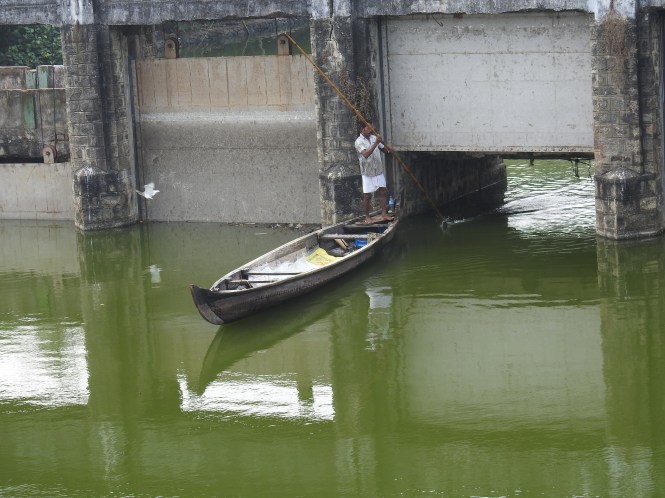
A channel of water runs parallel to the road and is navigable. Most of the bridge crossings are very low but the boatmen know how to do the crossing.
5

4

As you enter Cherthala, you will see a unique model of a Lighthouse. It is first one so far along India’s coast we have seen which is built on stilts.

3

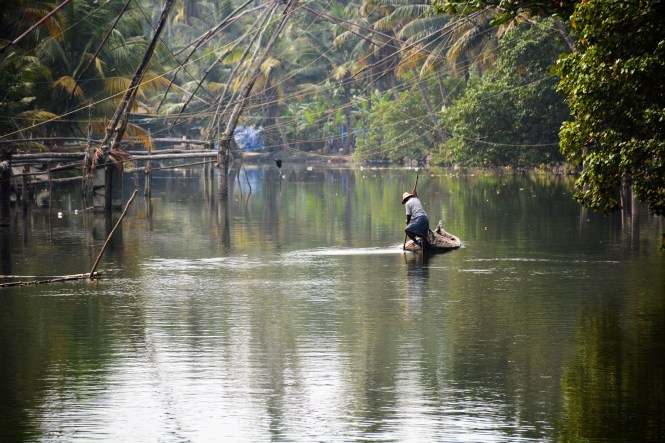
Cherthala beach is quite good but better still is the creek where people are dredging for sand.
6

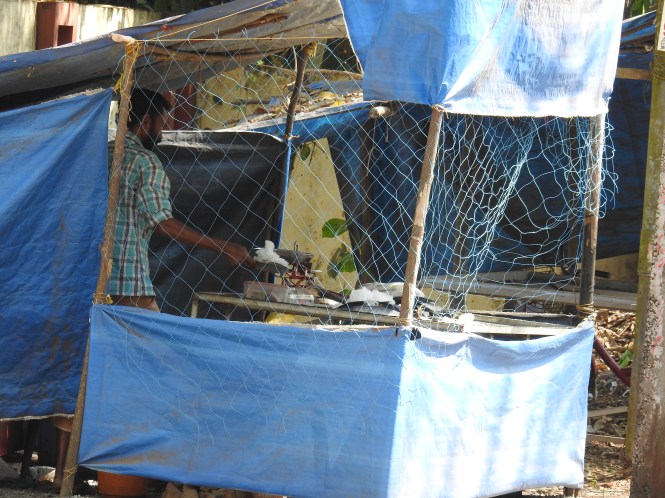
On the way we can see the Malayali ingenuity at work everywhere. For example this fish vendor has nets around his shop to prevent his fresh  fish jumping back into the see.
dscn0466

In fact it is to prevent theft of fish by crows.

Somehow during the drive we lost the Cherthala Cathedral and remembered it much later. By that time it was too late to come back. It is not on the main road.

We had booked a hotel room at Kottayam on a website. We drove all the way to Kottayam and beyond and could never trace it. We return back and find accommodation at KTDC Kumarkom within the Kumarkom Bird Sanctuary.

The stay at the resort start with lunch with Karimeen which we had missed earlier in northern Kerala.dscn0255
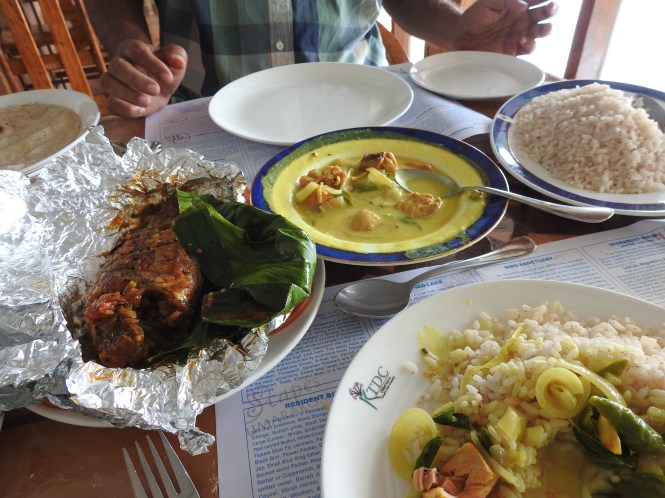
Karimmen Pollichathu and Fish Moilee with Boiled  Rice should be followed by a nice nap after the long drive from Kochi.

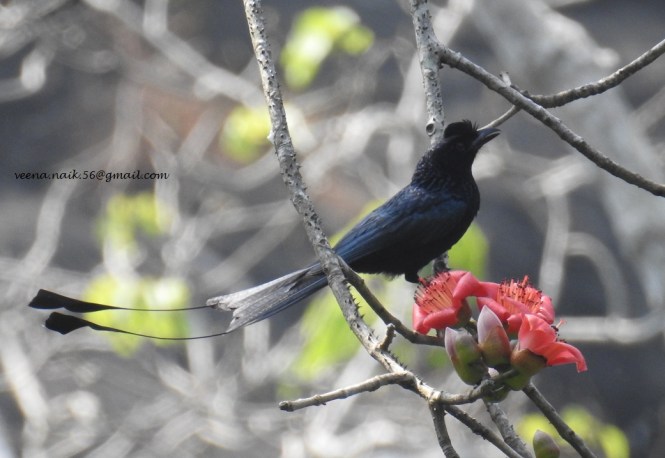
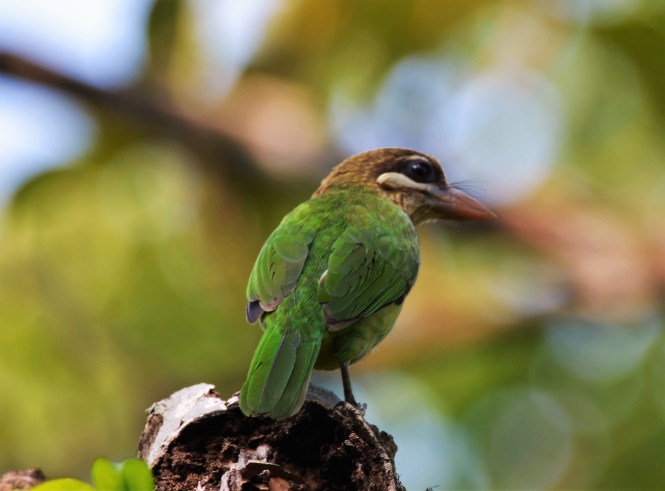
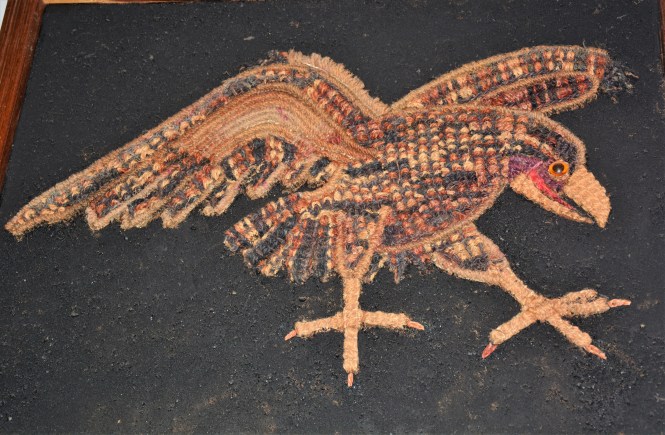
Come morning and it is birding time. Long walk through a dense vegetation by the side of the lake to find practically nothing. The day was saved by a Paradise Flycatcher, a Barbet at nest and a Racket-Tailed Drongo.
dsc_4214

White-Cheeked Barbet.


The lower one is my own bad photograph, not a painting.  Please note that the feathers are up to the lower left corner.It is an amazing bird.

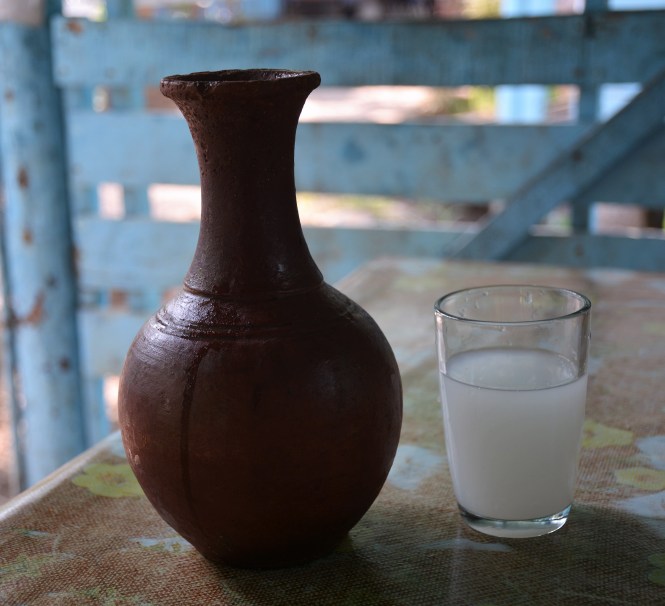
After the long walk till lunchtime, we deserve a good lunch which we decide to have it at a roadside local restaurant serving the local cuisine. It is a ‘Toddy Shop’
dsc_4238

Toddy, a sap from the Coconut ( and other palms) can be drunk before it is converted into an alcoholic drink. This is not to say that I have an aversion to alcoholic drinks.

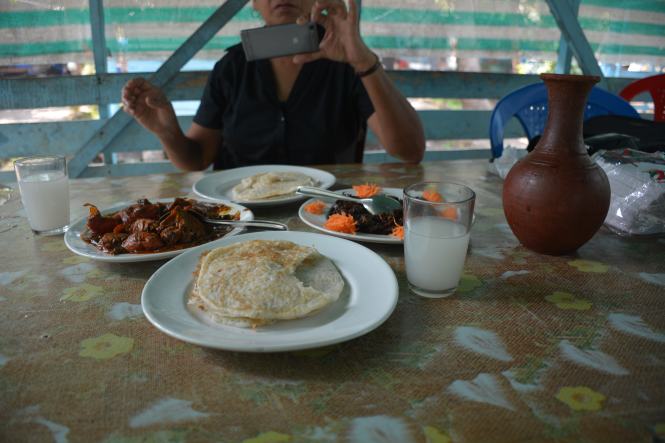
What is served by way of food (our choice) is more amazing. Fresh Crab Curry, Fried Shell-fish (about this delicacy a little later) and the Dosa ( appam). In my considered opinion, one cannot have anything better than this to eat.
dsc_4240

What do you do after such a meal? You are right, sleep.

Get up and go for a boat ride in the lake. Kumarkom is perhaps the place from where the Great Kerala Backwaters Romance starts although it is possible to travel from Aleppey to Cochin up north by a Water-Bus.

dsc_4243

The waterway

dsc_4279

The boats in which one can live( air conditioning included)

And of course there are the Birds in the lake.

The large picture is of Snakebird or Anhinga , the upper right is the While-Breasted Kingfisher and the lower one is the Little Cormorant.

Now it is the time to leave Kumarkom but before we do so, there is a small advertisement around which we would like to respond to. It is about the fossilized (putrified) Driftwood.

Mrs Raji Punnoose was a Post-Graduate teacher in English on the Andaman Islands when her husband was working for the Ports Authorities. She collected a large number of specimen of Putrified Driftwood from the Andaman Sea.

These specimen are now displayed at the Bay Island Driftwood Museum at Kumarkom.

dsc_4311

The museum has its own building and deserves a visit.

dsc_4306

I am not conversant with this subject and would not like say anything beyond saying that the story and exhibits and the sound that they make are impressive.

XXXXXXXXXXXXXXXXXX

We reach Alleppey or Allapuzha late in the afternoon and catch up with the Lighthouse. There are two pictures below. The first one is the actual Lighthouse and the second is as it appears on a Postage Stamp issued by the Government of India. Never trust a Government.

The Lighthouse has a small Museum attached and the entrance fee includes the entrance to the museum. One should have a look at it especially if one is interested in understanding the Lights of a lighthouse. It displays the various types of the lights.

Get back to the town and go to the Backwaters.

dsc_4355

It is brilliant.The way the backwaters have been used for practically every aspect of the life of this region. More to come on this.
dsc_4369

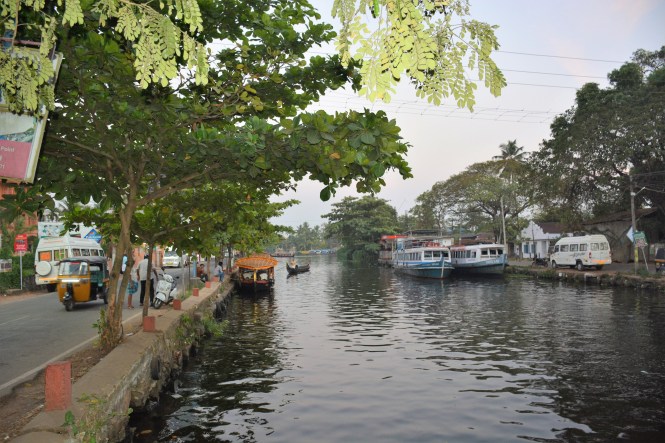
The waterways have been used as roadways for the centuries. They have everything that a road has including the petrol bunk.

The operators dont have to carry the diesel in cans.

One of the things you should not miss when you are in Alleppey is the Coir Museum.

dsc_4377

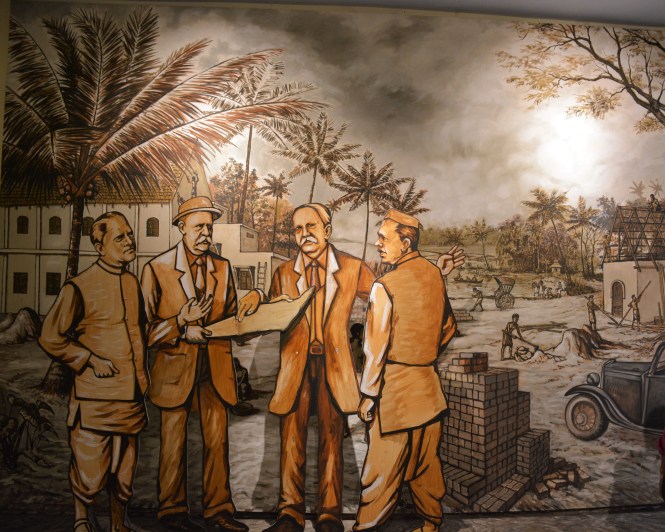
You enter the Museum and get a shock when you are told that the first coir factory in India was started with Europeans in 1859. I always thought that it is a ‘traditional’ industry going back many centuries. They were assisted by two Bengali Technicians who had expertise in the Jute industry. That establishes the connection. This is the second such shock to me after the discovery that the Mangalore tiles were invented by a Swedish missionary.
dsc_4381

James Darragh and Henry Small establishing the first Coir factory in 1859.

The Museum is exhaustive in the sense that it displays the history and the processing involved in the industry.

It has a workshop and Training Centre for the Industry and it displays a very large number of items that can be manufactured using coir.
dsc_4440

Kerala has unending festivals.One enjoys the sights even without understanding what is going on.

The people here are master inventors.

What do you do when the falling fruits of your coconut palm damage your roof tiles?

What do you do when your neighbours steal the falling coconuts?

This is what you do!!.

dsc_4266

Text by Suryakiran Naik suryakiran.naik@gmail.com

Pictures by Suryakiran Naik & Veena Naik
79. GOD’S OWN COUNTRY – 7. Thrissur, Chalakudy.

In the previous post, we had covered most important coastal parts of Thrissur district. What we did not touch on was the city of Thrissur.

Thrissur or what was earlier known as Trichur is called the cultural capital of Kerala. It has a number of religious institutions and was once a major centre of Hindu religious education. It is also important for some Christian denominations.

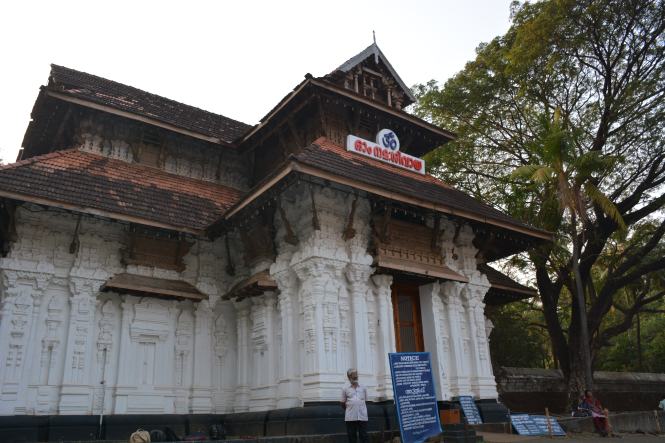
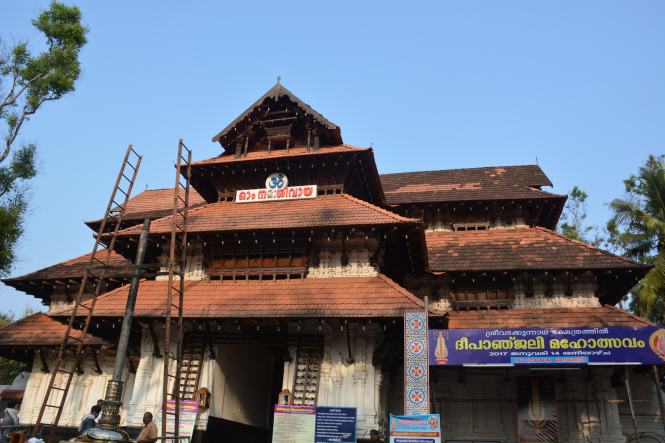
The town appears to have been built around a temple complex with huge grounds which serve as grounds for numerous socio-cultural activities. It is also the ground for the annual festival of Pooram. All those decorated elephants that you see in the tourist brochures are from here. The festival relates to Shri Vadakkunathan Temple which is the most important shrine in the city.

It is an imposing temple and nicely maintained.

dsc_3311

Peacock feathers are still sold openly in the compound of the temple.

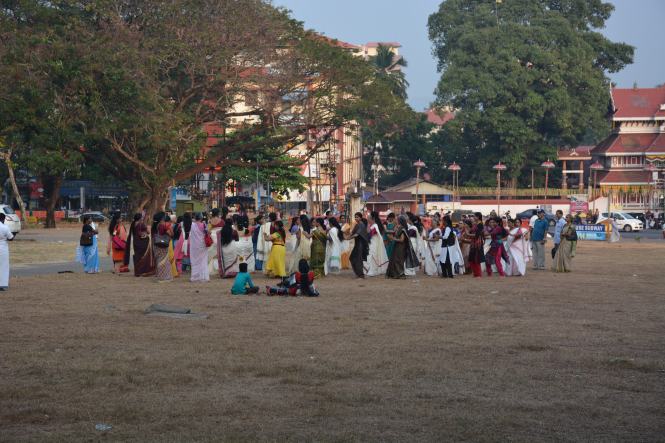
The area around the temple is used for various activities like practicing for group dance.

dsc_3363

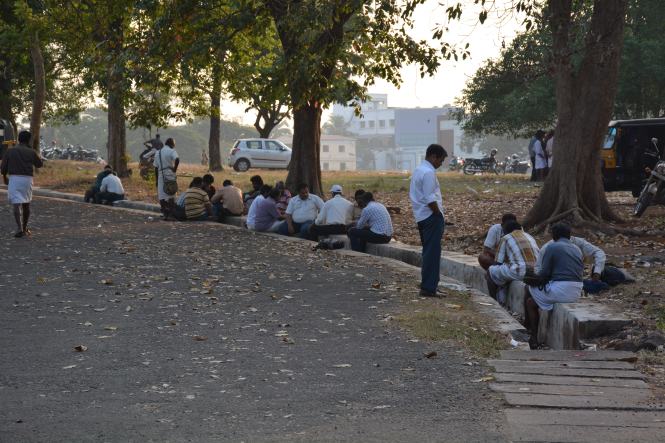
The people seating here in small clusters are not gossiping. They are playing Chess.

dsc_3354

There is a second temple on the backside of the main temple here. It was late and I could not gather the details.

dsc_3366

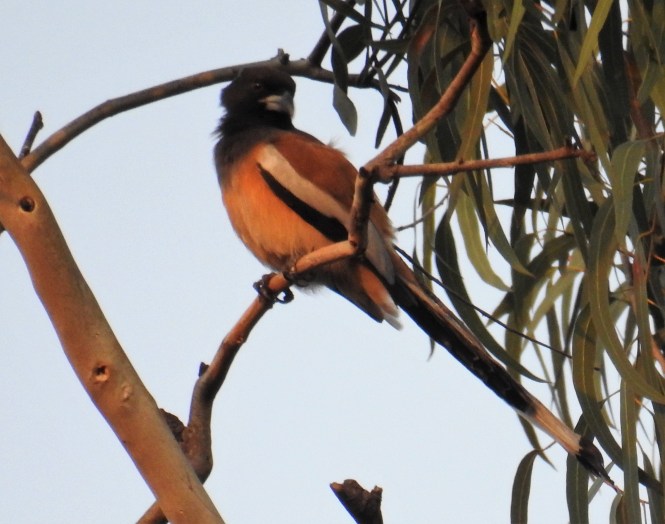
If you have interest in them the compound sports a few species of birds. Here is a Tree-Pie and a Barbet.

dscn0012

dsc_3331

The skyline of the town is dominated by the Basilica of Our Lady of Dolours has the tallest church building in India. It belongs to the Syro-Malabar Catholic Church and dates back to 1814, 200+ years old.

dsc_3359

Thrissur also has a Chaldean Syrian Church which belongs to the St Thomas Christians who trace their origins to Thomas the Apostle who came to India in 58 AD.

dsc_3389

Thrissur has a couple of  Museums. Even the small towns in Kerala sport a small museum. The Keralites appear to chrish their past of which they are justifiably proud. We had to skip the museums for paucity of time , except for the museum at Sakhtan Thampooran Palace. It is a small museum and could have been skipped in favour of the Museum of Art.

The place was actually a fort and some signs of the same are still visible in the noise of the Bus Station on the opposite side of road. The Palace is in solid teakwood and a beauty in simplicity, characterestic of Kerala.The contents of the museum has not much to write home about.

Thrissur town is not located on the seashore but the district has a few beaches. Snehatheeram is one of the newly developed one. Getting to the beaches on the seaboard from the highway is a challenge. At Snehatheeram beach, this restaurant roof is made entirely of the Coconut leaves, a rarity these days.

dsc_3286

TheBlueDrive is a coastal journey and we have avoided the temptation to drive some distance towards the hills which are greener and cooler, especially in the Western Ghats. An urge to do some forest birding takes us to Chalkudy which by itself is not far from the coast but the Ethirapally falls that we visit are.

If you have been watching Indian movies, especially the Soth Indian ones, you will have seen Ethirapally falls.

To reach this place one has to do quite a bit of descend and then a steep climb.

The forest area of Vazhachal is quite extensive and has waterfalls at three places. Two are not as spectacular as the one above.

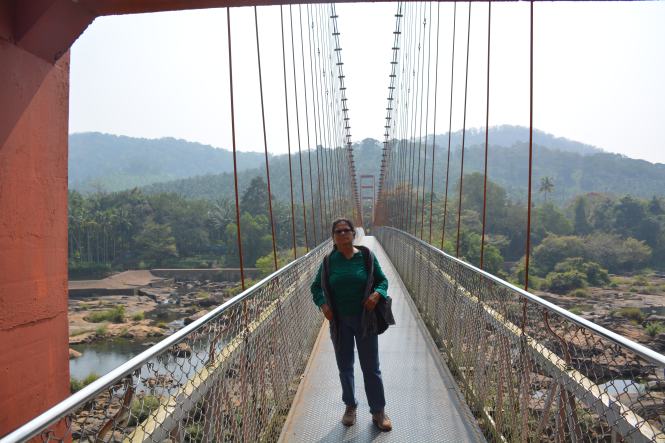
On the way is the Thumboormuzhy River Garden with a hanging bridge.

dsc_3736The hills of the Western Ghats are spectacular and beautiful but are outside the scope of our present travel programme which is cover the entire coast of continental India. May be another time.
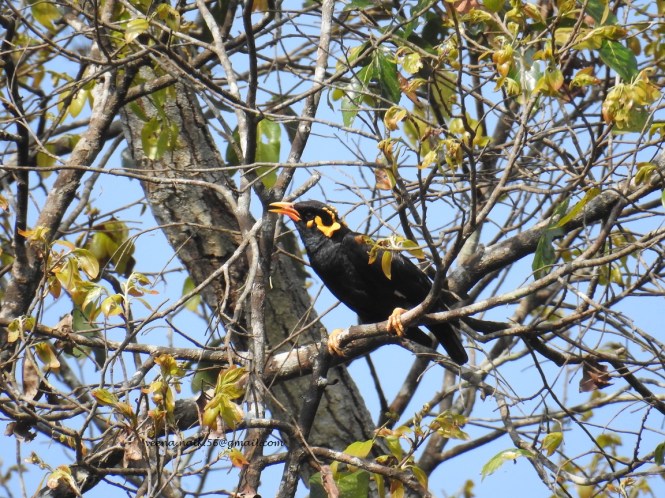
Our objective in coming to the hills was to do some birding. We stayed at Chalakudy in the plains and drove into the hills which took time and consequently we did not have the best of the birding time. That is not to say we did not see anything at all.

The Hill Mynah, not a easy bird to come by was there to welcome us.

dscn0049

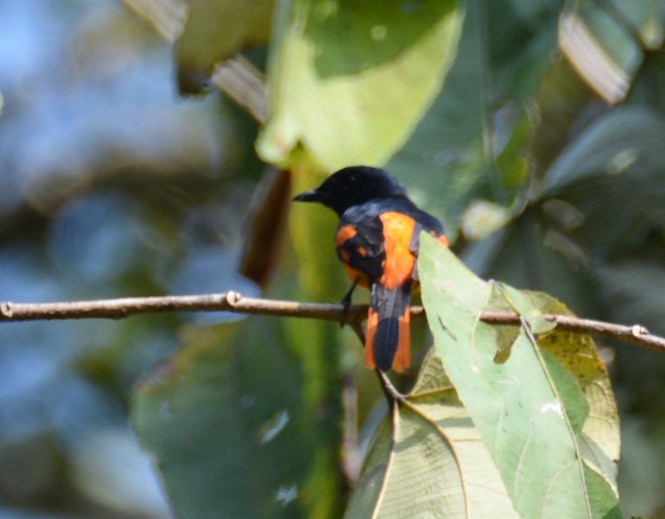
My old friend Scarlet Minivet was perching high up in the canopy.

dsc_3535.

The Black Capped Kingfisher, normally found near the sea was not expected at the high altitudes but was found enjoying himself in the cool stream waters.

dscn0069

The Racket-Tailed Drongo had the insects on the newly opened flowers of Silk-Cotton tree to feed on.

dscn0111

The Pond Heron,proabably the commonest bird in India after the House Crow was seen enjoying himself in the flowing waters.

dsc_3622

We return to our base at Chalakudy and have a late lunch. At the restaurant on the highway we find some ‘Cutlates’, which we decide against and go in for ‘Meals’.

dsc_3752

The digression is not over. We have to get back to serious work now. The next stop is the great historical city of Cochin and the district of Ernakulam of which it is a part.

Text and Photographs by Suryakiran Naik

Additional Photographs; Veena Naik


78. GOD’S OWN COUNTRY – 6. Malappuram & Thrissur.

TheBlueDrive uses, as far as possible, the headquarters of the districts travelled along the coast as the place to spend the nights. Sometimes the district place is not convenient for the stay or it is far off the coast and, a town closer to the coast is chosen. In fact, this journey started from the district of Kutch and the district HQ are far off the coast and we stayed in a Gurdwara in a Village Panchayat area. Later on, in these travels we have had opportunities to spend the nights in very small places. Here is another one.

Malappuram our next district’s HQ is not on the seashore and our limit is 30 Kms. from the seashore to prevent ourselves straying all over the country. The obvious choice is Ponnani. ‘Pon’ in Malayalam means gold and Ponnani probably means the land of gold. The entire west coast of India seems to have been engaged in trading with the rest of the world in the past and was rich. Signs of the same are found in many places.

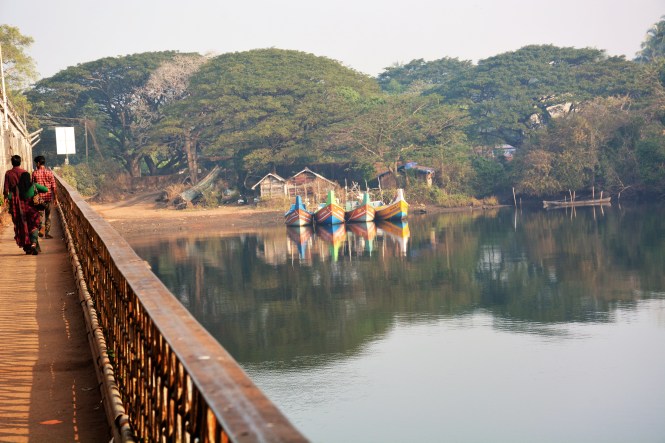
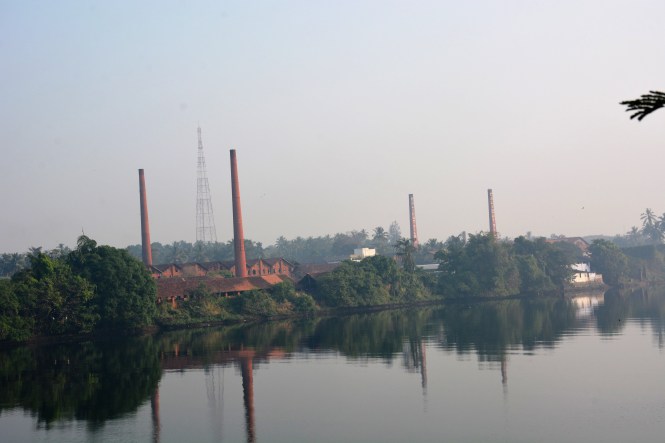
If you want to get out of Calicut district made famous by the great Vasco da Gama and others, you need to cross the bridge on the river Ferok. If you have the time and the inclination, please walk along the pedestrian bridge along the main narrow vehicle bridge. It will allow you some nice views of the river and the Tile factories along its banks.

dsc_3086

2

3

We drive along an amorphous and highly confusing road called Tipu Sultan Road. Some stretches of this road are a pleasure to drive on. It goes on and on along the coast and we end up at a place which we thought or expected would have a bridge to cross over to Ponnani beach. We find, not surprisingly, it does not exist. The geography pf the place looks like this on the Google map.

dsc_8351

We end up on the beach at Padinjarekkara. Nice place. One has to pay to enter it. One can see the beach at Ponnani on the opposite shore not very far. The boats are plying in the creek. They might be taking people (not cars) on the opposite side.

5


4

 The boats here practice the fine art of towing other boats. One can see the Ponnani Lighthouse from here.

6

After this we back to the highway and return to the opposite (southern ) side. This takes us about two hours of driving. We enter Ponnani, a modest town and find accommodation at a nice hotel. It is a surprising place for such a small town.

dsc_3169

Although Ponnani was once a part of the ancient trading network, not much is left of the distant past. One extant monument is the Ponnani Valiya Pally, a masjid built in 1518 AD by  Shaikh Zainudin Makhdum who apparently was a rich Arab mechant.

Please note that by 1518 AD the Portuguese were already establishing themselves in the Malabar coast. The Arab trade seems to have continued simultaneously amid the politics and the wars.

The masjid is built the old Kerala architectural style. Some scholars believe that these old masjids of Kerala were built in the  principles of Buddhist Chaitya Vastu, In this blog we have visited 4 such masjids earlier and this is the 5th. More to come.

dsc_3149As non-muslims are now allowed in the masjids, there is no question of an Atheist being allowed. Logically I should not have been allowed within several kilometers of the site.  I had to confine myself to some external pictures.

At the rear the masjid has a water tank which resembles one associated with temples in many parts of India.

The next place we visit is the Lighthouse which we had seen from across the creek earlier. This is a nice structure.

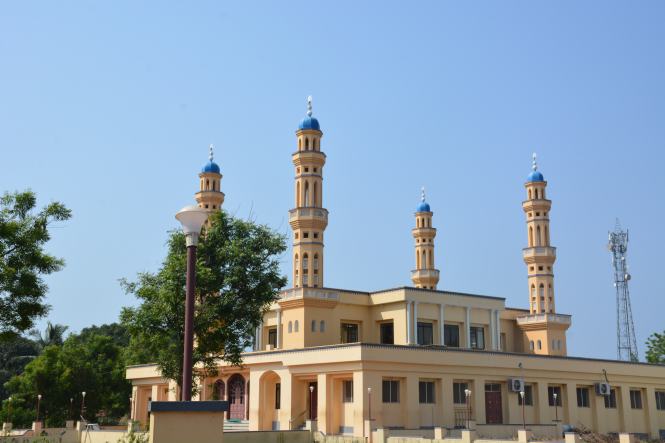
The town has another modern Masjid with Minars. It looks good but lacks the charm of the old Valiya Pally.

dsc_3124

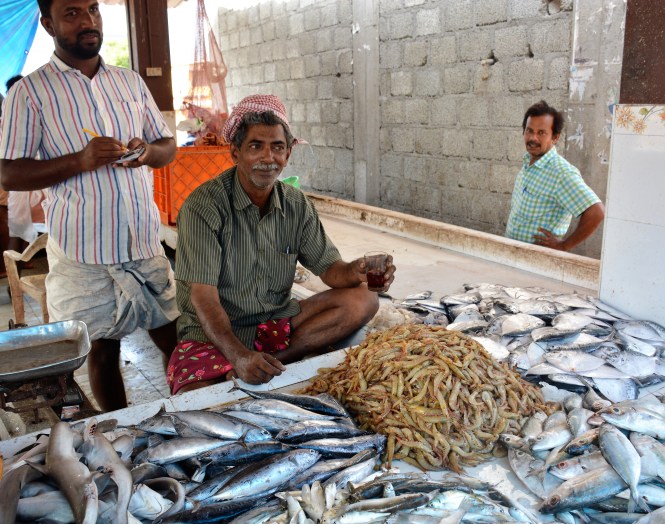
Opposite this mosque is my favourite place, the Fish Market

We come across this broad and flat silvery grey colour fish for the first time here. You would probably not find it in the northern parts. This is perhaps a resident of the Laccadive Sea.

Ibrahim insists that he be photographed with his stock in trade. He tells me the Malayalam names of all the fishes he sells. Unfortunately I have misplaced my notes.

dsc_3133

We decide to leave Ponnani after tasting the soft kernels of Tala (Borassus) palm. They are delicately soft but not  sweet. each fruit has 4 of them neatly packed inside.

dsc_3134

We leave Ponnani and enter the district of Thrissur (ex-Trichur).

If Kerala is God’s Own Country, the district of Thrissur (earlier known by the anglicized name of Trichur) is God’s own private Resort. God and His Prophets has sent their emissaries to this district with alarming regularity and consistency.

To start with, Lord Krishna  has an abode in the Holy District of Thrissur located at the town of Guruvayur. This place is considered as the most important of all the Vaishnavite sites in Southern part of India and has a huge number of visitors. Just about everyone who calls himself Hindu rushes to this temple.


It is a nice temple with a huge number of shops selling a huge number of things, mostly made in China. Can you imagine China benefitting from the Vaishnavite branch of Hindu religion? I salute them. I mean the Chinese.  I will not be surprised to see a Chinese-made idol installed here in course of time.

There is hall showing all ‘Avatars’ of Lord Vishnu in idol forms.Here are 4 of them.

The administration the temple has the temerity to ask an old friend of their Lord to dress in a particular way and deny permission to take in his cameras. Worst of all they ask me to remove my shirt. That I refuse to do. I  discard the Dhoti and become normal again.I have some decency still left in me.  I know how and when to meet my old friend. I am not at the mercy of the temple authorities. If your customer service is not good I move on to the next place. At the next place  I find St Thomas who does not impose a Dress Code and such silly restrictions. His ‘security’ does not ask you to remove your shirt.

dscn9963

Let us move on. The greatest advantage of Hindu history, Hindu religion and Hindu Gods  over the others is that they are undated. When you talk of Jesus Christ or Prophet Mohammed, there is a specific date as reference  in AD or AH. That gives them away. They are pinned down to history. Has anyone asked about the year of birth of Lord Krishna? Try asking it. You will get answers ranging from ‘before the beginning of the universe’ to ‘before the beginning of time’, ‘Long long time ago’, ‘you dont know these things’ etc. People however know the day of the birth in the lunar calendar.

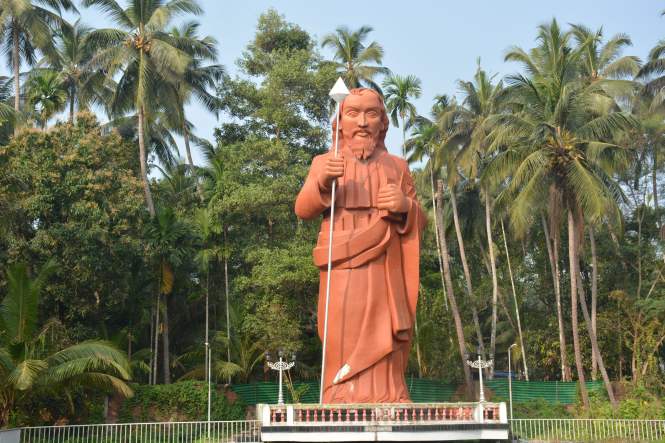
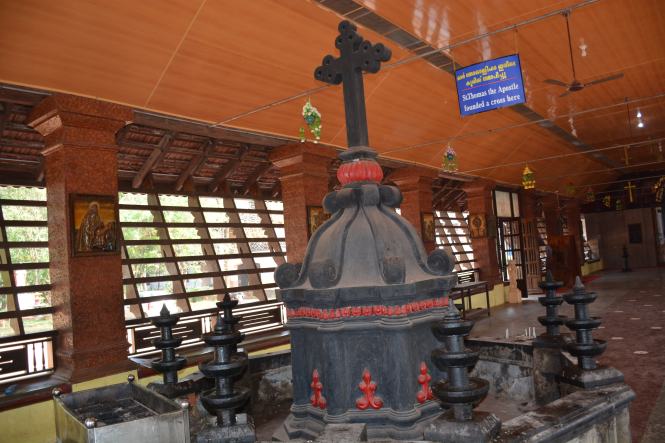
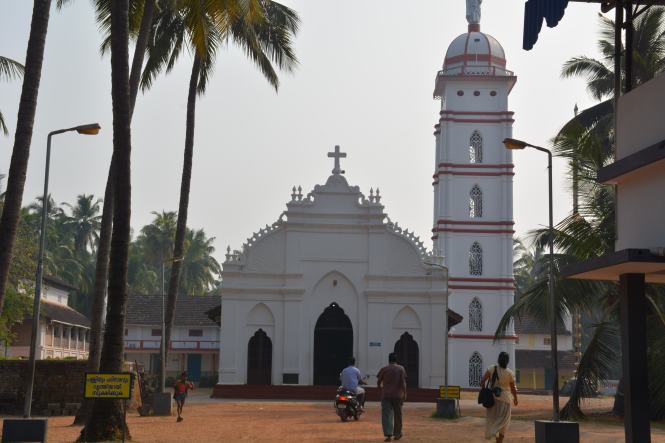
As Christians don’t have this advantage with reference to their Prophet they are stuck with a big problem. St Thomas the Apostle came to Kerala in 58 AD. He founded a Church or a Cross here and established 6 other churches. St Thomas was the direct disciple of Christ. If he established the Cross here in 58 AD , he would have been quite old by that time but he still had the energy and time to establish 6 others.

dsc_3226

I am not here in the God’s Own Country to get into these silly little controversies.What St Thomas did is not short of a miracle. It is not easy to travel in Kerala and Tamilnadu even now and St Thomas did it around 2000 years ago and also established 7 churches. It is said that his place of landing (by boat of course) is Muziri which in turn is supposed to be somewhere near Kodungallur. A replica of the boat is found here in Palayur,

dsc_3227

The church compound at Palayur we are referring to also has a museum and statuary displaying some incidences in the Saint’s life which include ‘pacifying’ an elephant and a tiger.

Anyway. St Thomas installed a cross opposite Marhaba Chicken Centre. This is claimed to be the first Christian establishment in Asia.

dsc_3184

Here is the Cross:

dsc_3234

Unmistakable Kerala woodwork all around and the stonework to support it. Perfect ventilation. No complaints. Thank you, sir.

Here are the other related structures:

dsc_3228

I have referred to this place as a ‘Church’ although officially it is  St. Thomas Archdiocesan Shrine.

dsc_3183

The place where St Thomas is reported to have landed is called Muziri. It is said that this was the greatest port in ancient times and a busy trading place where people from Egypt, Middle East and Europe (then Roman Empire) visited. In Kerala they even organize a Muziri Festival. The problem is nobody knows where Muziri is or was. It is speculated that it was around the place called Kodungallur.

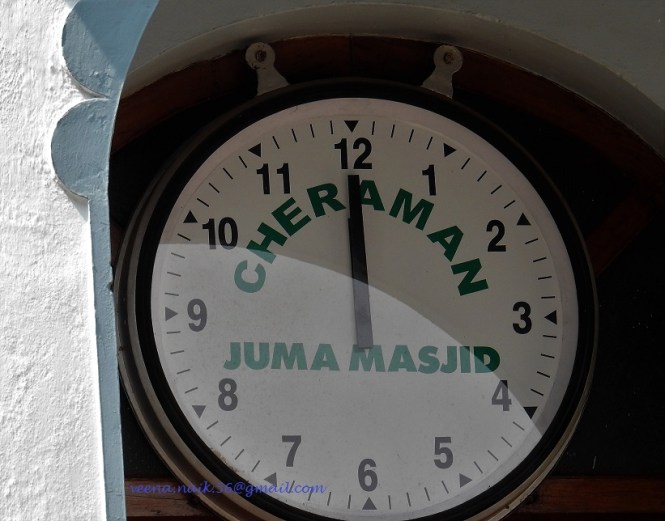
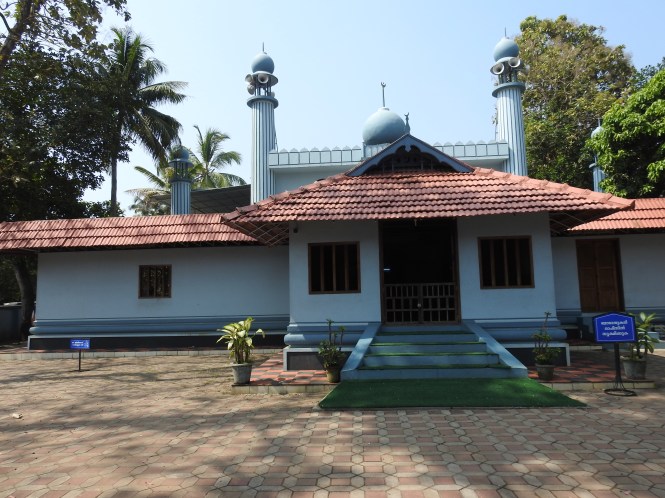
Welcome to Kodungallur. Here we find what is claimed as the first Mosque or Masjid in India and 3rd in the world.

Cheraman Juma Masjid is claimed to have been set up by Malik Dinar a contemporary and a follower of Prophet Mohammed and  also a rich merchant. That makes sense as Prophet Mohammed himself was a merchant.dscn0025

dscn0024I must confess here that the management of the Masjid was good to me. Despite my telling them that I am not a muslim and not likely to be one, they allowed me to go inside. No, not with my wife of course and not inside the sanctum.
About this Masjid and a few others in Kerala and one in Tamil Nadu, I would be making a separate post as there is a lot to be written about them.

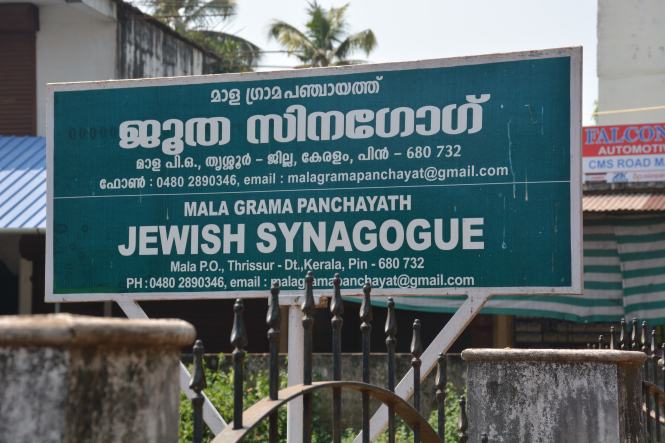
So let us now move to another place in Thrissur district. How about a Jewish Synagogue?

It is here, the oldest Synagogue in India.

dsc_3476

At a place called Mala, the Malabar Jews established the oldest surviving Synagogue in the 11th century. Jews are much older than the Christians and Muslims but the Synagogue is not. Secondly the Synagogue is not in use since 1955 when the Jews decided to migrate the Israel.

Despite their absence, the place is kept is neat and clean but does not have space around it. This is what the urban congestion does to the old monuments in many parts of the world.

Now you should have some idea about why I am calling  this district the God’s Private Resort. And remember we have not even reached the district Headquarters of Thrissur. There is more Thrissur to come but allow me to stop this post here.

Text &Pictures : Suryakiran Naik

Pictures : Veena Naik