35. UDVADA

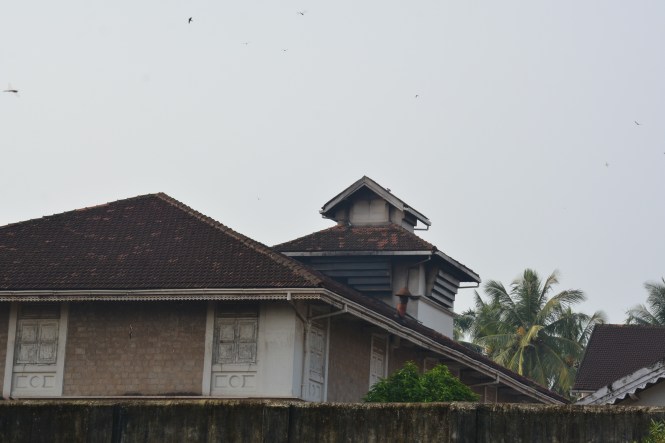
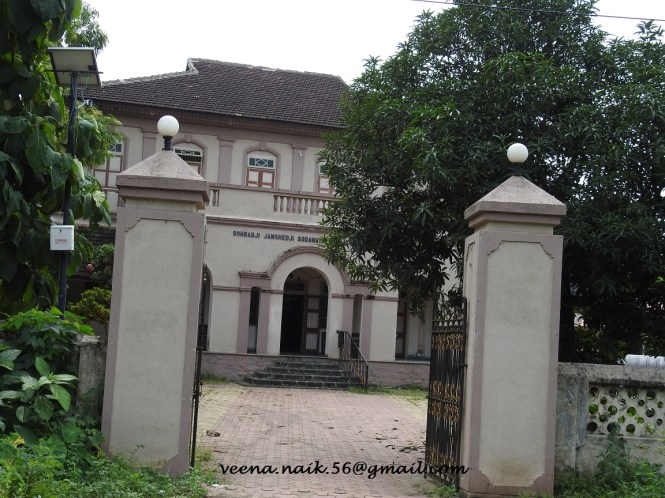
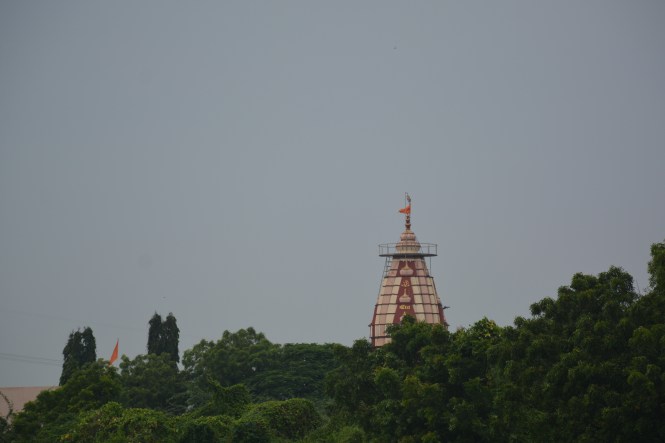
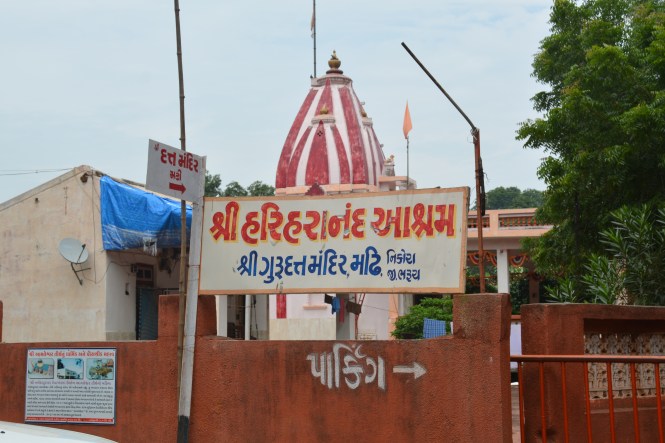
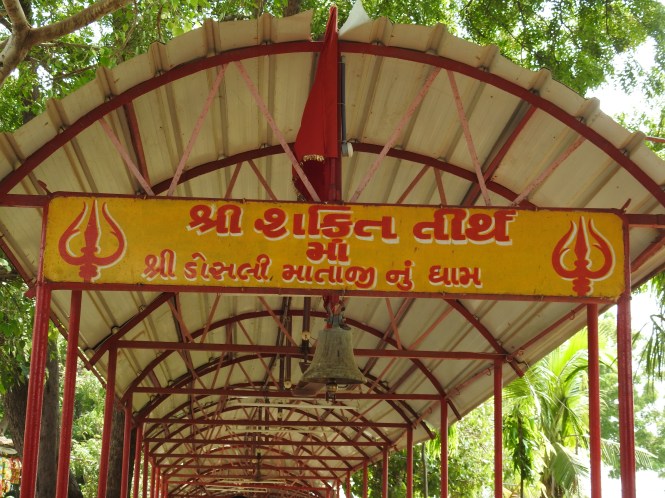
Photographing Parsee temples is not an option open to non-Parsees. Parsee temples do not allow non-Parsees inside. That does not prevent us the lesser mortals from using our cameras from outside.dscn5691

One can see the marks of the Holy Fire here.

dsc_1073

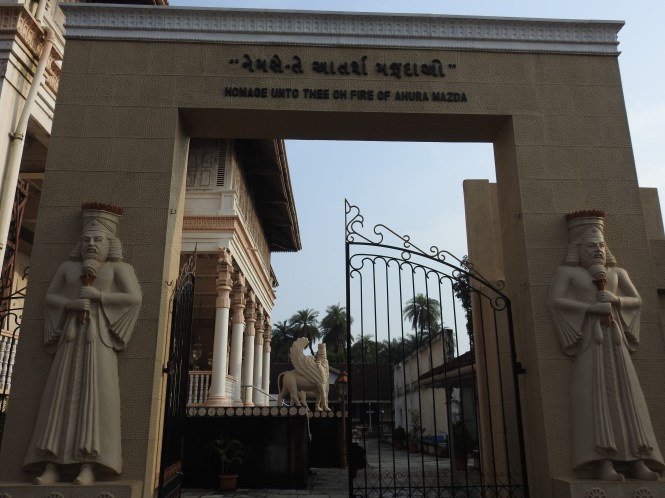
Among the familiarities we find here is the Dwarpal-like figurines at the gate.

dscn5694

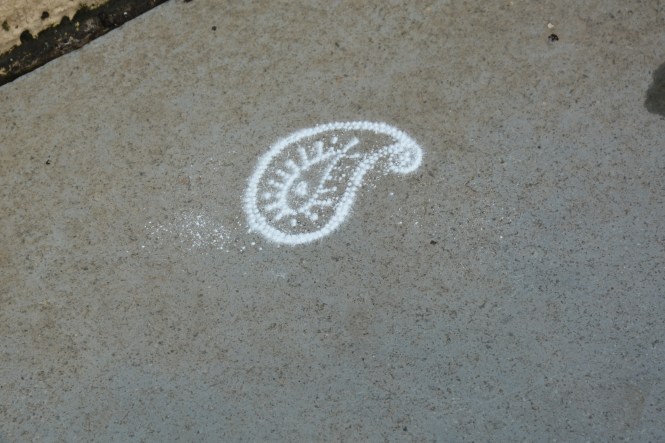
And the ‘rangoli’ on the ground: The Gujarati/Marathi ‘Toran’ is also a part of Parsi culture.

dsc_1059

We start our journey in this small village with a delicious lunch at Sodawaterwala. They have rooms but we cant stay there. The guests have to be Parsis.

1

Most of the Parsi part of this village has the streets made of interlocking bricks.

dsc_0975

The village has a beach but nota very clean one, the sand is not good at any rate.

dsc_0960

Any stranger will be able to make out that this is a very old place.

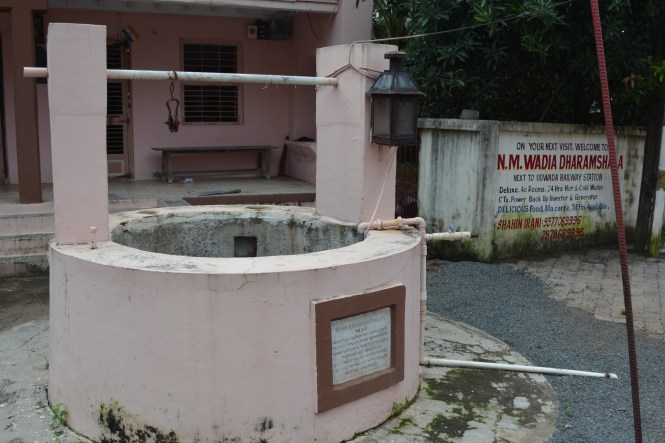
The town has water wells in many places. The one in front of our hotel is of 13th Century. It still holds water.

dsc_0969

The charming village also has an interesting Parsi Information Centre which has many exhibits providing insight into the history of the Parsees.


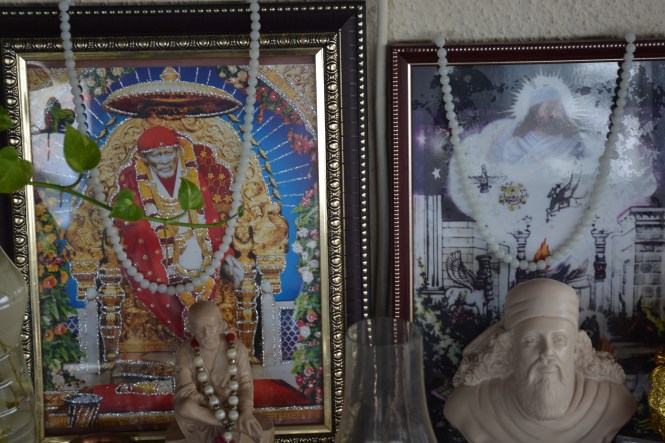
This man who stays in the village has spent time in Pune  and has mixed up his Iranian-made religion with the local Gods, a strange mixture.

dsc_0958

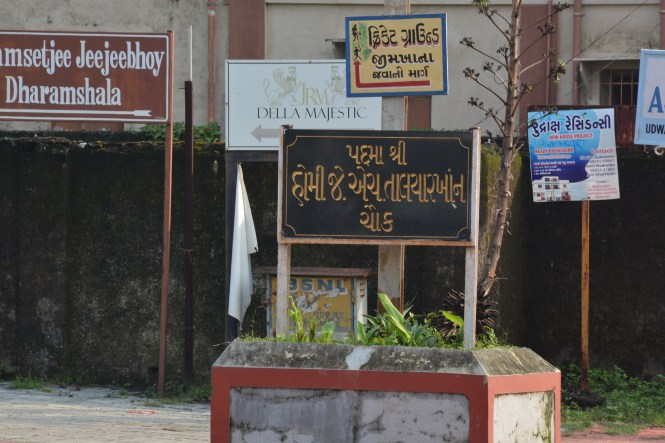
Homi Talyarkhan has a chowk named after him in thevillage.

dsc_1091

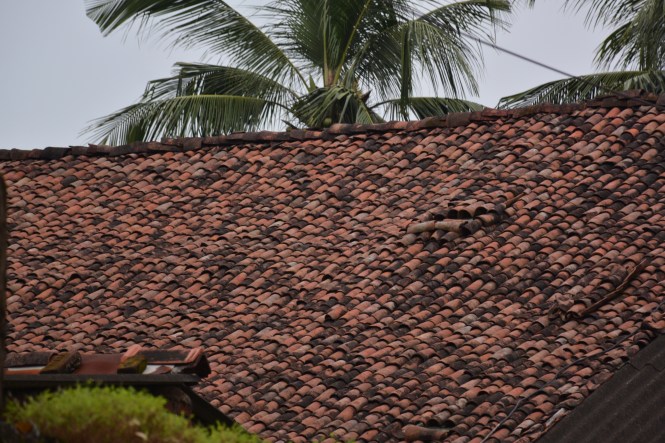
This kind of tiles are still in use in Udvada although the streets have interlocking blocks.

dsc_1031

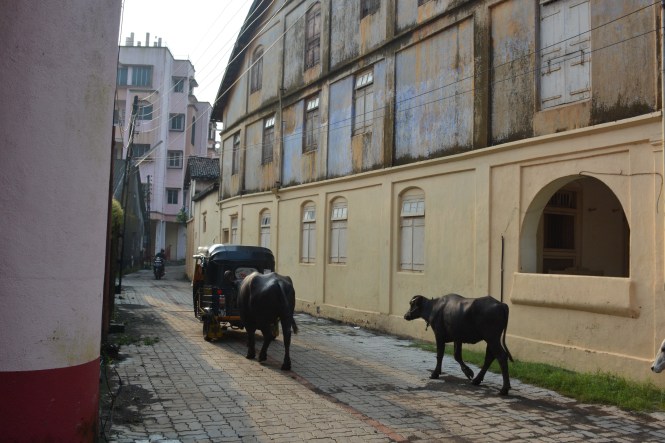
If you are from Udvada, own a buffalo who needs to be taken to the doctor, you sit in a autorikshaw and drag the buffalo with a rope.

dsc_1035

dsc_1038

24th Sept. 2016

Posted on 30th Sept. 2016


34. TITHAL, VALSAD, DHARAMPUR, BARUMAL, UMARSADI

Tithal is the beach close to Valsad town, quite famous and highly overrated. As we have decided to stay on the beach, we try our luck at three different hotels and decide not to stay there. Every hotel wanted to know if the room was required for the day or for the night.

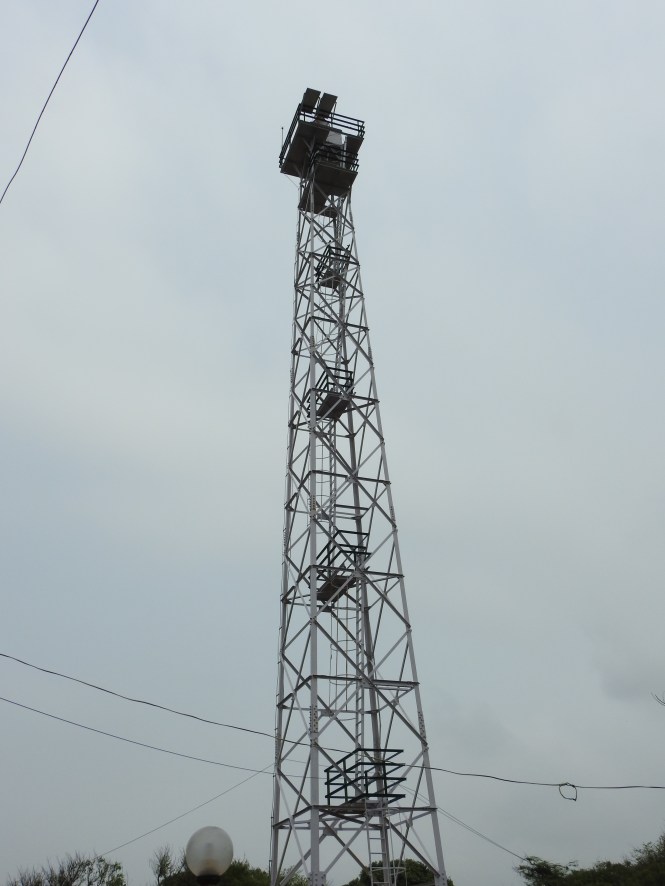
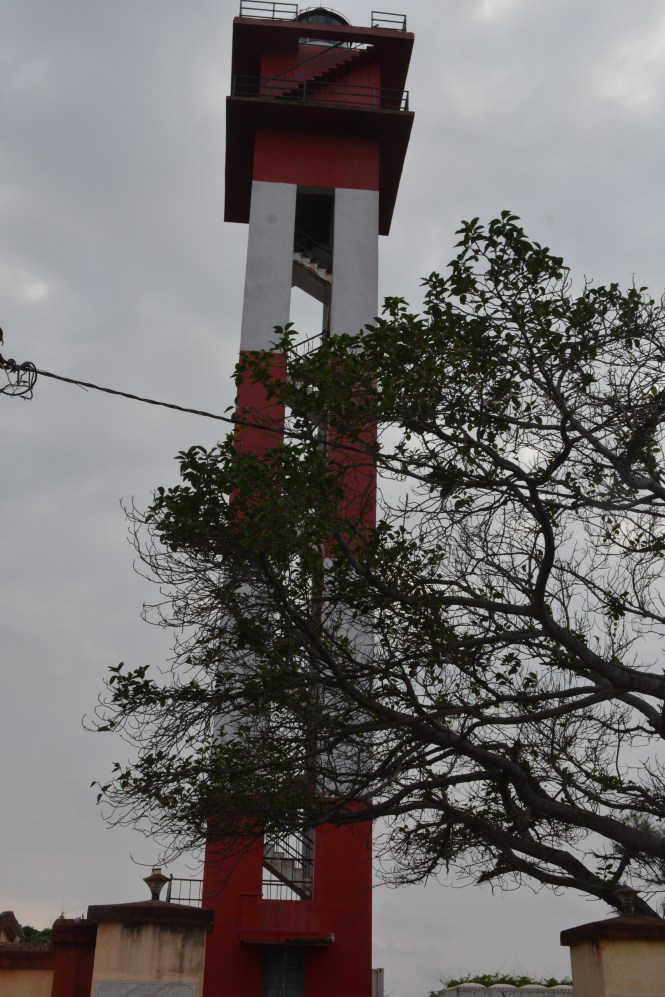
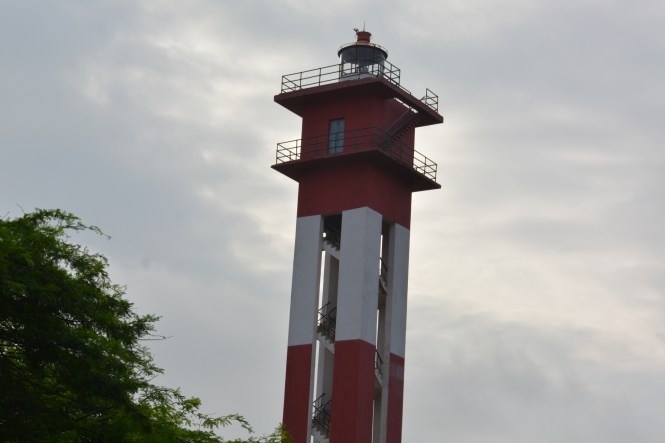
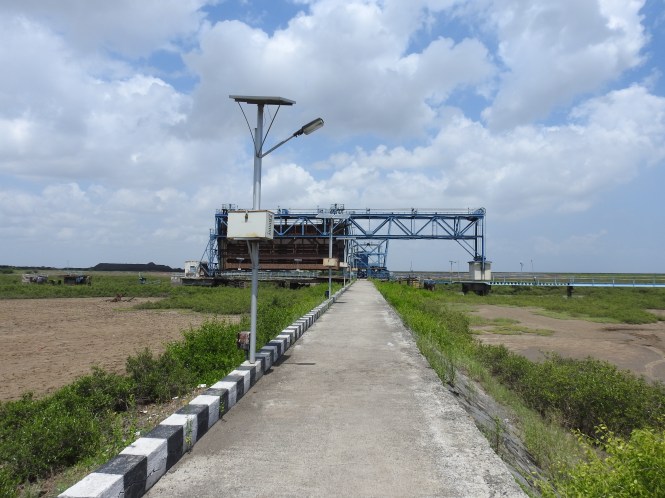
Another reason for our Tithal visit was the existence of a Lighthouse. The lighthouse is located at the extreme end of the beach and takes quite an effort to drive through the fishing village on the way. The lighthouse is a lattice structure and not the typical lighthouse.

1

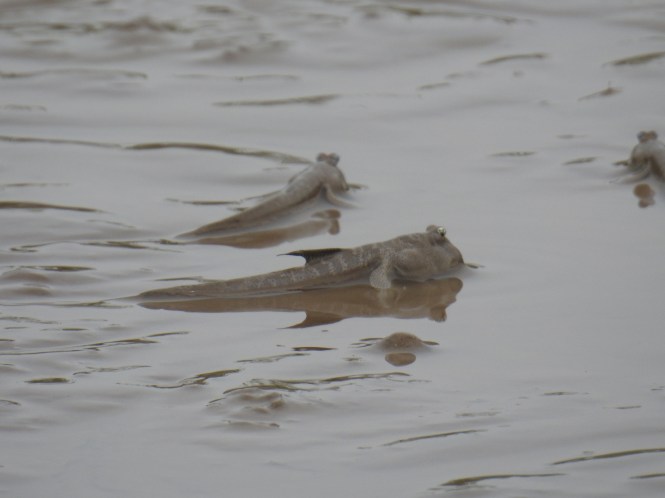
In the creek close to the lighthouse one can find these large mudskippers at low tide.

2

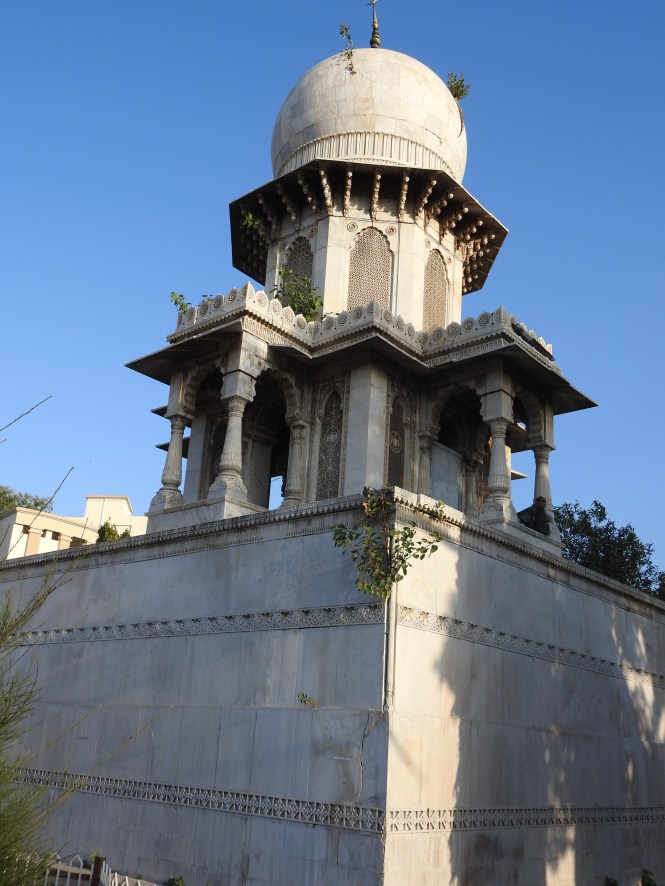
Valsad town by itself does not offer many interesting places to visit. The centre of the town has this Jyoti Minar in a small park. A very nice structure of 1962 vintage. It is not maintained well.

3

4

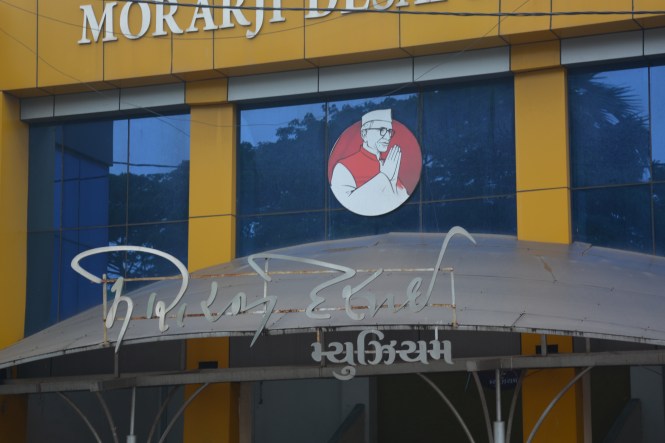
Morarji Desai the Prime Minister of India has a museum dedicated to him at Valsad. may be there are more such places in town which we did not come to know.

dsc_0822

During our conversations with the hotel manager at Valsad, the name Dharampur appears. Further inquiries reveal that it has a Tribal Museum, quite an interesting subject. We decide to visit although the place is not on the sea coast.

We reach the place too early for the museum to open. It opens at 10.30 m and we have two hours to go. Someone advises us to visit Barumal a nearby place which has the 13th Jyotirling. We had heard of 12 and since we have the time, we decide to go in for this one.

Not a great temple and photography is not allowed. Hence no pictures.

Dharampur is a vintage princely state originally created in 1262 as Rampur. The museum is called Lady Wilson Museum named after the wife of a British governor of Mumbai.


lady-wilson

The museum has the ground floor displaying articles of Natural History, obviously from the hunting and collecting days of the Maharajas. The first floor displays exhibits related to various tribes of India and other countries. Quite good.

The museum displays a number of dolls from European countries as also a stamp collection, both appear to be the results of royalty travelling abroad.

We make inquiries about the royal family and are told that there are no descendants are active, at least not locally. Yes, there is a palace somewhere but not maintained. No access.

The Museum is run by Government of Gujarat and the entrance fee is re. 1/- No photography is allowed. fair enough.

We are back on the coast and move southwards. The destination is Udvada, the religious capital of the Parsees but we have decided to go through a couple of fishing villages on the way, before we make a halt at Udvada.

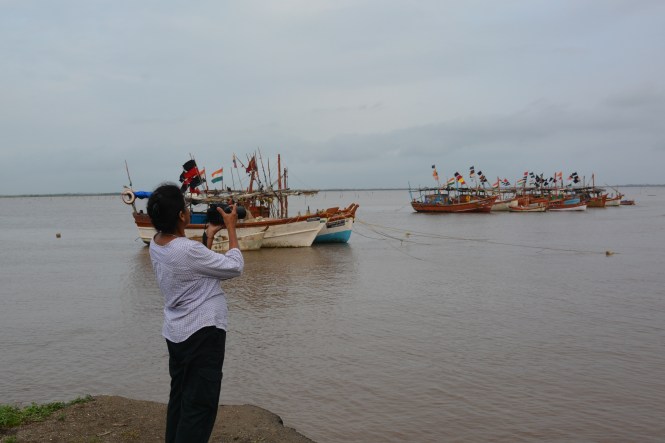
The fishing village we land in is called Umarsadi- Machhiwad. Here are the glimpses.

dsc_0859

dscn5621

In the village we come across this thorny plant. the stems as well as the fruits have thorns. The villagers warn us to keep away from it as the thorns can be painful.

dsc_0883

Only this reptile species can use this plant as its hunting ground.

dsc_0913

23rd/24th September 2016

Posted on 30th September 2016


33.NAVSARI, BILIMORA, DHOLAL PORT, TITHAL BEACH, VALSAD

Navsari town is an old place but does not have much by way of monuments. The major landmarks are the Parsee temples. Parsees have lived here for close to ten centuries. The major monuments are the two Fire temples. (only Parsees are allowed inside, hence no inside pictures)
1

2


3

AND This school.

4

5

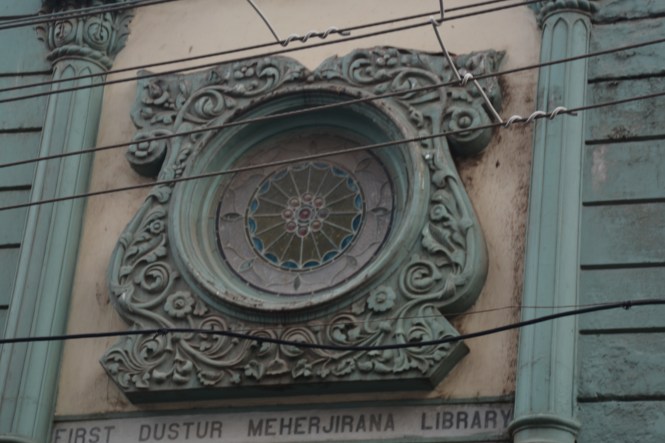
AND This famous library which is said to contain historical documents and has the reputation of being storing data in the electronic form from an early date.

6

7

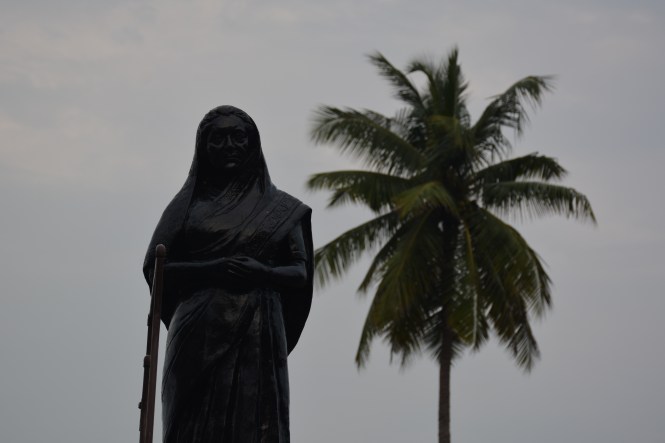
Indira Gandhi, who was married to a Parsee has a statue in the town.

8

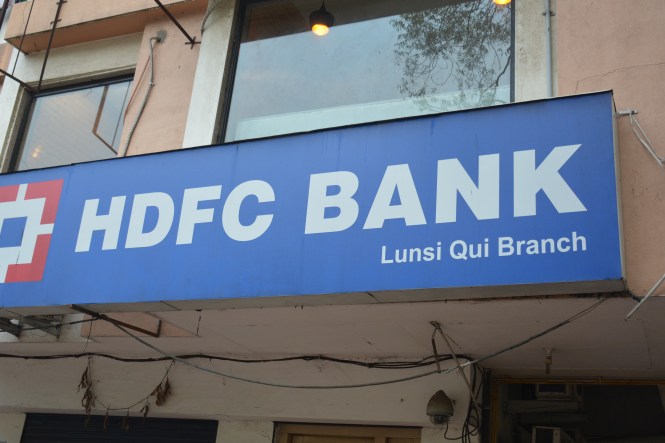
The HDFC Bank has a branch at a place called Lunsi Qui.Does anyone know what it means and which part of China it belongs to?

9

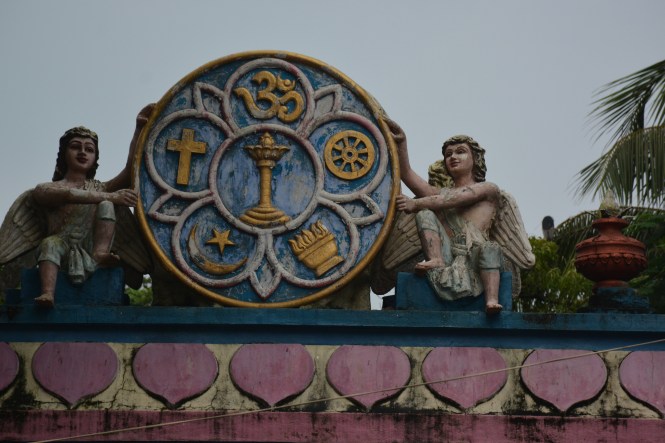
The Satya Saibaba has presence in the town. The Parsee fire is represented as among the religions his teachings incorporate. Good PR.

10

In Navsari they provide benches for the goats to sit on.

11

The ‘meduvada’ made at the hotel we stayed at are oversize, the biggest I ever saw. Compare with the Times of India below.

12

We move on towards Valsad another town with Parsee history. On the way one can see some beautiful villages. Please note that when I say ‘On the way’ does not mean we take the shortest and fastest highway. We take the small ‘coastal’ roads so that we are close to the sea. After all this is the Blue Drive.

dsc_0789

Bilimora is another Parsee town. The movie ‘Mother India’ was shot here. We don’t get to see much of the place. We visit a temple on the way. Somnath Mahadev.

dsc_0774

In the temple compound I noticed a tree which we used to call ‘badam’ tree in my childhood. There are on fact two different trees- one male , one female, growing nearby.

We move on to the next place along the coast before we reach Valsad. It is called Dholal port, a nice little fishing village.

dsc_0821

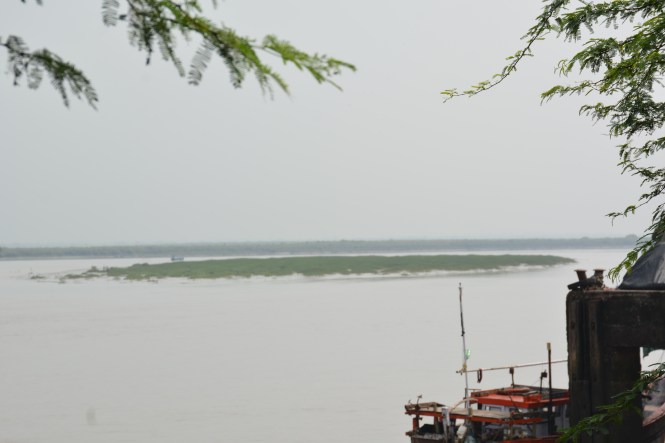
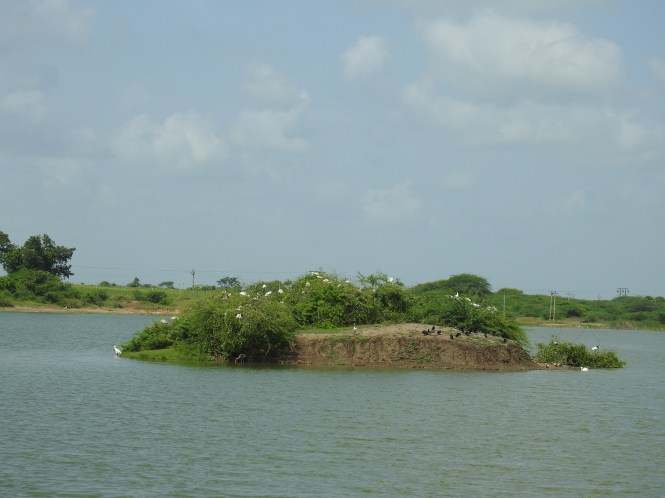
It has a couple of islands in the creek, the smaller one is here.

dsc_0817

Valsad follows.

23rd/ 24th September 2016

Posted on 28th September 2016.


32.URBAT, BORSHI, DANDI (NAVSARI)

We leave Surat in the afternoon with a plan to sleep at Navsari after covering a couple of places on the way along the coast. The first place we drive to is a popular beach named Urbat.

1

The beach is quite good but dirty as most of the beaches in Gujarat are.

The next place is not far away. It is at the opposite side of Urbat in the peninsula jutting into the sea. This one is called Borsi has a Lighthouse ( called Borsi-Vasi Lighthouse) and a fishing harbour. The Lighthouse design is quite interesting. One can see the staircase all the time. Yes, one can go up the top but the stairs are slippery after the rains and the persons in-charge advised us not to do so as it could lead to accidents.

4

5

The fishing harbour is walking distance from the Divadandi. The boats are on their way in. Fisher folks are busy in their activities. This is not the high season but that will start shortly. They do get a variety of fish and prawns. The place across the creak is Valsad.

7  planned we get to Navsari at the end of the day. Finding a hotel was not difficult. We decide to stay here and explore the places around. The next morning, we proceed to Dandi the place made famous by the ‘Salt Satyagraha’, led by Mahatma Gandhi and an important event in India’s freedom movement. Reaching Dandi from Navsari or from anywhere else needs travel through these overgrown thorny Babool trees. This is a feature of many of the village roads along the sea coast.

7a

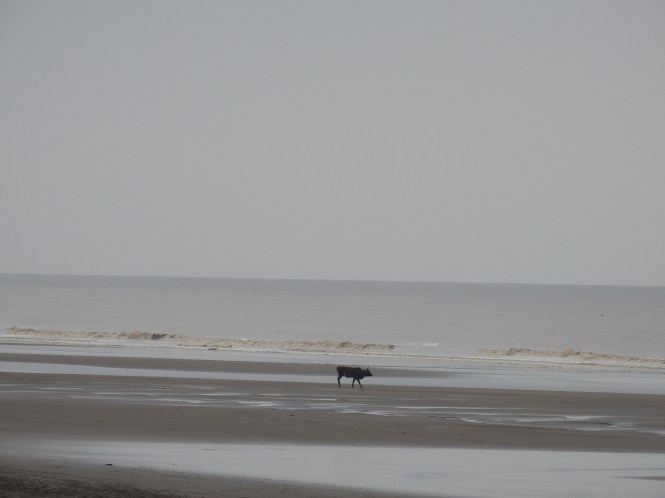
Dandi has quite a good beach with some afforestation for company courtesy Gujarat Forest Department.   Cows go there for their morning walk.

8

The place for prayers and Gandhiji’s statue is well-maintained.

10

9

Saifi illa where Gandhiji stayed the night prior to the event is well maintained and has a permanent exhibition of photographs and some articles of the time.

11

One interesting thing the caretakers told us is that the actual act of defying the tax on salt imposed by the British Government took place at the doorsteps of the Saifee Villa. This implies that the sea or at any rate the place where salt was extracted was close to the Villa. Now it is about a kilometre away. This phenomenon is observed at many places. At some places the sea has receded like here and at some other places it has gobbled up land. We can see many places along the Gujarat coast (including near the Dwarka temple) where a lot of money is spent by creating embankments to prevent this.

12

13

On the way back from Dandi we miss our way and go into wrong direction to reach a village to witness a prawns harvesting activity at Samapore.

The prawns are harvested once in two years and our visits coincided with one of those.

The prawns are large in size and are destined for the big cities and for export market after processing. These are captive bred prawns and not form the sea/creek.

A small distance away, this man is hunting crabs by the creek.

23

We get back to Dandi again and go to Bhutsad Lake. The area around this small lake has plenty of birds, butterflies, insects and plant species.


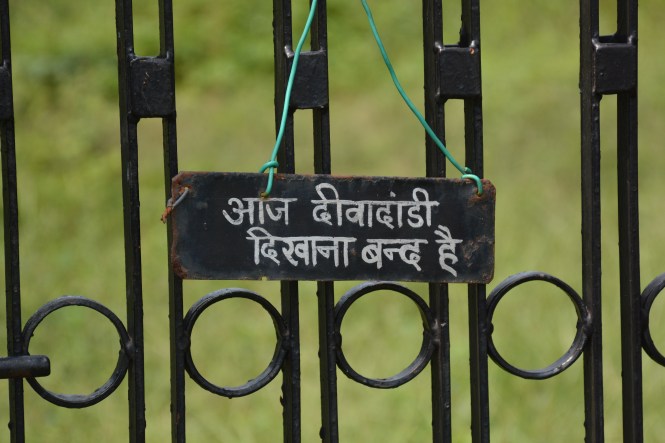
The next place we visit near Dandi is called Onjal. There is nothing much at this place except that it has a Lighthouse. No, you cannot visit it now. Come at 4 in the evening.

27

dsc_0597

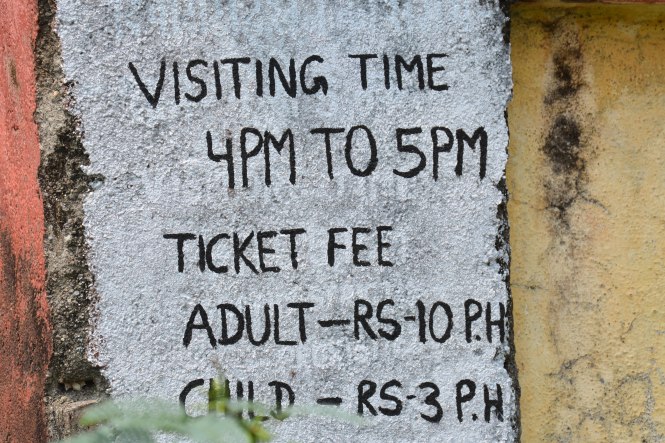
The rates for visitors are displayed.

29

But this appears to be a permanent fixture on the gate.

28

21st & 22nd September 2016

Posted on 27th Sept.


31.SURAT, HAZIRA.

We intended to stay at Hazira for a night and then go on to Surat. The reason is that Hazira has a small Bird Sanctuary or at any rate a place designated at Bird Sanctuary and it has extensive area under mangroves. This did not happen. Hazira does not have hotels. Hazira is merely a port extension of Surat. Staying in Hazira would not have made much difference as the Bird Sanctuary is a very small place and access to the mangroves is not that easy.

We travelled to Hazira/Surat from Bharuch/Ankleshwar along the coastal road visiting several small but beautiful places along the way. It was cloudy but we could still enjoy the serene beauty of the countryside.

dsc_0357

dsc_0363

Fungii growing on cow dung.

dsc_0343.Our stay in Surat was a disaster caused by continuous rains. Apart from this we did not find many places of interest to us in Surat. There are those two cemeteries- English & Dutch.

The Dutch one is quite interesting. The tombs are real big. The Dutch Company must have ben spending a lot of money on their directors, living or dead.

dscn5407

dsc_0390

Currently the Government of India is spending money to restore the tombs.

dsc_0403

the people doing the restoration work are from Rajasthan. The marble slabs and other decorative work on the tombs is of Rajasthani origin.

dsc_0411

Surat has an aquarium but photography is prohibited inside. Fair enough.

The old fort of Surat is undergoing extensive renovations and repairs. It is expected to be preserved as a monument and museum after the restoration. We could see some exteriors.

dsc_0418

dsc_0419

Near the Fort, Surat has a pedestrian bridge across the River Tapi which is used extensively by Suratis for their morning walk.

dsc_0427

Hazira is out and out an industrial town and port city. Nothing much of interest to us in the current travel programme. We pass through the town and the Bird Sanctuary and then visit Suvali Beach.

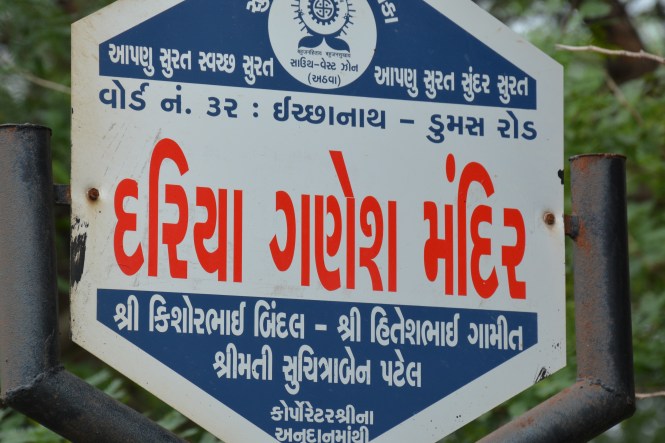
We also visit the Dumas Beach on the Surat side. The Ganesh here is designated as Dariya Ganesh- Ganesh of the sea.

dsc_0485

There is not much there by way of a beach.

dsc_0483

This one is supposed to be an haunted place. No. We did not find any ghosts there. May be the red flags are keeping the ghosts away.

dsc_0506

19th & 20th September 2016

Posted on 26th September.


30.BABA GHOR.

The presence of people of African origin on the west coast of India, who arrived in historical times  is heard or read in many different contexts. Near the Gir forests they have whole villages of the ‘Sidhis; as they are called. We have record of two princely states in Gujarat and Janjira in Maharashtra being ruled by Sidhis not too far ago.

Another important part of the Sidhi story is the legend of Bab Ghor

dsc_0278

Baba Ghor or Babagor Baba Gor or Baba Gour , as the legend goes, was an African religious person who came to India with his followers. Baba Gor was a Muslim and he is considered a saint. He and his relatives have their own dargah complex at a place called Ratanpur or Ratanpore about 22 Kms. from Ankaleshwar. We drive through the rains on an extremely bad road towards the Rajpipla Hills which ultimately culminate into a wildlife sanctuary by the name of Shoolpaneshwar.
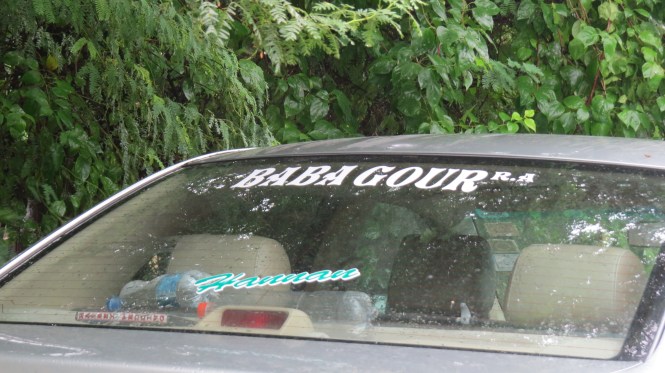
img_4513

We find the Dargah complex easily into a forested area. The greenery in the mist reminds us of the Western Ghats in Maharashtra and Goa.

dsc_0314

The people are of unmistakable African origin. The hair and the appearance remains African.

It is not clear from which African country Baba Ghor and his people came from. It is generally believed that they are Abyssinians which is Ethiopia and Eritrea in terms of current geography. If you do a google search you might find something to the effect that Baba Ghor came from Nigeria. This is unlikely as there does not appear be any contact between India and western Africa in those times.

dsc_0279

The possibility that the people came from Eastern Africa is reinforced by the fact that they used the word ‘habshi’ in referring themselves. The word means East Africans in general and East African slaves in particular. Bilal-e-Habshi  ( Habshi Muezzin) Provision Stores is here.
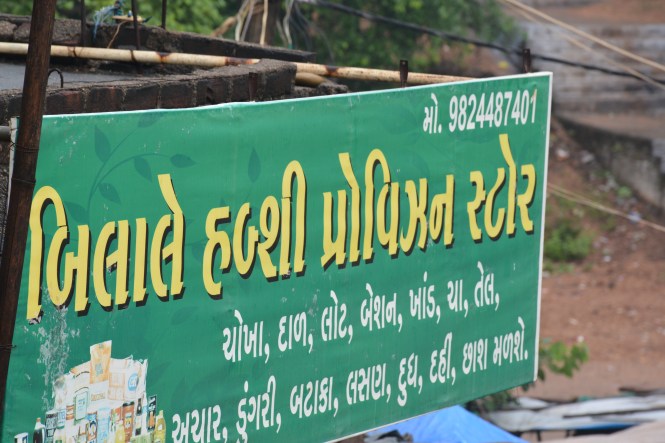
dsc_0318

Baba Gor is known more for a trade reason than religious. He is associated with the mining, cutting and polishing a mineral called Agate. His followers were engaged in this activity in the Rajpipla Hills where this mineral is found. His expertise in this trade is recognized by the fact that a variety of Agate is named after him; Babagor.

The agate mining continues and the processing is industry is spread to other parts of Gujarat. It is no longer practiced at Ratanpur. One funny thing about the place is nobody knows by its name, it is simply called Babagor.

The people at dargah inform us that they are no longer engaged in Agate mining . When asked where it is found, they say that it is everywhere. One doe not even have to dig for it during the rains. Just spade through the mud and you will find the stones.

dsc_0307

Baba Ghor was definitely a Muslim. It is not clear to which sub-sect he belongs to. The shopkeepers around has designated him a ‘sufi’, not just an ordinary sufi , a Black Sufi!!
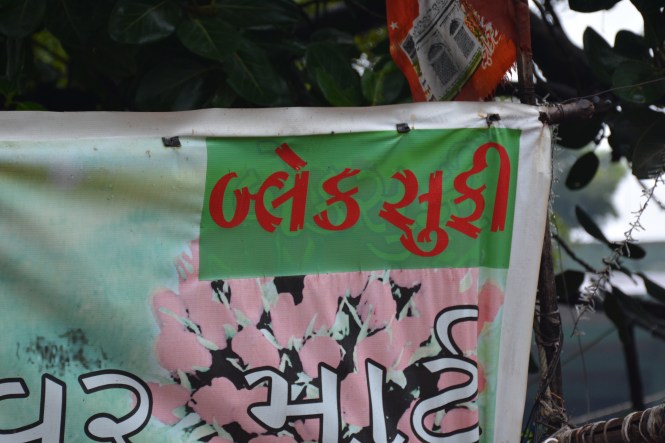
dsc_0324

Baba Ghor seems to have to India with a large number of his relatives. His brother has a tomb on a picturesque hill nearby.

dsc_0288

Sister Mai Misra rests very close to the brother’s tomb. Mai Misra is a phenomenon that needs to be studied.  I have found a tomb with the same name on a beach between Alang and Bhavnagar at a place called Kuda. The locals were of the impression that she come from Sindh.

dsc_0281

There are other tombs around. When asked the people at the dargah tell you that they are of Baba’s Khadims- servants in modern language. There is a sizable water tank which has holy water which is reputed to cure people of their ailments.
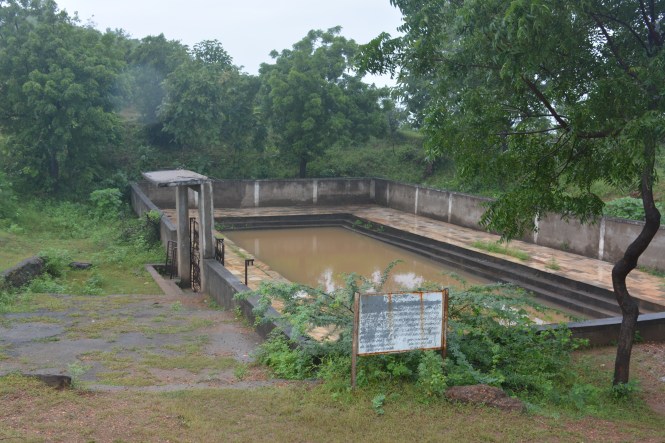
dsc_0299

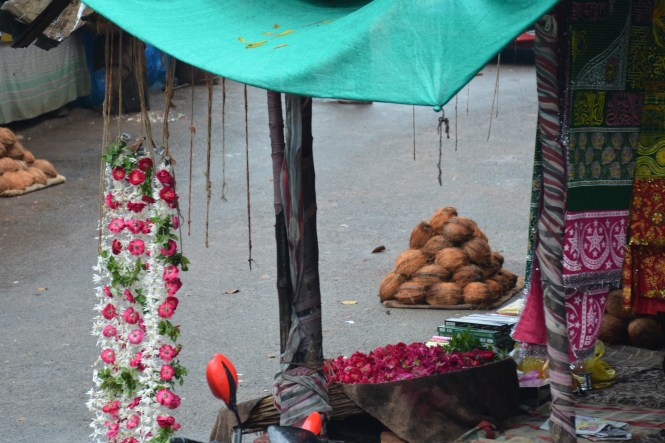
It is a Sunday and the Dargah has a number of visitors. Buses are coming in. The tea and flower vendors are happy. Incidentally in addition to the flowers and the Chaddars which are the traditional offerings at a dargah, coconut is also offered here. Some sort of fusion.
dsc_0322

img_4469

I am curious about the language they speak. Apparently it is Gujarati. The signboards all over are in Gujarati. I am sure they speak Gujarati with a few words here and there from their native language., now difficult to understand.

An enterprising young man volunteers with some information. He says that their language is Swahili. He offers me a CD ( Rs. 151/-) with recordings of DHAMAAL, which according to him contains Swahili songs. On a casual hearing they appear to be Gujarati. I need to go through the recording carefully to see if it contains any Swahili words which are known to me. Unlikely as Swahili itself developed in the region south of Abyssinia.

In any case the Siddis have enriched Gujarati and Marathi language by giving them the word ‘dhamal’. I am not sure if the ‘Goma’ music that the Siddis use and which has a distinct African rhythm , has influenced any of the Indian musicians.

As more and more devotees start coming in, we decide not to adversely affect the Siddis’ business prospects by idle questioning. We retreat to Ankleshwar.

img_4509

18th September 2016.  suryakiran.naik@gmail.com

Posted on 21.09.2016


BHARUCH

Bharuch or Bhadoch in Gujarati or Broach at an earlier time is another historical place on the Gujarat coast. A medium size town with a population of c. 400,000 and with two large industrial areas- Dahej and Ankaleshwar close by.

Although it has a history, Bharuch has very little in terms of monuments to vouch for it. It is said that after Varanasi, Bharuch is the oldest continuously inhabited place in India. If true, much needs to be done to document it. Very few people in the town know about it’s past. To make things worse for us, it was raining.

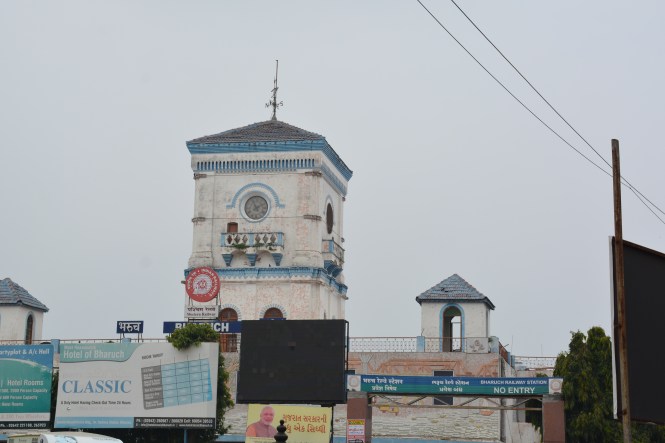
As landmarks we could see the Railway Station.

1

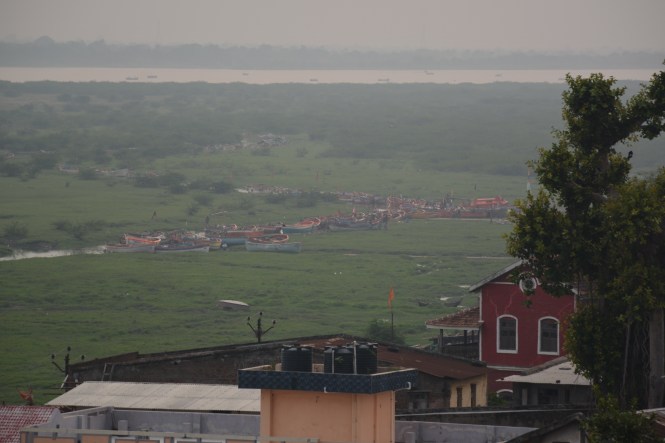
The fort which is in bad condition but offers beautiful view of River Narmada.

3

4

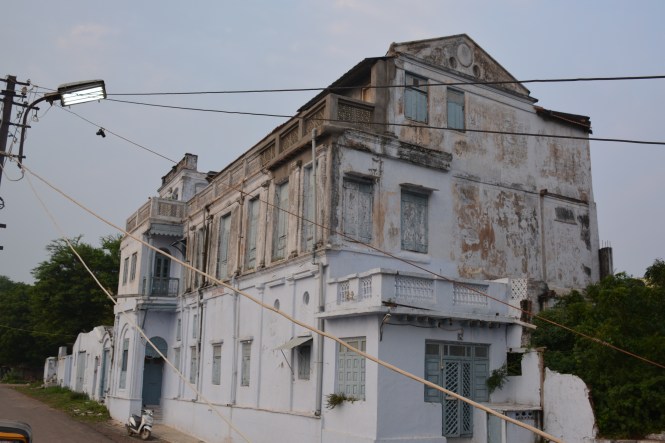
The Nawab’s haveli is in good condition. We had the good fortune of meeting the Nawabsaheb who is keen traveller himself. He showed us around a part of the haveli on the ground floor and showed us a number of antique objects in his collection. It includes a number of clocks and watches, very old but still functional. No. Photography is not permitted.

5

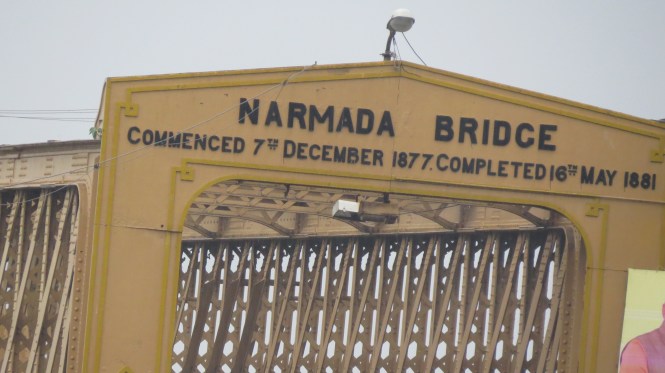
The city has two bridges ( 3 if you count the railway bridge separately) connecting it to the sister city of Ankaleshwar.  The logistically important is the new bridge but the one of antiquity of 125+ years old is the  1412 meter long Golden Bridge by which the city’s inhabitants swear.

6

img_4453

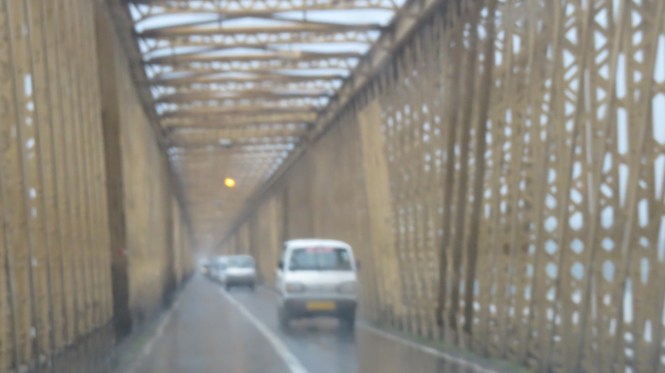
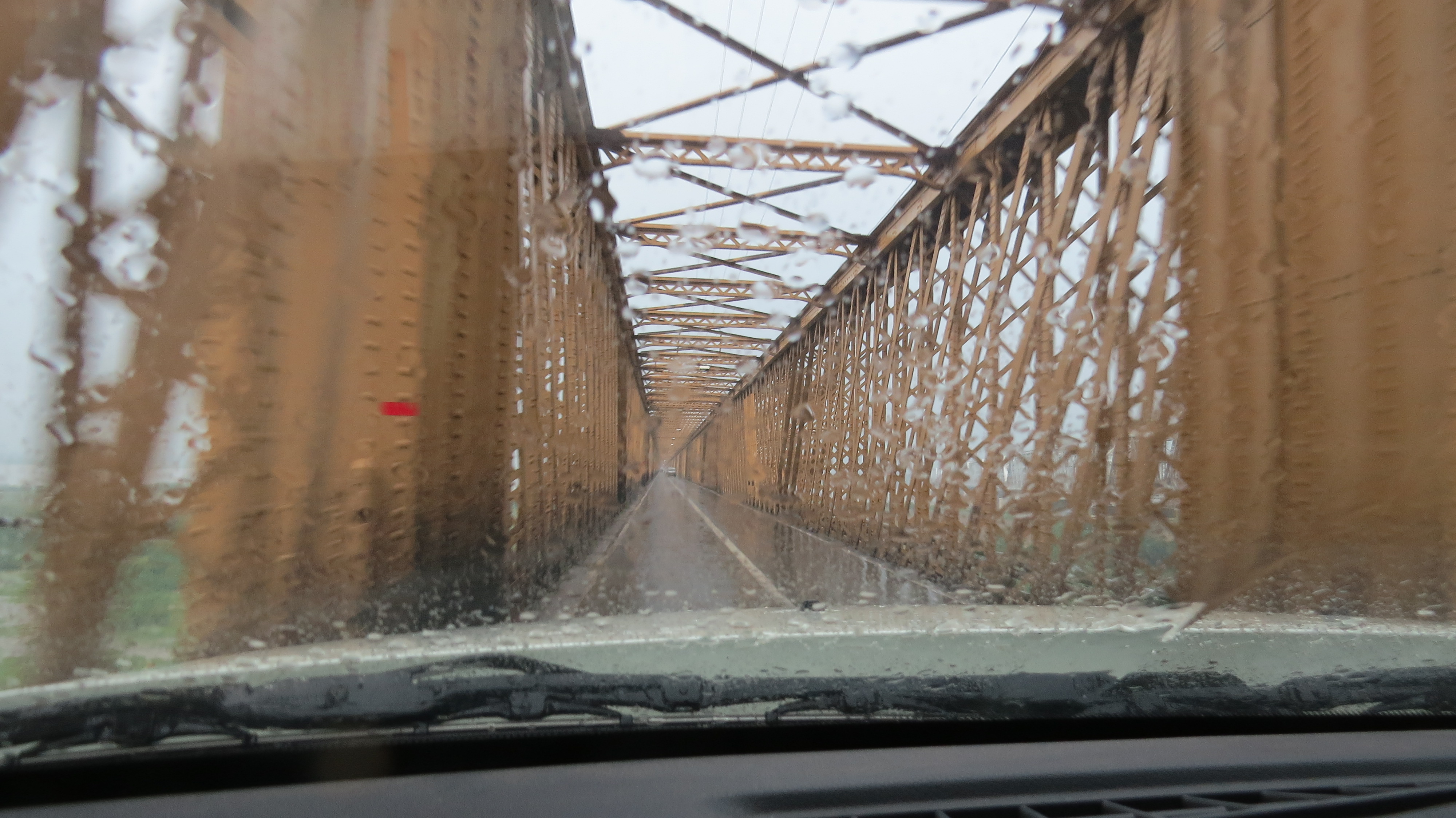
The Golden Bridge is a scary affair. It is a two-way bridge but scarcely any space between two cars. We had to retract the rear-view mirrors

img_4463

img_4460

Ankaleshwar is an out and out industrial town. Hence we decide to give it a miss as ‘industry’ is not a part of our tour agenda unless it is historical. Still we decided to take a drive-through trip of Dahej as it was coupled with visit to another place en route. Dahej ( & Lakhigam which is almost indistinguishable from it)  has port terminals and a host of industries. It rained and we had to confine ourselves to the car and miss out on a few things including the Lighthouse.

dscn5350

dscn5356

The place we intended to visit is called Aaliya Bet, an island in the river Narmada. It is located off the road to Hazira to be crossed at a fishing village called Badbuth.

They are in fact two islands. The smaller one which is also nearer is simply called ‘bet’ or island. It is inhabited but does not have a name. Strange. We understand that the people on the ‘bet’ rear cows and the milk is sold at Basdbuth. We make enquiries about a boat to cross over to Aaliya Bet. We are persuaded not to. ‘There is nothing there’. ‘only villages and farming’, ‘there is no boat currently available’ etc.

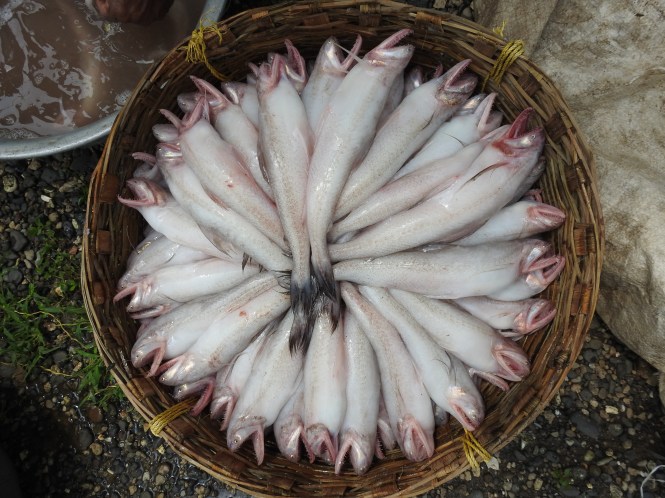
On the banks of river Narmada, this village is engaged in Hilsa fishing which is sent as far east as Howrah market in West Bengal.

dsc_0242

dsc_0249

In this smallish village we could count at least 5 temples on the river bank itself, including one under construction.

dsc_0250dsc_0253

Our next stop is another island in the river Narmada. Kabirwad is a famous place. Made famous by a religious place called Shuklatirth on shore and a huge banyan tree on the island. The tree is associated with the Saint Kabir and is said to have spread over two and half acres. ‘Said to have’, because we could not see it.

The boat service to the island is suspended for about 4 months now. We are told that there is a dispute between the Government and the contractor. Nobody is willing to take us across.

‘How about the people living on the island? How do they manage?’, ‘People on the island have their own small private boats’. Not for hire.

We saw a boat crossing to the mainland from a distance. We rush upstream but are told that it is a single crossing for the day. The boat will not comeback until the next day.

On the Banks of Narmada, opposite Kabirwad Island. The fruit for sale is the Star Fruit or Carambola.

dsc_0277

dsc_0276dscn5377

16th &17th September 2016
Posted on 19th September 2016


KHAMBAT, DHUVARAN, ZAROLA, JAMBUSAR, KAVI.

When we started out from Velavadar, the idea was to end the day at Khambat. However it was quite late by the time we reached a place called Tarapur which has highway accommodation and we decided to make a halt there.

It turned out to be a good decision. The drive from Tarapur ( not to be confused with the town with the same name in Maharashtra) to Khambat is something to cherish. The scenic beauty of the 22 Kms. road with greenery on both sides is unforgettable.

1

2

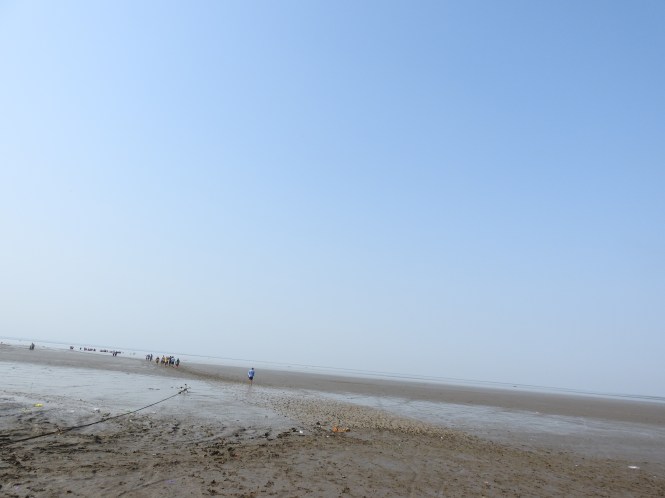
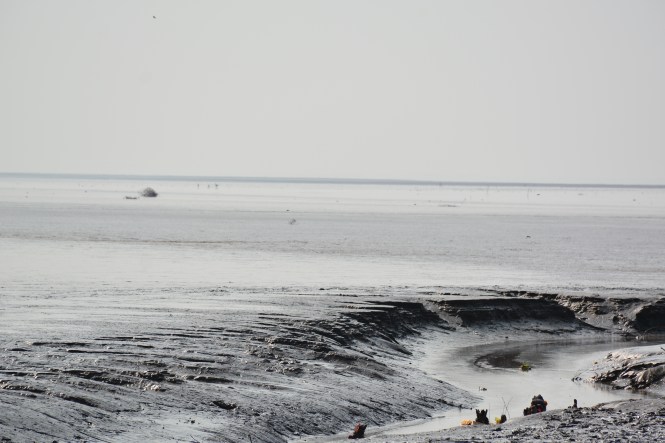
Khambat is steeped in history. Once a major port, the town lost its importance in the course of time perhaps due to silting of the seashore. The difference between the low tide and high tide sea level is huge. There is nothing like a port any longer.

3

4

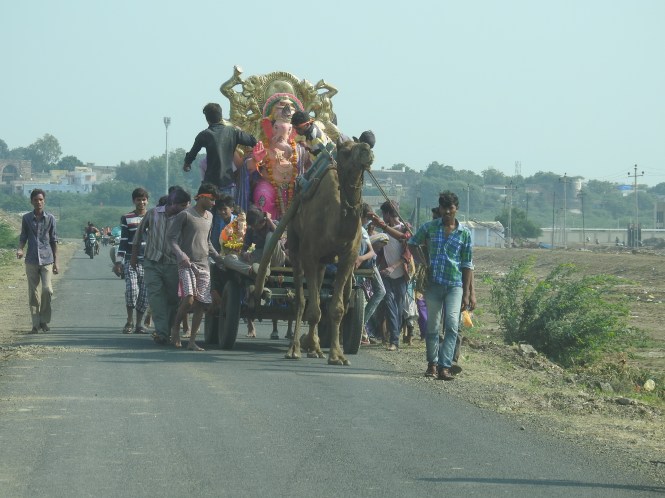
A few old buildings are still seen. The time we spent in the town was very little largely due to the fact that the day was Ananth Chaturdashi, the last day for immersion of Ganesh idols.

56

We saw one being carried on a camel cart. This must be unique. Is there any other place where camel is used to carry Ganesh?

8

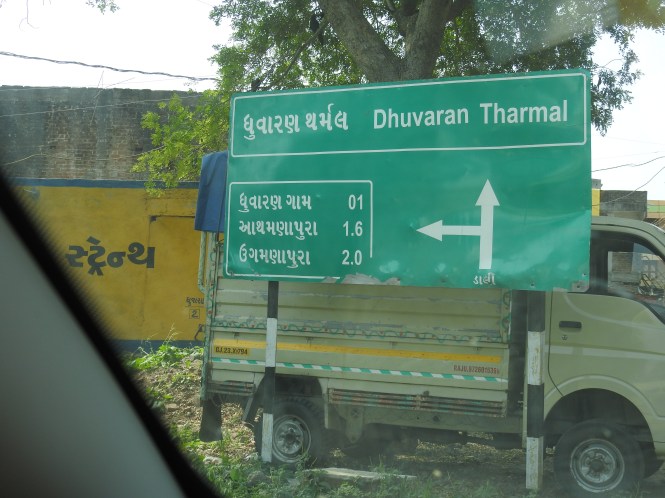
We decide to proceed and visit another place by the sea called Dhuvaran. Dhuvaran has a two-year old gas-based power plant which never started. Perhaps they made some mistakes. They certainly made one on this signpost showing the direction.

9

By the sea there are two temples. We have posted too many pictures of temples on this blog. For a change let me post some signboards.

11

10

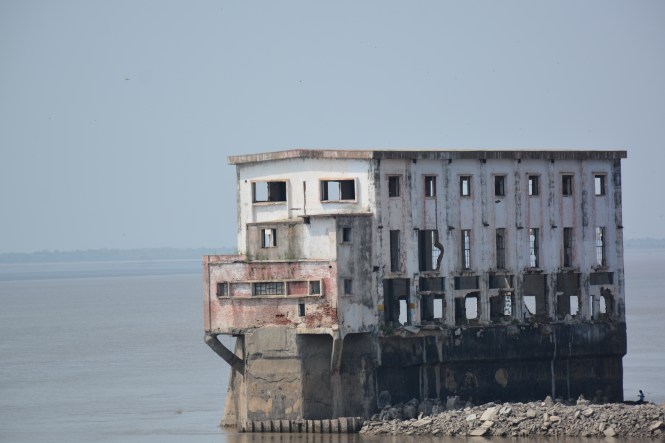
Sometimes old dilapidated structures, including industrial ones look cute. This pumping station for an old power plant is by the sea rendered useless by the new power plant which is not functional. Tragic.

13

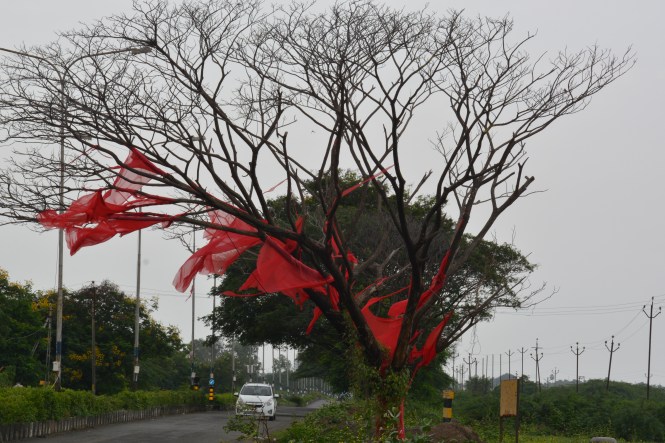
By now we have decided on Jambusar as the place to make the night halt. That is the best option we have as Bharuch is a bit too far and we have one or two places to cover which are accessible from Jambusar. Before we reach Jambusar we come across a scene to remember. Sarees, hundreds and thousands of them hanging from the trees on both sides of the road for nearly half a kilometre. A sight that would make even the most disinterested person to stop and take a note.

14

We make enquiries about the phenomena. The explanation came out very easily. This is the shrine of Chudail Maa. You go to this deity and make a wish. It will be fulfilled. You have to come back and offer a saree to Chudail Maa. The saree will be hung up there. Consequences of not offering the saree are serious.

Going by the number of sarees hanging there, it appears to be a serious business and worth trying. By the way, you need not go there with a saree, they are available with the local vendors. Incidentally, did you hear the women in Hindi movies calling each other ‘chudail’ ? They don’t know what they are talking about.

18

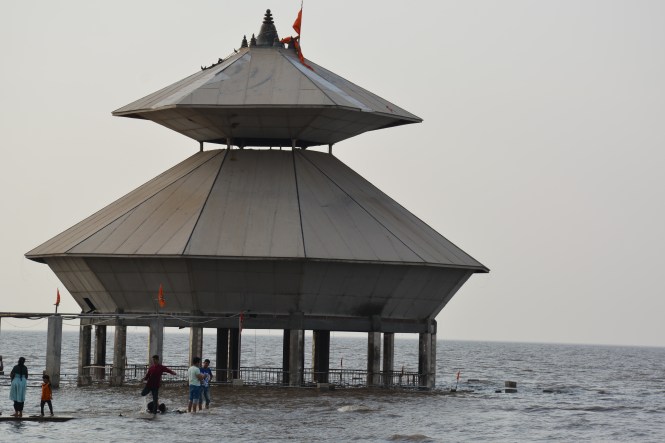
Jambusar is a very ordinary small-town. ONGC is active nearby. Nothing to write home about, a stopover place like it happened for us. The place we go and see from here on the sea is called Kavi. Kavi is on the opposite side of the Gulf of Khambat and one can see Khambat. The actual seashore is 5 kms from the Kavi village and has a mosque, a Jain derasar and the famous Stambeshwar Mahadev temple in the sea.

19a

19

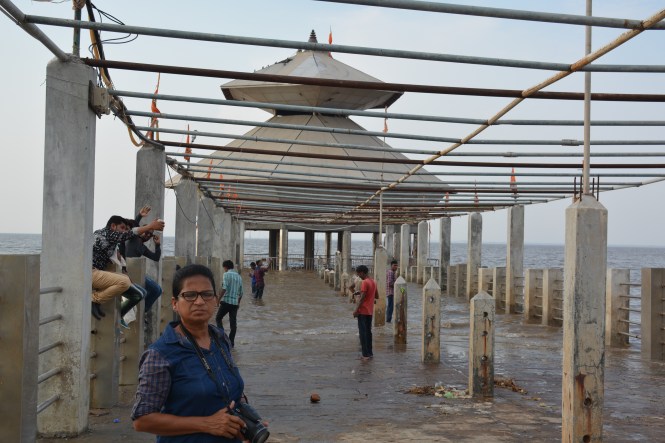
The temple is operational only during the low-tide and is immersed in water at high tide exactly like the Nishkalank Mahadev temple. The difference between the two is the distance. Nishkalank is far out in the sea, Stambeshwar isquite close on the beach. Therefore, Nishkalank is more famous and has more devotees than Stambeshwar. Those planning to build temples in the sea, kindly make a note of this.

20

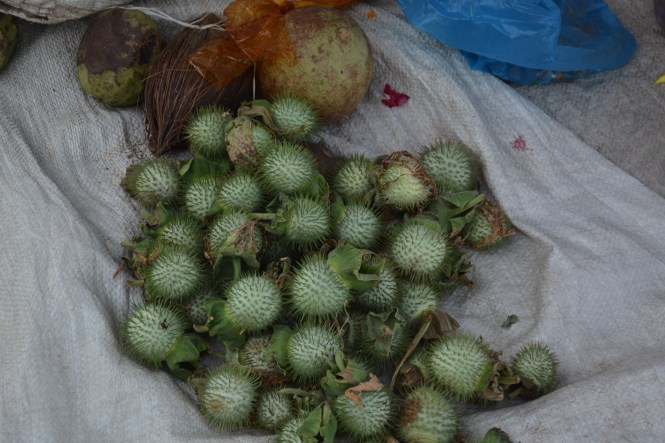
These are the fruits of Dhattura which are offered to Stambheshwar Mahadev by the devotees. He must be the most gracious God to accept poisonous fruits as offering.

21

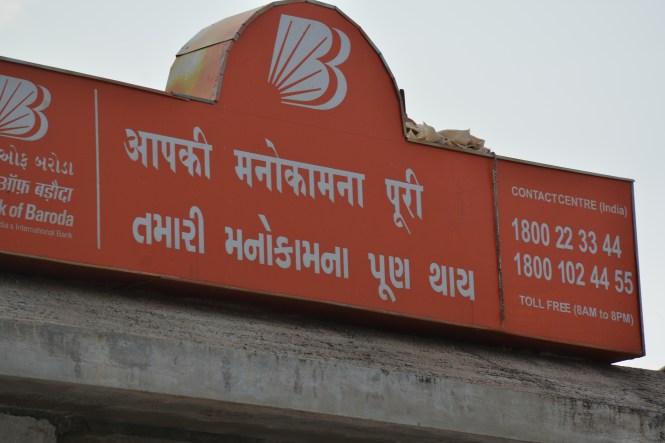
Gods have the monopoly to grant us wishes, not financial institutions. Here at Stambheshwar Mahadev, Bank of Baroda has thrown an open challenge to God(s). It is publicly offering to fulfil all (tamam) manokamana (wishes). This is an affront to the divinity. The Gods should take immediate action against the Bank and Government of India, it’s owners.

22

14th & 15th September 2016

Posted on 17th September 2016.

BHAVNAGAR, VELAVADAR,DHOLERA & LOTHAL.

Bhavnagar was a disappointment. Despite being the capital of a major princely state, it has very little to offer in terms of architecture. Just about four monuments can me mentioned including the palace which is now a hotel.

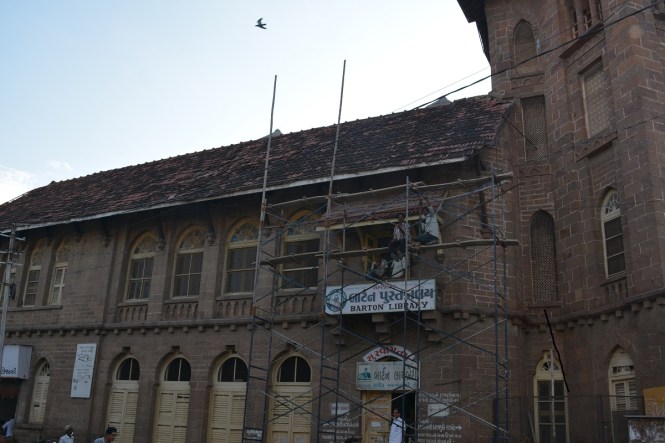
Barton Library is a landmark. It was under repairs when we visited.

1

Alfred High School is another notable structure along with the nearby buildings housing the law courts.

2-alfred-high-school

3

The Ganga Chhatri is a finely designed 1893 make structure badly in need of some care. It is a memorial to a queen who died in childbirth. People are urinating, plants are growing between the pieces of marbles. It would not be long before it is gone unless something is done urgently.

4-ganga-deri

A parrot atop the Ganga Chhatri

5-2

The Victoria Park in the centre of the town and the adjacent lake are environmentally important places providing the leisure space and quite a bit of minor wildlife. The important aspect of the Victoria Park is that it’s tree species are all locals.

A few miles outside the town is an important mechanical device, a gate which maintains the water level at low tide in a shipyard. The adjacent Bhavnagar port, however appears to be past its days.

6

Beyond Bhavnagar and up to Bharuch which is located beyond the Gulf of Khambat, there are not many places on the coast which would be of interest to us. However, we intend to visit as many of them as possible. The next important place on the coast is Khambat but before that we decide to visit two more places which are not exactly on the coast but within a 30 Kms. distance which is the limit we have set for ourselves.

The first of these is the Velavadar Blackbuck Sanctuary & National Park.

dscn5078

Velavadar is closed for the monsoons which end on 15th October for the department of forests of the Government of Gujarat. It is a 4 months holiday. We are stopped on the public road which passes through the sanctuary to reach the villages beyond and admonished for taking photographs. We are to stay at the Blackbuck Lodge a couple of Kms. beyond. The Lodge is excellent and well managed. I wish we were visiting during the migration season when the park gets a number of migratory birds. We still hoped to see an indigenous but local bird- the Lesser Florican. We spent almost half a day with a local guide. No success. the grass is grown a bit more than what is ideal for it’s sighting. There are other birds like this spoonbill which are not migratory.

dscn5186

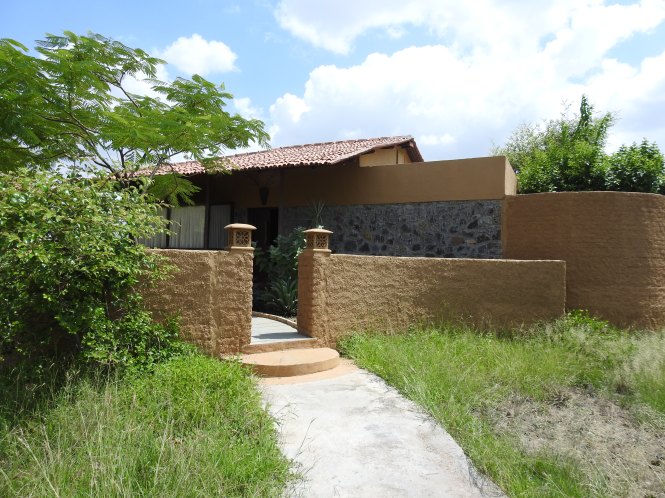
We enjoy our one night stay at the Lodge. It is a place to remember. This was our cottage.

dscn5020

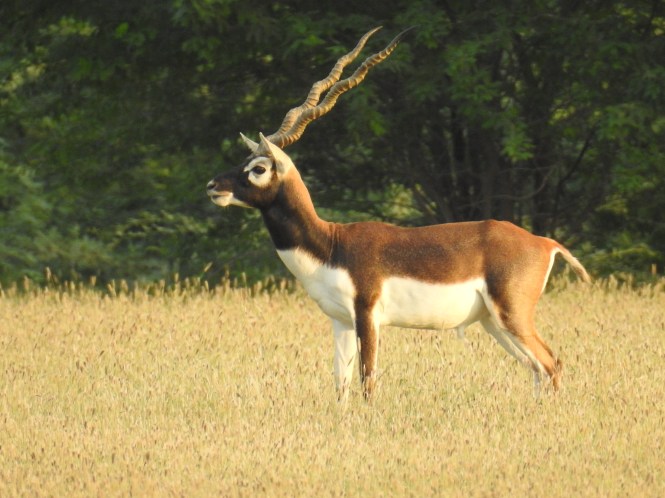
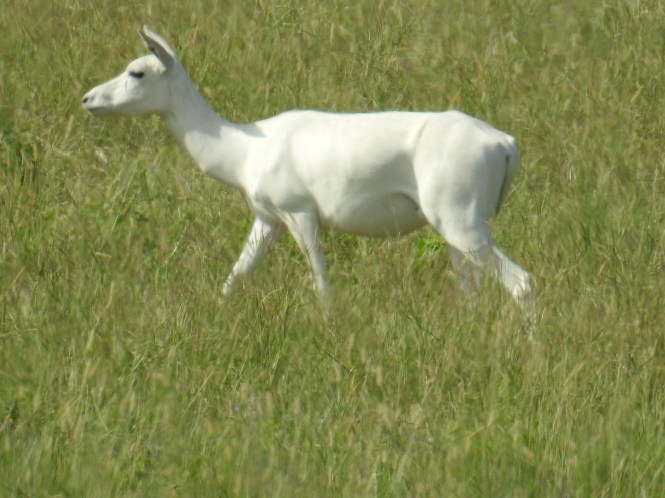
The migration season is just starting and we could see a female Montagu’s Harrier and an European Roller. The local Guide Amit Velavadar is an young student but quite knowledgeable of the local and visiting species. The thing to remember on the wildlife side was the sighting of a leucistic female Blackbuck. There are two of them in the park. It is not common because the leucistic  specimen of animals cannot expect to survive long in the wild as they lack the natural camouflage of their species.

dscn4941

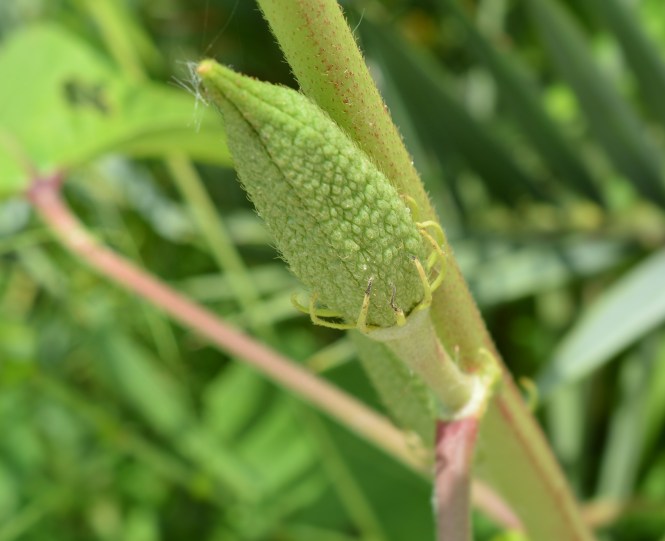
Another interesting thing we find at the Lodge ( and around it) is a wild variety of Ochra(Bhendi). It is growing naturally and has similar flowers but the fruit has a design on it which is not found in the domesticated variety. No, we did not taste it.

ochra

We come of the Park area and drive towards Khambat. On the way between Bhavnagar and Khambat , one can see an interesting twist of history. We cross Dholera, the proposed megacity , the Hong Kong of India and drive towards Lothal  an Harappan city at least 4000 years old. The two places are quite close by. By the time Dholera is fully complete, Lothal would around 25 Kms. across.
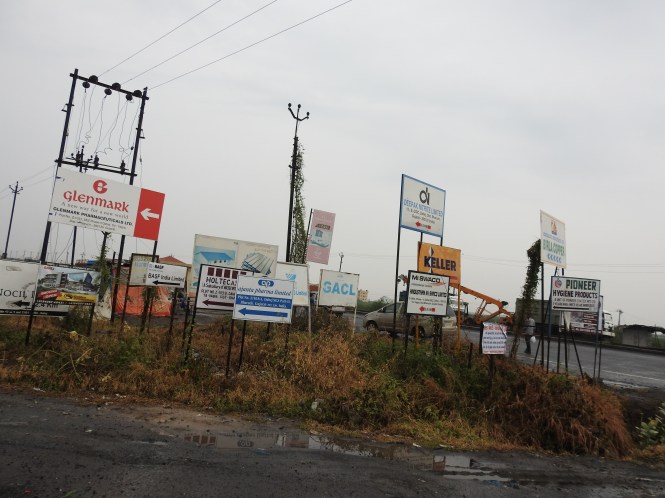
There is not much in Dholera at the moment except for the very promising billboards and hoardings offering all kinds of real estate.

dscn5193

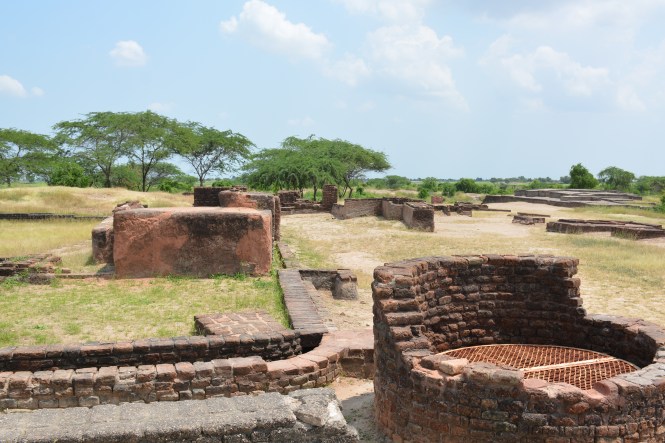
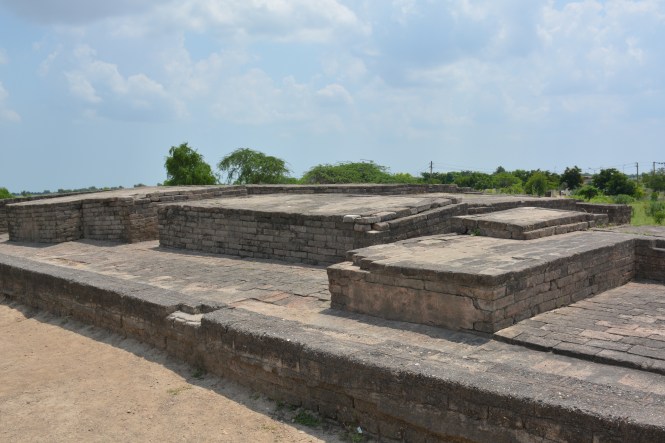
Lothal gives you a good insight into the Indus Valley civilization townships. The factories, the port, the Chief’s residence are all there. This site is not as big as Dholavira in Kutch but is important as it was a maritime place with a port and trade with several overseas territories in the Persian Gulf as well as Africa.

dsc_0142

The chief stayed here.

dsc_0139

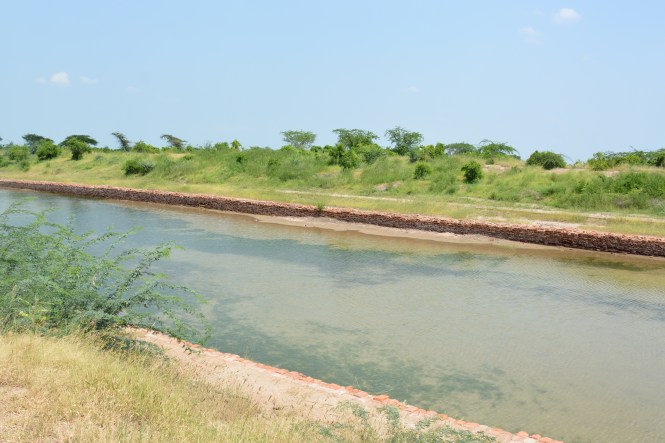
A part of the Harbour. The Archaeological Survey appear to have done a good job. The small museum at the site is helpful in understanding many aspects of the Harappan life. The place does not have the usual tourist crowd and hence is clean and neat.

This is the part of the harbour where the ships of overseas traders docked. Now it is several kilometres from the river which connects it to the Arabian sea.

dsc_0145

12th to 14th September 2016

Posted on 16th September from Bharuch.


GOPNATH,JANJMER, TALAJA,ALANG KUDA , GHOGA.

We start the day with a beautiful sunrise from the Arabian Sea at Gopnath, move around the estate of the Maharaja, look at the beach and start for Janjmer.

1

The reason for going back to Janjmer is the Lighthouse we had missed yesterday on our way from Mahua to Gopnath. We have to go through the entire village to reach a small hill which used to be a fort to reach the lighthouse.
3

2-2

The surrounding as seen from the hill are incredibly beautiful.

4 The village has an old Vav. This is a regular well, not a step-well.

5

A colony of spoonbills on the way.

dscn4749

The next place on the way is Talaja. This is an important Jain pilgrimage centre with caves along the hill and the temples on top. It also has some Hindu temples as well. This hill forms a part of the famous Shatrunjay Hills group which include the more famous Palitana.

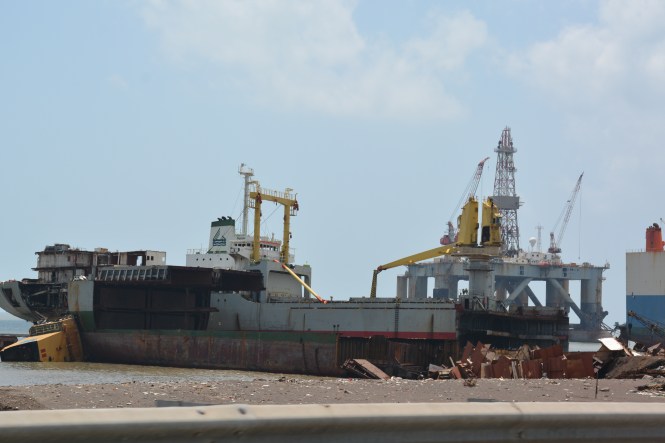
We cross a couple of rivers and reach the junction to Alang. This port was once credited to be the world’s largest ship breaking yard. I am not sure if it still holds the record but one can certainly see large number of vessels meeting their end along the coast at various yards.

10

11

The shops between the port and the highway sell whatever could be salvaged from the dead ships. This includes anything from dinner plates to large lifeboats.

12

13

Alang port houses a Lighthouse. We have taken it upon ourselves to create a photographic record of all Lighthouses on our route.

14

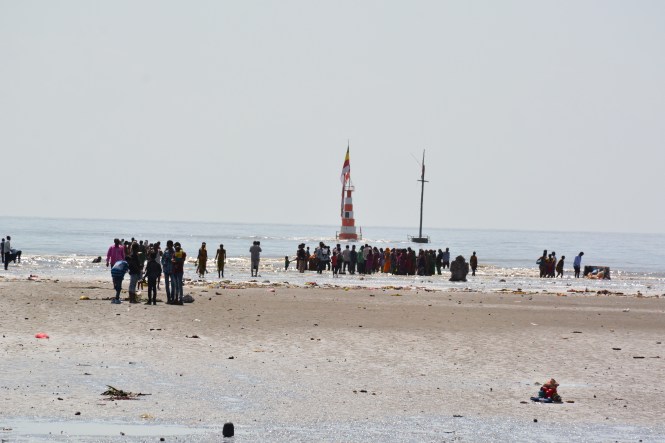
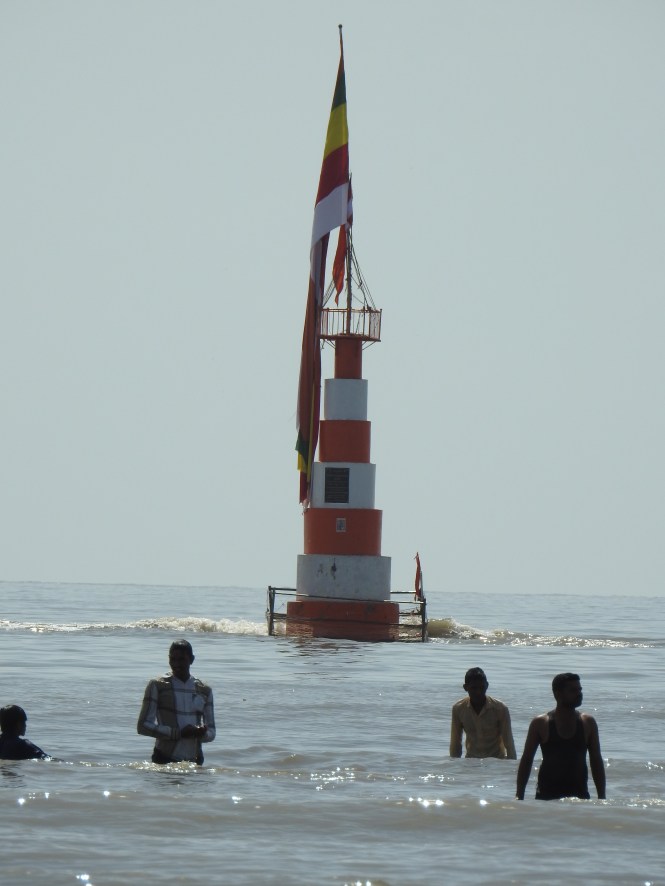
Between Alang and Bhavnagar the coast ( which is by now the Gulf of Khambat) has a large number of temples ( what else?) and dargahs. The most famous of the temples is the Nishkalank Mahadev Temple at Koliyaak . The temple is operational only at low tide. At high tide it is submerged preventing Lord Mahadev from blessing the large number of devotees waiting in hot sun on the shore

15

dscn4865

The beach is disgustingly dirty with all kind of waste.

16

The debris includes the idols of Nishkalank Mahadev’s son Ganapati immersed earlier by devotees and mercilessly rejected by the Arabian sea as unsuitable.

Between here and Bhavnagar town which is our next stop, we have two beaches and one island. Kuda beach has a temple and a Dargah. Ghoga has a Lighthouse, two jetties. There is an island called Pirambet. We make an unsuccessful attempt to visit the island. It requires permission from Marine Police, Ports Authorities and the Lighthouse authority. It would be easier to visit Pentagon. The island is uninhabited save for the lighthouse staff.

Piram Island lighthouse from the shore.

dscn4832

At Kuda beach we find, adjacent to the Dargah, a temple to a goddess and another dargah of a woman saint. This is the first to me. The locals reveal that the devi as well as the female Muslim Pir came from Sindh.

dsc_9631

Here is the dargah of Mai Misra Mata. What do you call a female Pir? anyone?

dsc_9628

1th & 12th September 2016

Posted on 15th September (on account of bad connectivity)